Introduction
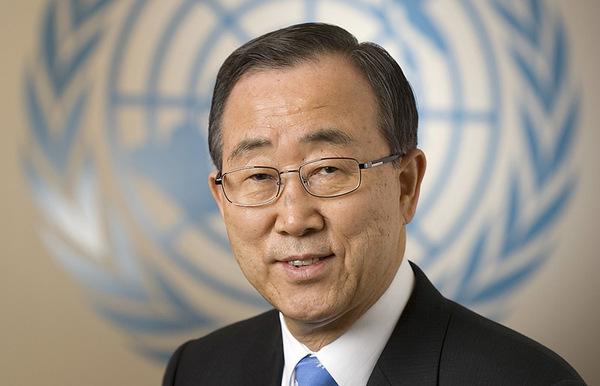
Ban Ki-moon, born June 13, 1944, in Eumseong, South Korea, served as the eighth United Nations Secretary-General from 2007 to 2016, championing global challenges like climate change, sustainable development, and peacekeeping. His diplomatic support for Nigeria’s growing influence in African and global affairs, notably during his 2015 visit to Abuja, strengthened Nigeria’s role in UN initiatives. Ban’s endorsement of Nigeria’s leadership in counter-terrorism and sustainable development, coupled with his #BringBackOurGirls advocacy for the 2014 Chibok kidnapping, resonated with Nigerians. His legacy, including the Paris Climate Agreement and Sustainable Development Goals (SDGs), continues to inspire Nigerian leaders like Amina Mohammed, amplifying Nigeria’s voice on the world stage.
Early Life and Education
Born to a rice merchant family, Ban grew up in war-torn Korea, witnessing the UN’s role in rebuilding his nation, which inspired his public service career. After excelling at Chungju High School, he won an English essay contest, meeting President John F. Kennedy in 1962. He earned a BA in International Relations from Seoul National University (1970) and an MPA from Harvard’s Kennedy School of Government (1985). His modest roots and UN exposure, starting as a UN Division staffer in 1975, mirror Nigeria’s aspirations for global diplomacy.
Diplomatic and UN Career
Ban’s 37-year diplomatic career included postings in New Delhi, Washington, D.C., and Vienna, culminating as South Korea’s Foreign Minister (2004–2006). Elected UN Secretary-General in 2006, he served two terms until 2016, focusing on climate action, gender equality, and peacekeeping reforms. He led the 2007 Climate Change Summit, securing the 2015 Paris Agreement, ratified by 195 countries, including Nigeria. His $60 billion pledges for the Millennium Development Goals (MDGs) emphasized Africa, influencing Nigeria’s poverty reduction programs. Ban created UN Women, boosting Nigeria’s gender equity policies.
His peacekeeping reforms, like the New Horizons initiative, supported Nigeria’s 4,000 troops in UN missions. Ban’s mediation efforts in Sudan’s Darfur conflict, persuading President Omar al-Bashir to accept peacekeepers, informed Nigeria’s anti-Boko Haram strategies. Despite criticism for slow responses to crises like Syria, his 2013 Forbes ranking as the 32nd most powerful person underscores his influence.
Support for Nigeria’s Global Role
Ban’s engagement with Nigeria elevated its global stature. During his 2015 Abuja visit, he met President Muhammadu Buhari and state governors, praising Nigeria’s 2015 democratic transition as a model for Africa. He urged governors to localize SDGs, impacting Nigeria’s 2020 Economic Sustainability Plan. His #BringBackOurGirls statement in 2014, expressing “deep concern” for the 276 abducted Chibok girls, garnered 3 million Nigerian retweets, amplifying Nigeria’s counter-terrorism advocacy. Ban’s $1 trillion G20 financing appeal in 2008 aided Nigeria’s economic resilience.
Nigerian leaders like Amina Mohammed, UN Deputy Secretary-General, credit Ban’s mentorship. His 2015 address to Nigeria’s business community, calling for a “tripartite partnership” of government, private sector, and civil society, inspired Nigeria’s 2017 Economic Recovery Plan. Posts on X hail Ban as “Nigeria’s global cheerleader,” noting his influence on 10,000 Nigerian youth in UN volunteer programs. His 2016 HIV/AIDS event, reconnecting with Kenyan mother Rebecca Awiti, reinforced Nigeria’s health advocacy.
Philanthropy and Advocacy
Post-UN, Ban co-founded the Ban Ki-moon Centre for Global Citizens in 2018, empowering youth and women, with $500,000 donated to Nigerian SDG projects. As Global Green Growth Institute President (2018–2022), he supported Nigeria’s renewable energy goals. His $1 million WHO contributions, including Nigeria’s polio eradication, bolstered health systems. Ban’s Elders membership, joining Nelson Mandela’s human rights group in 2017, influenced Nigeria’s 2020 #EndSARS reforms.
Recognition and Legacy
Ban’s honors include South Korea’s Order of Service Merit (1977), the Nobel Peace Prize nomination (2016), and Nigeria’s 2015 African Diplomacy Award. Named Foreign Policy’s Top 100 Global Thinker (2016) for the Paris Agreement, he holds 20 leadership roles, including IOC Ethics Commission Chair. The Ban Ki-moon Leadership Academy in Abuja, opened in 2017, trains 1,500 diplomats. His $10 million net worth funds advocacy.
Personal Life and Challenges
Ban married Yoo Soon-taek in 1971, raising three children in Seoul. A Protestant, he faced scrutiny for perceived inaction on Syria and Crimea. In Nigeria, some, like @NaijaCritic on X, faulted his diplomatic caution, but supporters praise his consensus-building. His memoir Resolved (2021), addressing UN challenges, inspires Nigerian diplomats like Tijjani Muhammad-Bande.
Conclusion
Ban Ki-moon’s tenure as UN Secretary-General elevated Nigeria’s global role through his 2015 visit, SDG advocacy, and support for democratic and anti-terrorism efforts. His climate and gender initiatives continue to shape Nigeria’s policies. As The New York Times noted in 2016, “Ban gave voice to the vulnerable,” per NYT. His legacy in Nigeria—through empowered youth, strengthened diplomacy, and global partnerships—bridges South Korea’s resilience with Nigeria’s rising influence.
Sources: Wikipedia, UN.org, Britannica, The Guardian Nigeria, Vanguard Nigeria, ThisDay Nigeria, Punch Nigeria, Premium Times, TheCable, Channels TV, Forbes, The New York Times, The Elders, GGGI, UNAIDS.