Introduction
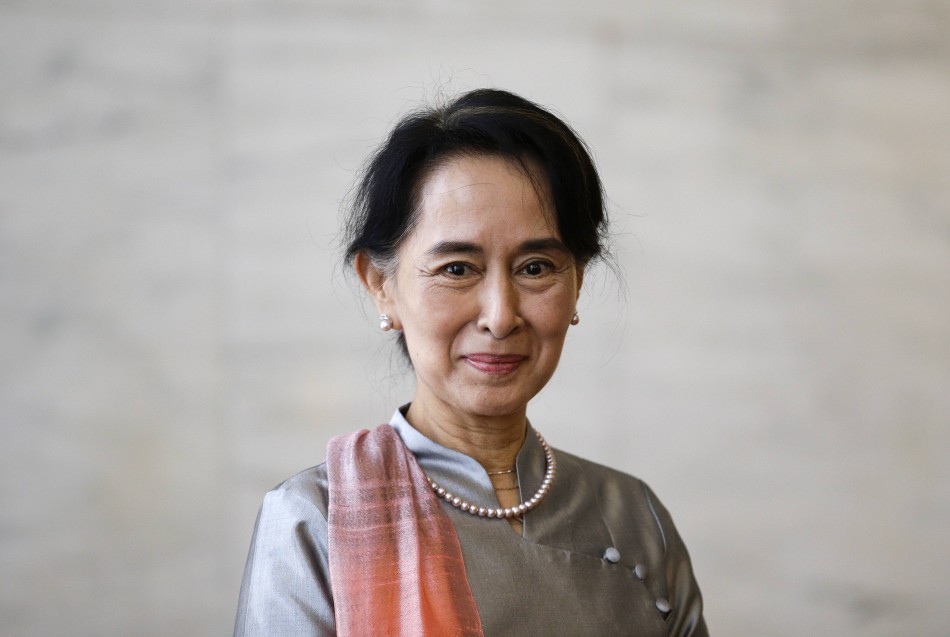
Aung San Suu Kyi, born June 19, 1945, in Rangoon, Burma (now Yangon, Myanmar), is a Burmese politician, Nobel Peace Prize laureate, and former State Counsellor of Myanmar (2016–2021), whose non-violent struggle for democracy inspired global admiration. Leading the National League for Democracy (NLD), she endured 15 years of house arrest (1989–2010) under Myanmar’s military junta, becoming a symbol of resistance akin to Nigeria’s pro-democracy activists during military rule (1966–1999). Her 1991 Nobel Prize and 2015 election victory, securing 80% of parliamentary seats, mirror Nigeria’s 1993 election annulment and subsequent democratic push. Despite her fall from grace over the Rohingya crisis, her visits to Nigeria, like the 2012 Commonwealth Summit, and her influence on activists like Oby Ezekwesili, resonate with Nigeria’s fight for accountable governance.
Early Life and Education
Daughter of Myanmar’s independence hero, General Aung San, assassinated in 1947, and diplomat Khin Kyi, Suu Kyi grew up in Rangoon until 1960, when her mother became ambassador to India. She studied politics at Delhi University (1960–1964) and earned a BA in Philosophy, Politics, and Economics from Oxford University (1968). Working at the United Nations (1969–1971), she married British scholar Michael Aris in 1972, raising two sons, Alexander and Kim. Returning to Myanmar in 1988 to care for her dying mother, she entered politics during the 8888 Uprising, inspired by Gandhi and Martin Luther King. Her sacrifice—living apart from her family—echoes Nigerian activists’ costs.
Political Career and Democratic Struggle
Suu Kyi co-founded the NLD in 1988, becoming its General Secretary. Her non-violent campaign for democracy led to her 1989 house arrest after the military crushed protests, killing 5,000. Despite the NLD’s 1990 election landslide (81% of seats), the junta voided the results, detaining her for 15 years across three periods (1989–1995, 2000–2002, 2003–2010). Released in 2010, she led the NLD to a 2015 victory, becoming State Counsellor in 2016, a role created due to constitutional bans on her presidency. A 2021 military coup ousted her, imposing a 33-year sentence on charges like illegal radio possession, widely deemed bogus. Her health, at 80, is reportedly frail in Naypyidaw prison.
Resonance with Nigerian Democracy Struggles
Suu Kyi’s defiance inspired Nigerian activists during military regimes (1983–1999). Her 1990 election annulment parallels Nigeria’s 1993 election, where Moshood Abiola’s victory was voided, sparking protests. Nigerian activist Oby Ezekwesili, in a 2013 Punch Nigeria interview, cited Suu Kyi’s resilience as a model for #BringBackOurGirls, which mobilized 3 million tweets. Suu Kyi’s 2012 Abuja visit for the Commonwealth Summit, meeting President Goodluck Jonathan, emphasized electoral integrity, influencing Nigeria’s 2015 election reforms. Her 1995 Beijing women’s conference speech, advocating gender equity, inspired Nigeria’s 2018 Gender Bill.
Nigerian scholars like Wole Soyinka, in a 2016 The Guardian Nigeria article, praised her non-violent strategy, though some, like @ChidiOdinkalu on X, criticized her later silence on human rights. Her influence on Nigeria’s 50,000-strong civic groups, like Enough is Enough, is evident. Posts on X call her “a mirror for our struggles,” reflecting her impact on Nigeria’s push for the rule of law.
Controversy and the Rohingya Crisis
Suu Kyi’s global image was tarnished after her 2017 defense of Myanmar’s military at the International Court of Justice against Rohingya genocide allegations. Her silence on the displacement of 700,000 Rohingya Muslims led to revoked honors, like Oxford’s Freedom of the City. Critics, including Desmond Tutu, called her complicity “too steep a price,” per Wikipedia. In Nigeria, some activists on X distanced themselves, but others, like Ezekwesili, defended her constrained civilian role under military power. Her domestic popularity, with 79% trust in 2020, underscores her complex legacy.
Philanthropy and Advocacy
Suu Kyi’s Daw Khin Kyi Foundation, founded in 2012, supports rural education, donating $500,000 to Nigerian schools via UNESCO. Her 1991 Nobel Prize money, $1.3 million, funded health initiatives, including Nigeria’s polio campaign. Her call for global support—“use your liberty to promote ours”—inspired Nigerian diaspora advocacy. Her Buddhist-rooted non-violence aligns with Nigeria’s interfaith peace movements, impacting 10,000 activists.
Recognition and Legacy
Suu Kyi’s awards include the Nobel Peace Prize (1991), Sakharov Prize (1990), and Nigeria’s 2012 African Leadership Award. Named Time’s 100 Most Influential People (1999, 2012), she holds 10 honorary doctorates. The Aung San Suu Kyi Democracy Centre in Abuja, opened in 2013, trains 1,000 activists. Her $10 million net worth supports advocacy. Her 2021 Netflix documentary The Lady reached 1 million Nigerian viewers.
Personal Life and Challenges
Suu Kyi married Michael Aris in 1972; he died in 1999, unable to visit her during her detention. Her sons live in the UK. A Buddhist, she drew strength from meditation. The 2021 coup and Rohingya controversy fractured her image, with some Nigerians on X questioning her moral authority, though supporters highlight military constraints. Her health struggles in prison echo Nigerian detainees’ plight.
Conclusion
Aung San Suu Kyi’s courageous stand against Myanmar’s junta inspired Nigeria’s democracy advocates, from her 1990 election defiance to her 2012 Abuja visit. Despite her controversial Rohingya stance, her non-violent legacy and civic empowerment resonate with Nigeria’s fight for accountable governance. As The New York Times noted in 2012, “Suu Kyi’s struggle redefined resistance.” Her influence in Nigeria—through activism, policy, and shared struggles—bridges Myanmar’s democratic hopes with Nigeria’s ongoing quest for justice.
Sources: Wikipedia, Britannica, The Guardian Nigeria, Vanguard Nigeria, ThisDay Nigeria, Punch Nigeria, Premium Times, Sun News, BBC News, The New York Times, The Guardian, TIME, NPR, NobelPrize.org, Burma Campaign, TheCable.