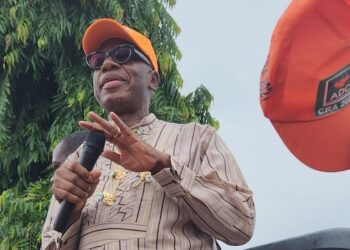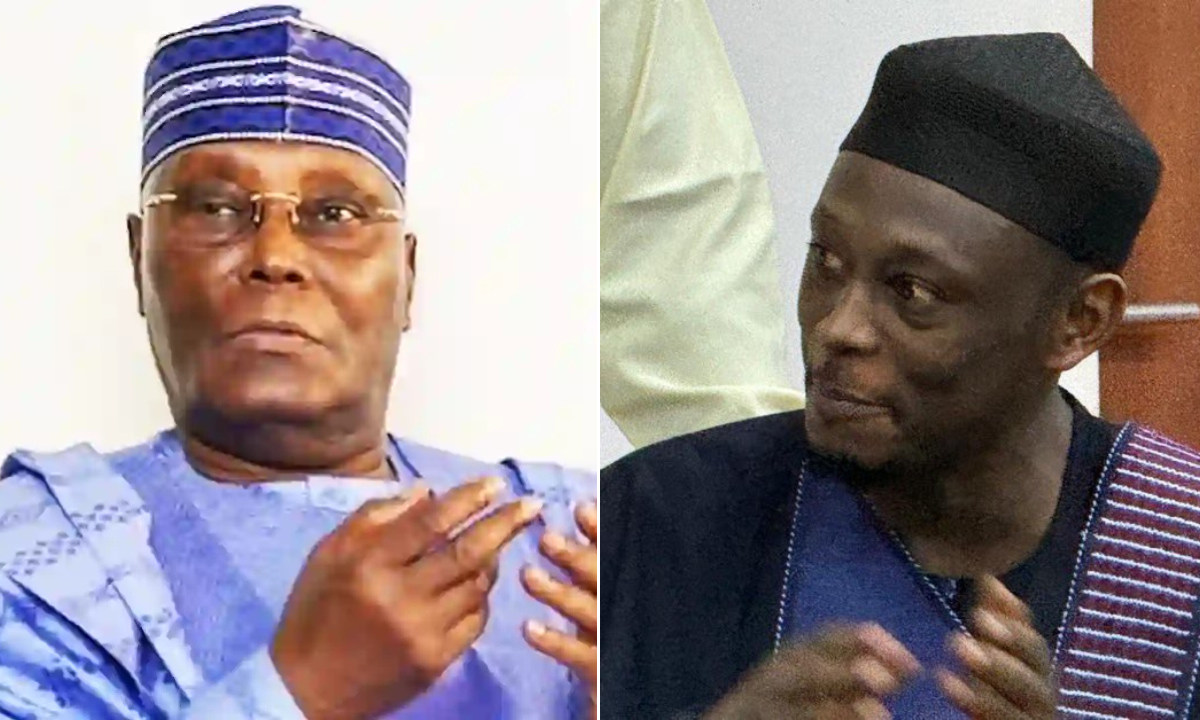
Abubakar Atiku Abubakar, son of former Vice President and 2023 Peoples Democratic Party presidential candidate, Alhaji Atiku Abubakar, has officially left the PDP for the ruling All Progressives Congress, declaring his intention to work toward the re-election of President Bola Ahmed Tinubu in 2027.
The political switch, which has generated strong reactions across Nigeria’s political space, was announced on Thursday at the National Assembly. Abubakar, widely known as “Abba,” was formally welcomed into the APC by the Deputy President of the Senate, Senator Barau Jibrin, alongside other party leaders from the North-East zone.
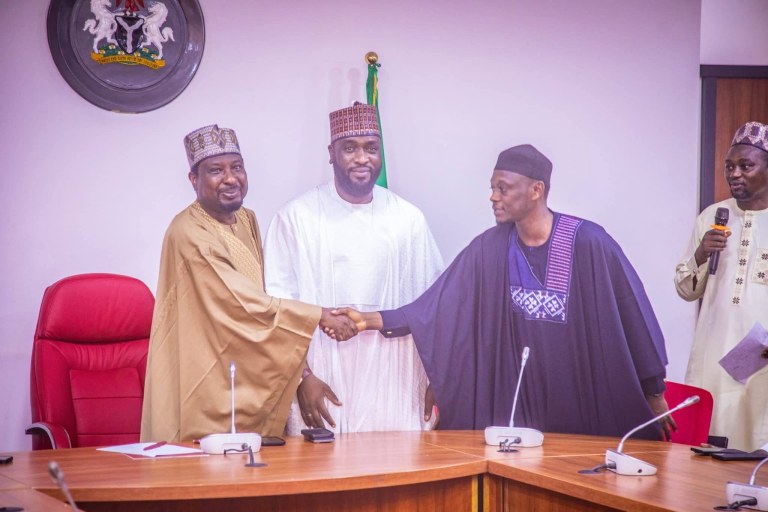
Addressing party leaders and supporters, Abba confirmed his resignation from the PDP and publicly aligned himself with the APC, describing the move as a personal conviction and a significant turning point.
He instructed all members and coordinators of his political platform, formerly known as the Haske Atiku Organisation established in 2022, to immediately defect to the APC and support President Tinubu’s Renewed Hope Agenda.
“My name is Abubakar Atiku Abubakar, but everyone calls me Abba. I am here today to formally announce my exit from my former party, where we worked in 2023, and my decision to join the APC,” he said.
He explained that his decision was influenced by what he described as the leadership qualities of Senator Barau Jibrin and the performance of the Tinubu administration so far.
“With this development, I will work with Senator Barau to actualise the second-term bid of President Bola Ahmed Tinubu in 2027. To this effect, I am directing all coordinators of my association to join the APC and work for President Tinubu,” he added.
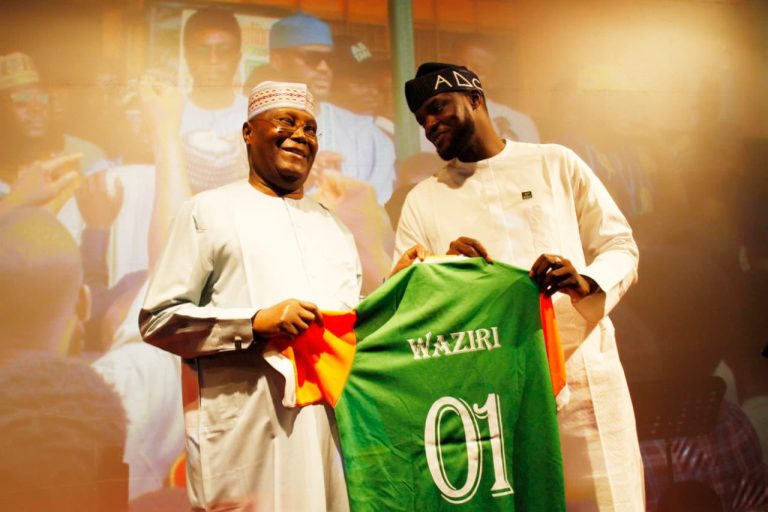
Receiving him into the party, APC National Vice Chairman for the North-East, Comrade Mustapha Salihu, said the defection carried deep political significance, describing it as evidence that Nigerian politics is no longer bound by rigid divisions.
“Today is one of my happiest days. This young man has seen the policies and programmes of the Tinubu administration and decided to align with them,” Salihu said, while assuring Abba of equal treatment and opportunities within the APC.
Senator Barau congratulated Abba, noting that party leaders viewed the move as a major addition to the APC’s efforts to strengthen its base ahead of the 2027 general elections. He described the decision as courageous, thoughtful and rooted in belief rather than family ties.
“You have taken a decision based on ideology. You did not come here because of your father. You came because you believe in President Bola Ahmed Tinubu, his ideology and the Renewed Hope Agenda,” Barau said.
He revealed that Abba had been closely monitoring political developments from the United States and was particularly impressed by the administration’s reforms and engagement strategies, which ultimately influenced his return to Nigeria and decision to join the APC.
A presidential aide, Alhaji Mahmoud Abdullahi, also welcomed Abba, assuring him of President Tinubu’s support and acceptance within the party.
“Just like Atiku, Tinubu is also your father. Your decision is like returning home. You and your coordinators have a future in this party,” Abdullahi said.
Representing Abba’s political group, Kano State Coordinator Hon. Mubarak Musa described the defection as a calculated political move, stressing that their operations would now be coordinated under Senator Barau’s leadership.

“We have worked round the clock for our former platform. We will double our efforts and deliver for the APC in 2027,” Musa said, affirming Senator Barau’s role as their political leader and a key figure in the party’s northern structure.
At the gathering, Abba’s political movement, Haske Atiku, was formally rebranded as the Haske Bola Tinubu Organisation, marking a full political realignment as preparations begin for the 2027 elections.
What you should know
Abubakar Atiku Abubakar’s defection is politically symbolic, given his close ties to former Vice President Atiku Abubakar, a leading opposition figure.
His move to the APC highlights ongoing realignments ahead of the 2027 elections and reflects efforts by the ruling party to consolidate support, particularly in the North.
While Abba insists his decision is driven by ideology and confidence in President Tinubu’s leadership, the development is expected to deepen debates around party loyalty, generational politics and shifting power blocs within Nigeria’s democratic landscape.