The Academic Staff Union of Universities (ASUU), Bauchi Zone, has expressed deep concern over what it described as the Federal Government’s declining commitment to resolving long-standing issues affecting Nigeria’s public universities.
The union cautioned that another nationwide strike may soon be unavoidable if urgent measures are not taken.
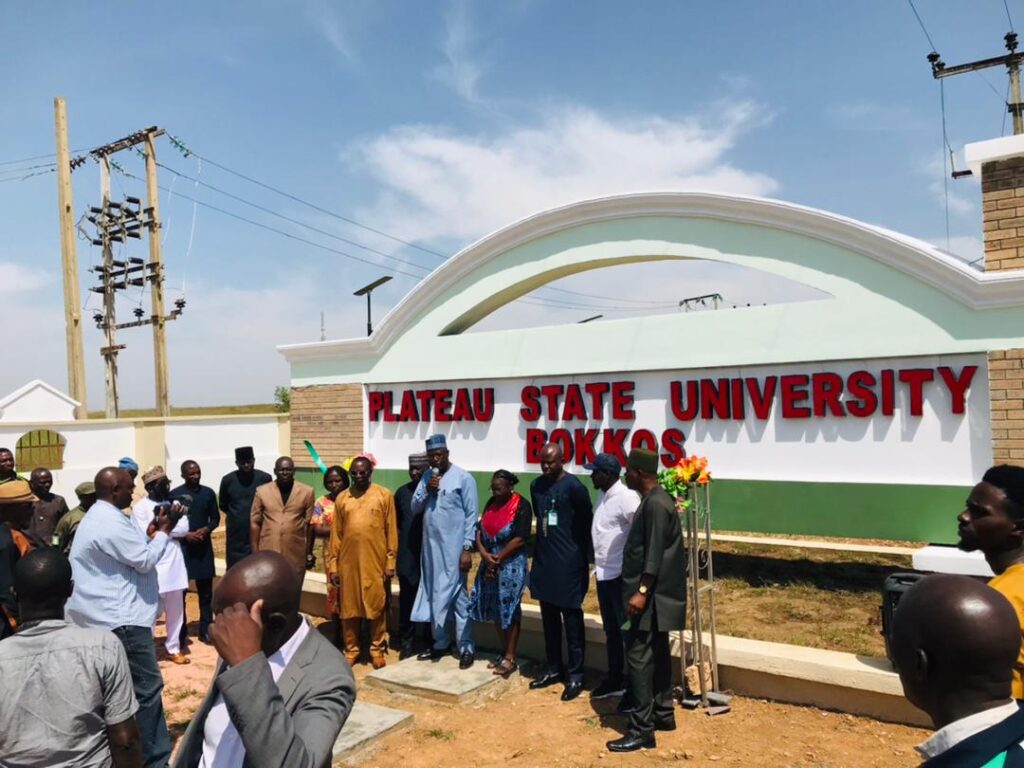
During a press conference at Plateau State University (PLASU), Bokkos, on Saturday, November 15, 2025, the zonal coordinator, Timothy Namo, criticised the government’s handling of negotiations since ASUU suspended its two-week warning strike declared on October 13, 2025. According to him, despite the suspension, the government has shown little interest in addressing the critical concerns raised by the union.
Namo recalled that ASUU called off the warning strike on October 21 after an emergency meeting of its National Executive Council (NEC). He said the union noted a strong wave of support from students, labour groups, the media, the National Assembly, and the wider Nigerian public. The suspension, he added, was meant to create an enabling environment for meaningful dialogue and swift resolution of contentious issues.
However, Namo lamented that “barely one week to the expiration of the four-week window given to the government, nothing substantial has been achieved”. He explained that the NEC meeting held from November 8 to 9 at Taraba State University rejected the salary increment proposed by the government, dismissing it as “a drop in the ocean” and insufficient to curb the ongoing brain drain that continues to weaken Nigerian universities.
While noting that some non-monetary aspects of renegotiation had recorded progress, he stressed that the most important issues—improved salaries and adequate working conditions—remain largely unresolved. He further criticised the attitude of certain government officials, describing their conduct as a deliberate attempt to undermine ongoing negotiations.
“There is no sufficient evidence from the government’s response so far to suggest that education is a priority in Nigeria and that the government truly desires to avert a crisis in the universities,” he said.
Namo condemned the partial payment of promotion arrears dating back to 2017 and the recent release of third-party deductions, arguing that these small gestures fall far short of rebuilding trust between lecturers and the government.

ASUU also challenged government claims of low revenue, citing evidence of increased allocations to both federal and state governments. According to the union, states received ₦3.92 trillion in 2022 and ₦5.81 trillion in 2024, while the Federal Government received ₦3.42 trillion in 2022 and ₦4.65 trillion in 2024—representing increases of over 62 per cent and 70 per cent, respectively.
Namo said these figures prove that “it is not lack of funds but lack of political will and misplacement of priorities that make education suffer in Nigeria”.
The union appealed to traditional rulers, civil society groups, student associations, the Nigeria Labour Congress, and the National Assembly to intervene and prevent another shutdown of academic activities across the country. Namo urged the government to take advantage of the remaining days in the negotiation period, warning that only massive investment in education can safeguard Nigeria’s future.
ASUU had initially suspended its two-week warning strike in October 2025 after receiving renewed assurances from the Federal Government and the National Assembly that its demands would be addressed.
What You Should Know
ASUU says the Federal Government has failed to take meaningful steps toward resolving major issues in the university system, especially salary adjustments and improved working conditions.
With only days left in the negotiation window, the union warns that a nationwide strike may soon be inevitable. While the government cites funding challenges, ASUU insists the problem is not lack of resources but a lack of political will.
The tension comes barely weeks after ASUU paused a warning strike based on assurances that now appear unfulfilled.