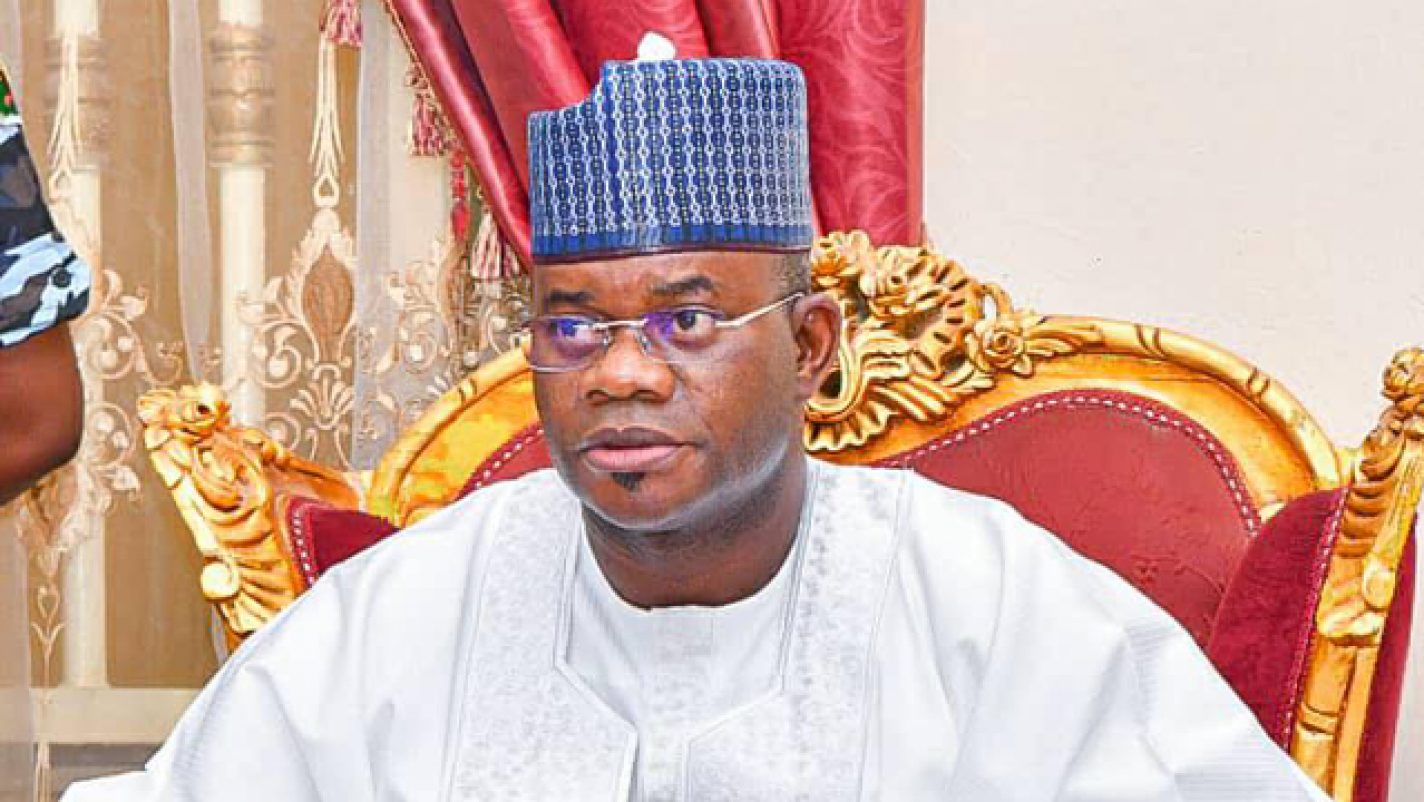
The Court of Appeal in Lagos has reversed a lower court ruling and reinstated an interim forfeiture order granted to the Economic and Financial Crimes Commission (EFCC) over 14 properties linked to Kogi State Governor Yahaya Bello.
This judgment clears the path for the anti-graft agency to move forward with a final forfeiture application concerning the disputed assets, which include properties in Lagos, Abuja, and even Dubai.
The verdict, delivered virtually on Wednesday by Justice Yargata Nimpar on behalf of a unanimous panel, set aside a Federal High Court decision that had earlier struck out the EFCC’s case. Justice Nimpar held that the trial judge erred in applying Section 308 of the 1999 Constitution — a provision that grants sitting governors immunity from civil and criminal prosecution — to block the temporary seizure of assets suspected to be linked to unlawful activity.
According to Justice Nimpar, the immunity clause does not cover assets believed to be proceeds of crime, especially when such assets are subject to ongoing investigations and preservation efforts pending judicial determination.
Justices Danlami Senchi and Paul Bassi concurred with the ruling, emphasizing that the lower court should not have dismissed the case but should have proceeded to evaluate whether the properties should be permanently forfeited to the federal government.
The case dates back to February 2023, when Justice Nicholas Oweibo of the Federal High Court, Lagos, granted the EFCC an interim forfeiture order. The agency had argued — through senior advocate Rotimi Oyedepo — that the 14 assets were reasonably suspected to be proceeds of criminal activity. The court not only allowed the temporary seizure but also mandated the EFCC to publish the order in two national newspapers and invite anyone with a vested interest to challenge it.
Shortly after the publication, Governor Bello filed a notice challenging the forfeiture and sought to vacate the order. His legal team argued that the properties were purchased before he assumed office as governor and could not have been bought with public funds. They invoked Section 308 of the Constitution to argue that the governor was shielded from such proceedings and accused the EFCC of lacking the jurisdiction to act while he remained in office.
The governor’s lawyers further challenged the application of the Proceeds of Crime Act, 2022, saying it could not be retroactively applied to properties allegedly acquired before the law came into force. They also cited a Kogi State High Court order that restrained the EFCC from investigating state accounts and claimed the Federal High Court in Lagos lacked jurisdiction, as the assets were located in Abuja, Kogi, and Dubai, while the governor resides in Lokoja.
In response, the EFCC insisted that no court had stopped it from fulfilling its constitutional mandate and maintained that the properties — including a high-end apartment in the Burj Khalifa, Dubai — were bought with illicit funds. The agency also sought the forfeiture of ₦400 million allegedly tied to the same investigation.
While the forfeiture order was initially granted by Justice Oweibo in February 2023, he later reversed the ruling in April of the same year. The judge concluded that Section 308 of the Constitution shielded the governor from any form of civil or criminal legal process and thus ruled that the court lacked the authority to hear the matter, striking out the case entirely.
Unhappy with the ruling, the EFCC approached the Court of Appeal to overturn the decision and reinstate the interim forfeiture order. In its virtual judgment, the appellate court sided with the EFCC, stating that the lower court had a duty to proceed with the forfeiture proceedings rather than prematurely dismissing the case.
The appellate court dismissed Bello’s preliminary objection, found no merit in his arguments, and revalidated the EFCC’s authority to pursue the preservation of suspected illicit assets. With the ruling, the EFCC is now empowered to proceed with a final forfeiture hearing, potentially paving the way for permanent seizure of the properties.
What You Should Know
The Court of Appeal has restored the EFCC’s interim forfeiture order over 14 properties allegedly linked to Kogi State Governor Yahaya Bello. The ruling clarifies that a sitting governor’s constitutional immunity does not extend to assets suspected to be proceeds of crime.
The EFCC can now move forward with efforts to permanently seize the properties, which include high-value assets in Nigeria and Dubai.