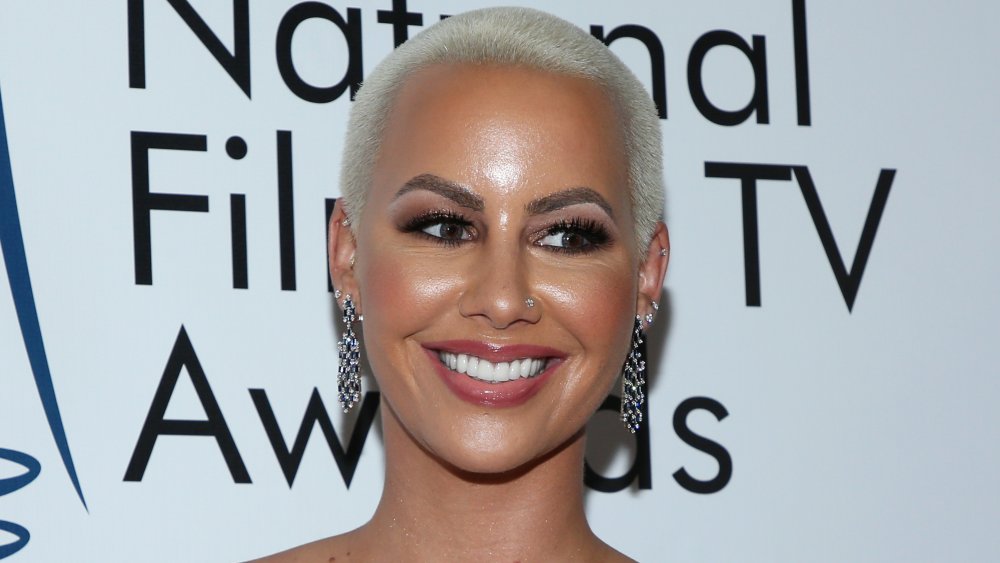
Model and political activist Amber Rose has mounted a vigorous defense of rapper Nicki Minaj following criticism over Minaj’s public support for President Donald Trump, arguing that her friend has every right to express political opinions without facing accusations of bigotry.
Speaking to TMZ, Rose praised Minaj’s appearance at the conservative AmericaFest conference over the weekend, where the “Super Bass” artist made a surprise appearance alongside Rose herself, who was in conversation with Erika Kirk. Rose’s comments came as Minaj faces renewed scrutiny from segments of her fanbase—known as the Barbz—particularly those in the LGBTQ+ community who view Trump’s policies as hostile to their interests.
“I think she did a great job, an amazing job,” Rose told reporters. “We live in a free country. She has a right to her own political opinion just like everyone else does.”
The defense marks the latest chapter in what has become an unlikely political alliance between hip-hop figures and conservative politics. Rose herself underwent a highly publicized political transformation in 2024, transitioning from her previous associations to become a vocal Trump supporter—a shift that culminated in her speaking at the Republican National Convention ahead of the November presidential election.
At AmericaFest, Minaj delivered effusive praise for the Trump administration, calling the president “handsome” and “dashing” while describing Vice President JD Vance as “the assassin” in remarks directed at young men in attendance. “Dear young men, you have amazing role models like our handsome, dashing president, and you have amazing role models like the assassin JD Vance, our vice president,” Minaj said from the stage.
Rose dismissed concerns that such endorsements could alienate Minaj’s substantial LGBTQ+ following, pushing back forcefully against what she characterized as mischaracterizations of their political positions.
“She didn’t say anything wrong,” Rose stated emphatically. “She didn’t say anything about the LGBTQ+ community at all. Why do people think anyone over there is homophobic?”
To bolster her argument, Rose cited her own personal relationships. “I’m not homophobic; my assistant has been with me for 11 years; he’s Black and gay. I have a bunch of trans friends—so does Nicki,” she said, adding, “I don’t know why people twist our words or think because we endorse Trump that we just hate gay people and trans people. That’s just not true.”
The friendship between Rose and Minaj stretches back to the 2000s, predating both women’s rise to mainstream prominence. That longstanding personal bond appears to have survived—and perhaps strengthened through—their parallel political evolutions.
Minaj’s increased political activism extends beyond domestic politics. In recent months, the rapper has voiced opposition to what she describes as persecution of Christians in Nigeria, advocacy that led to her speaking at a United Nations event in November. Her AmericaFest appearance and interview with Kirk represent her most explicit embrace of conservative American politics to date.
The controversy highlights ongoing tensions within entertainment communities as some prominent figures break with industry orthodoxy to support Trump. For artists with diverse fanbases—particularly those that include significant LGBTQ+ representation—such political alignments present complex challenges in maintaining audience loyalty while exercising personal political expression.
Rose’s defense underscores a recurring theme among Trump-supporting entertainers: the insistence that conservative political views don’t necessarily conflict with support for LGBTQ+ rights, despite concerns from advocacy groups about the administration’s policy positions on transgender rights, same-sex marriage protections, and other issues affecting the community.
As the Trump administration continues its second term, the cultural ripples of celebrity endorsements—and the backlash they generate—seem likely to remain a flashpoint in American political discourse.
WHAT YOU SHOULD KNOW
Amber Rose is defending Nicki Minaj’s right to support President Trump without being labeled homophobic, following backlash from LGBTQ+ fans. Rose argues that political endorsement doesn’t equal bigotry, pointing to both women’s personal friendships with LGBTQ+ individuals.
The controversy underscores growing tensions when entertainers with diverse fanbases—particularly those including substantial LGBTQ+ communities—publicly align with conservative politics that some view as contrary to those communities’ interests.
Two high-profile entertainers are challenging the assumption that supporting Trump automatically means opposing LGBTQ+ rights, though critics remain skeptical given the administration’s policy record on such issues.