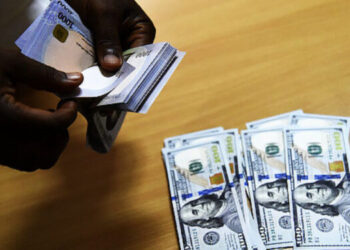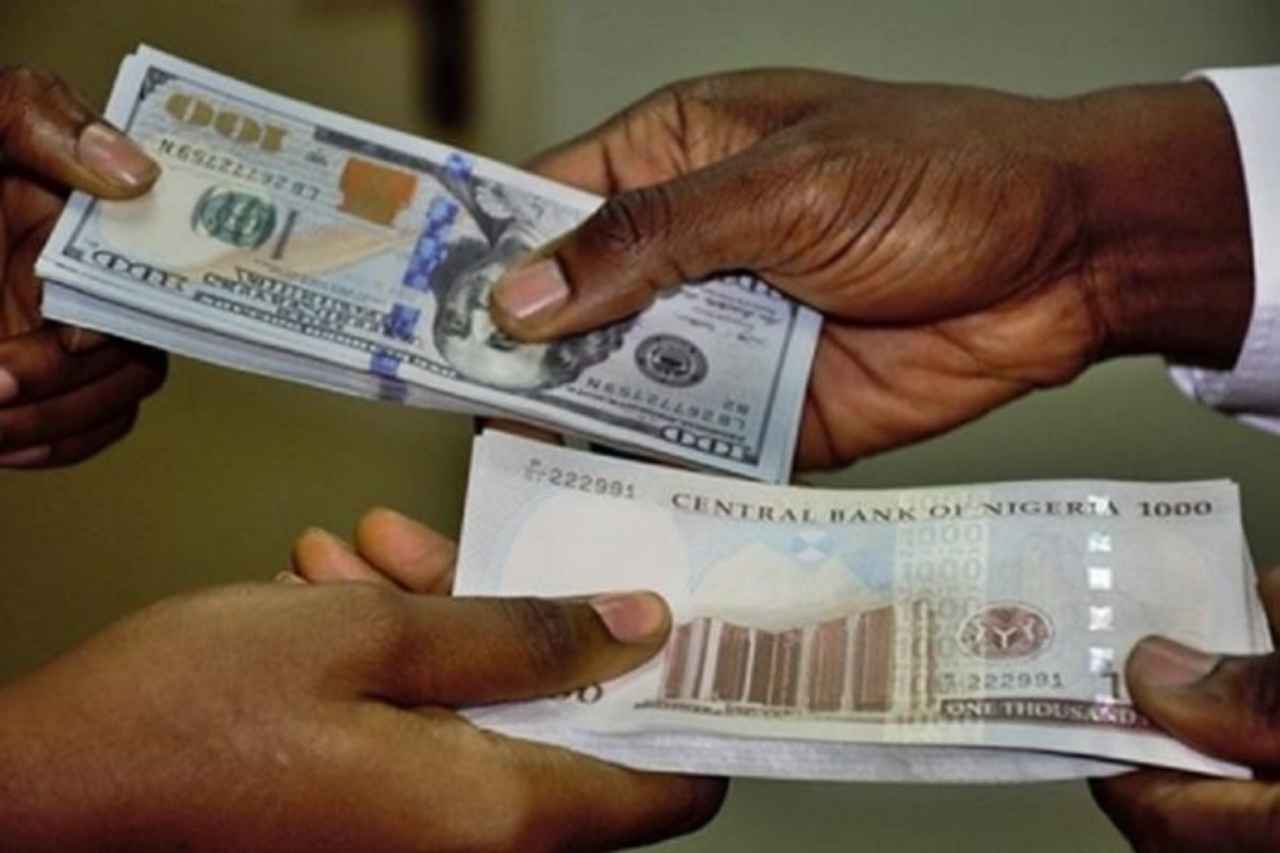
The naira eased into the new trading week on a familiar footing, opening at approximately ₦1,326.84 to the US dollar on the Nigerian Foreign Exchange Market (NFEM). Monday’s data showed a figure that keeps the official window comfortably stronger than the country’s stubborn parallel market.
At street-level currency stalls and Bureau de Change (BDC) counters across the country, the picture was markedly different. Dollars were changing hands at roughly₦1,380 on the buy side and ₦1,390 on the sell side, a level that mirrors where the informal market closed out the previous week a sign that, for now at least, the black market has settled into a temporary holding pattern rather than the sharp swings of past months.
Do the math, and the divergence between Nigeria’s official and unofficial currency windows becomes stark. Subtracting the NFEM rate of ₦1,326.84 from the parallel market’s selling rate of ₦1,390 leaves a gap of roughly ₦63.16 per dollar, a premium that continues to underscore just how differently the naira is priced depending on where, and how, a transaction happens.
For ordinary Nigerians navigating the parallel market, the practical implications are immediate. A trader looking to buy $100 at the prevailing street rate would need to part with approximately ₦139,000, while a bigger transaction, say $1,000, would set a buyer back by around ₦1.39 million.
On the flip side, someone looking to offload dollars would fare slightly worse relative to the sell rate: cashing out $100 at the parallel market’s buying rate of ₦1,380 would fetch only about ₦138,000, a reminder of the spread BDC operators and informal dealers routinely pocket between what they pay for dollars and what they charge for them.
Monday’s figures are not an outlier. Over recent trading sessions, the naira has shown a degree of consistency rarely associated with its recent history. Official NFEM rates have largely clustered within a tight ₦1,320 to ₦1,330 band, while the parallel market has hovered stubbornly close to the ₦1,390 mark.
Analysts tracking the currency say this steadiness, however modest, suggests the local FX market may be finding a temporary equilibrium after a turbulent stretch of volatility in previous quarters.
That relative calm is being attributed in large part to the interplay of dollar liquidity conditions and the Central Bank of Nigeria’s (CBN) ongoing interventions, which have been aimed squarely at narrowing the gap between the official and parallel windows and restoring greater confidence in the regulated market.
The NFEM, unlike the parallel market, reflects transactions conducted through licensed, regulated channels banks and authorized dealers operating under the CBN’s framework whereas rates at BDCs and informal dealers are shaped more directly by the everyday forces of demand and supply, often amplified by speculation and sentiment.
As trading resumes, market watchers say several familiar variables will determine whether the naira can sustain its recent poise. Chief among them:
- Foreign exchange liquidity—the availability of dollars within the official market remains the single biggest swing factor for the naira’s trajectory.
- Crude oil earnings—as Nigeria’s principal source of foreign exchange, oil revenue continues to underpin the CBN’s capacity to defend the currency.
- External reserves—the health of the country’s reserve buffer will shape how much firepower the apex bank has to intervene when pressure mounts.
- Diaspora remittances—a growing and increasingly vital channel of dollar inflows outside the oil sector.
- Foreign portfolio and direct investment—renewed investor confidence could ease demand pressure on the parallel market.
Beyond these fundamentals, analysts note that forthcoming monetary policy decisions and the day-to-day rhythm of official NFEM trading will remain closely watched signals.
For now, businesses and investors alike are left assessing the same question that has framed much of the naira’s story in 2026: whether this fragile stability can hold, or whether it is merely the calm before the next bout of pressure on Africa’s most-watched currency.
WHAT YOU SHOULD KNOW
The naira held steady this week, with the official rate at ₦1,326.84/$ and the parallel market at ₦1,380/₦1,390, but the roughly ₦63 gap between the two markets remains the real story.
Until dollar liquidity improves through oil earnings, remittances, and investment inflows, this two-tier pricing will persist, and Nigerians will keep paying a real premium for dollars outside the official window.