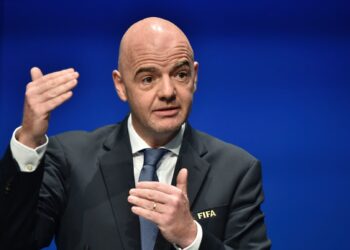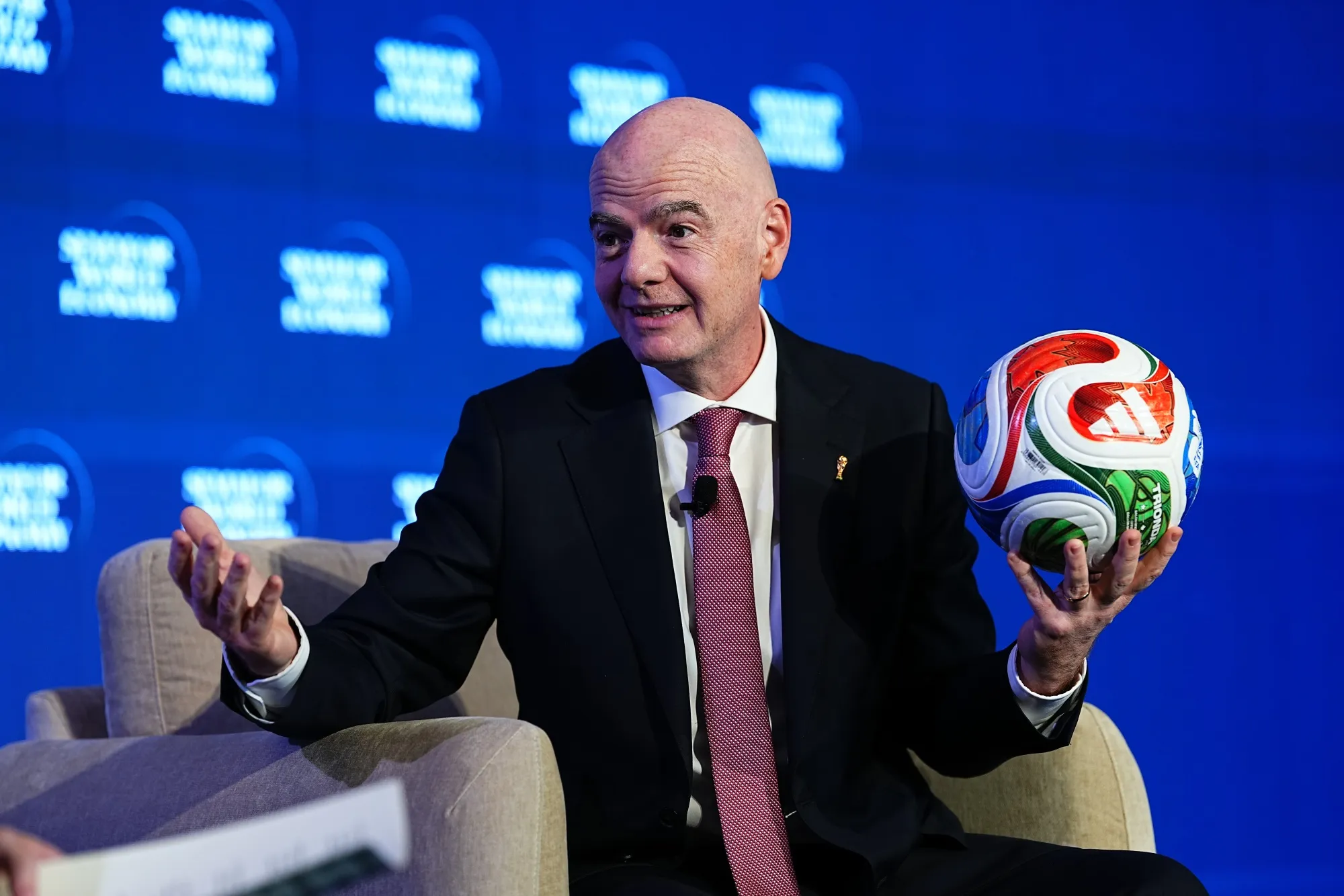
Gianni Infantino’s push for a third term as FIFA president suffered another significant blow on Thursday, as the French Football Federation (FFF) formally announced it would not back his candidacy in the election scheduled for March 18, 2027, in Rabat, Morocco.
FFF president Philippe Diallo delivered the news personally, telling reporters that the trust placed in the FIFA president had been broken and that the way French football’s governing body envisages the running of world football no longer corresponds with the way it is being conducted. The decision, Diallo said, was taken unanimously by the FFF’s executive committee.
Crucially, this is not a reversal born of long-standing skepticism; it is an about-face. Diallo explained that France had initially been convinced by Infantino’s bid to succeed himself, but that “from July onwards, the reasons that led us to support his candidacy have been overturned,” and the conditions for that support “were no longer met.”
At the heart of the federation’s reversal is Infantino’s now-shelved proposal to sell a stake in FIFA’s flagship competitions to outside investors. The plan, unveiled in late July, would have allowed private investors to acquire stakes in a company created under the FIFA Forward Enterprise (FFE) initiative, encompassing rights to the World Cup and Club World Cup.
Diallo was blunt about how that plan was handled, saying it was “carried out without any consultation or information,” and that he had personally opposed the proposal “both in form and substance.” He added that the FFF welcomed the fact that “pressure exerted by several confederations had led to the withdrawal of this proposal.”
Even though the plan has been abandoned, the FFF made clear that its withdrawal does not resolve the underlying governance concerns.
The federation stated that “a project with such a significant impact on the future of football could not be envisaged without comprehensive information, in-depth consultation, and a fully transparent decision-making process,” concluding that “FIFA’s governance does not live up to the standards that football represents.”
France’s move fits into a rapidly widening pattern of dissent. Beyond the countries already named Belgium, Italy, Scotland, Sweden, and Wales, England’s Football Association and the Italian Football Federation are among the European FIFA members to have withdrawn their backing for Infantino, and Diallo indicated the French decision was coordinated with a broader continental push. He noted that France’s stance “forms part of a wider movement within UEFA.”
The pressure isn’t confined to Europe. UEFA, the Asian Football Confederation (AFC) and North America’s CONCACAF have all called for change at the top of FIFA and are seeking a credible alternative to Infantino. The dispute has also escalated into legal territory: it emerged last month that UEFA is pursuing a criminal complaint against Infantino.
Diallo also invoked France’s institutional and sporting standing to justify the federation’s right to weigh in, saying, “We have a historical right to intervene; France is one of FIFA’s founding members. We also have a sporting right to do so: for the past 10 years, France has been one of the top three nations in the FIFA rankings.”
For now, Infantino remains the only declared candidate for March’s vote, but speculation over a challenger is intensifying. CONCACAF president Victor Montagliani is widely seen as a likely challenger to the incumbent, though no formal declaration has been made.
Diallo signaled that France intends to move from criticism to concrete proposals. He said that at the next UEFA Executive Committee meeting, “in a few days, a framework for our contribution must be established to determine what we want to achieve after early March regarding the leadership of FIFA.”
Infantino, who succeeded Sepp Blatter as FIFA president in 2016, now faces a rare and mounting coalition of dissent from across multiple confederations just six months before voters decide his fate a dramatically different landscape than the one he faced when first securing France’s backing at the end of June.
WHAT YOU SHOULD KNOW
France’s withdrawal of support for Infantino isn’t an isolated snub; it’s the latest domino in a growing European and global revolt sparked by his mishandled plan to privatize World Cup rights.
With Belgium, Italy, Scotland, Sweden, Wales, and now France abandoning him, and UEFA, AFC, and CONCACAF all pushing for change, Infantino heads into March’s election as the sole declared candidate but with his authority visibly crumbling.
This is no longer scattered criticism; it’s a coordinated institutional break in trust, and the real question now isn’t if Infantino will face resistance, but whether a serious challenger emerges before Rabat.