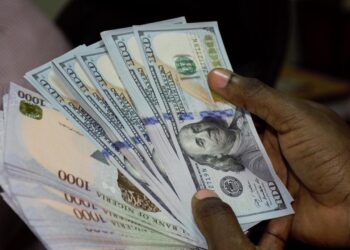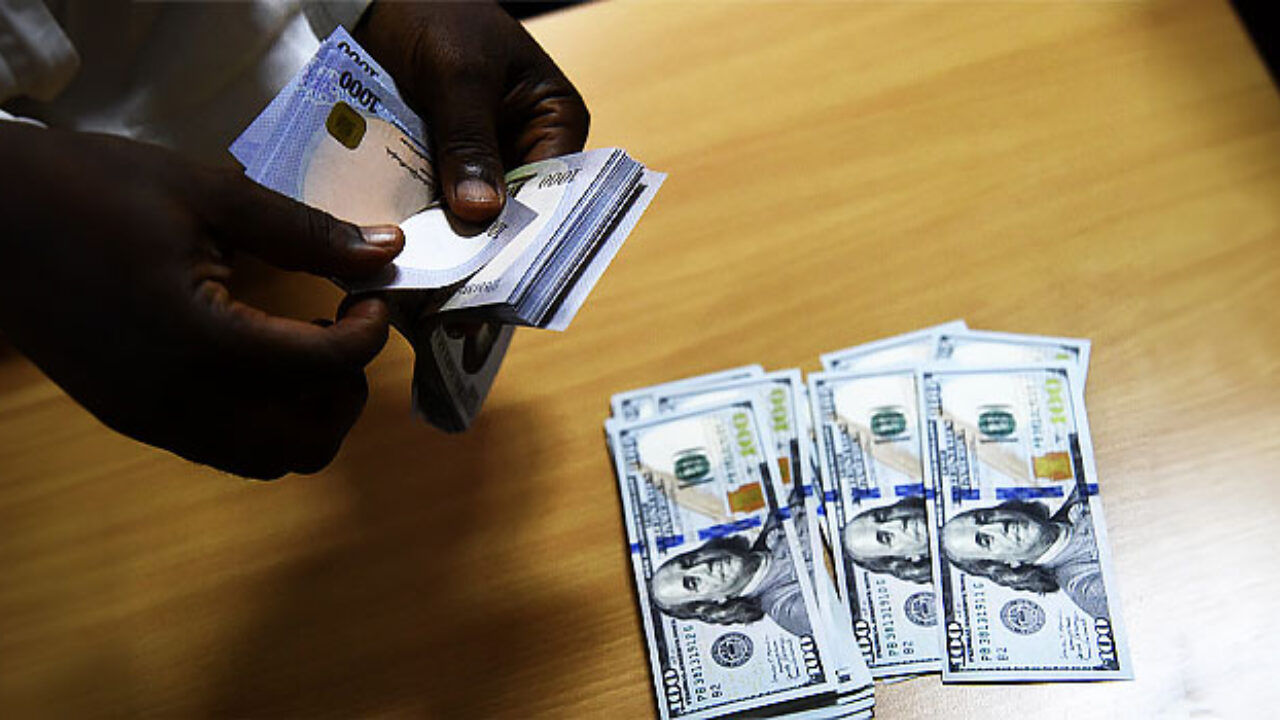
The Nigerian naira closed out the trading week broadly unchanged, holding within its now-familiar ₦1,300 band against the US dollar as the country’s dual exchange-rate system continued to show a persistent, if narrowing, gap between official and street-level pricing.
Early Friday indications put the dollar at ₦1,349.06 on live-tracking platforms, a level consistent with the relative calm that has characterized the official window in recent sessions. That figure sits slightly above the last confirmed rate from the Nigerian Foreign Exchange Market (NFEM), which pegged the dollar at ₦1,344.45 on Thursday.
Meanwhile, on the streets, the picture remains less forgiving for ordinary Nigerians. Data from Aboki Forex put the parallel-market rate at approximately ₦1,405 per dollar as of Friday morning, a premium of roughly ₦56 over the live official indication and about ₦60 above Thursday’s confirmed NFEM print.
The official market has had a mildly encouraging few days. On August 18, the naira firmed to ₦1,343.32 per dollar, a move attributed to reports of improved dollar liquidity feeding into the interbank space. That momentum, however, has not been mirrored on the parallel market with the same consistency.
Black-market dollar rates told a choppier story: ₦1,410 on August 19, easing to roughly ₦1,404 by August 20, before ticking back up to ₦1,405 heading into the weekend. The net effect is a parallel market that has essentially traded sideways over the past several days, even as the official rate posted incremental gains.
Under the current framework, the CBN calculates the NFEM rate using a volume-weighted average of transactions executed on any given day. That average becomes the officially published rate, a methodology designed to reflect actual trading activity rather than a fixed peg, though it can still diverge meaningfully from what Nigerians encounter when they actually try to buy dollars.
Despite the day-to-day noise, analysts and market watchers would likely note that today’s spread, a roughly ₦56–₦60 premium in the parallel market, represents relative stability compared with some of the wider gaps seen in past trading cycles.
Still, the persistence of any gap at all continues to raise questions about liquidity, market unification, and the confidence gap between the official window and the cash market.
For everyday Nigerians, the distinction is far from academic. Anyone converting naira for international travel, school fees abroad, import payments, subscription services, or remittances is likely to encounter a rate that differs from both the headline live figure and the official NFEM print.
The rate actually paid can hinge on:
- The specific bank or Bureau de Change (BDC) handling the transaction
- Geographic location
- The size of the transaction
- Broader market conditions at the time of the trade
With rates capable of shifting through the trading day as supply, demand, and dollar liquidity fluctuate, the message from currency watchers remains consistent: Friday’s headline figures offer a snapshot, not a guarantee, and Nigerians transacting in dollars should expect some variance from the numbers reported in the morning.
WHAT YOU SHOULD KNOW
The naira held steady near ₦1,349/$ officially this week, but the real takeaway is the persistent ₦56–₦60 gap with the parallel market, where dollars still cost around ₦1,405.
That gap means the “official rate” you see in headlines isn’t what you’ll actually pay; your real cost depends on your bank, BDC, location, and transaction size, so always confirm the live rate before converting.