The naira held steady at about ₦1,384/$1 on the official NFEM on Thursday, even as parallel-market dealers continued pricing the dollar higher, data from currency traders show.
At the NFEM window, the platform the Central Bank of Nigeria (CBN) recognizes as the country’s sole official foreign exchange market, the naira has moved only marginally over the past two weeks.
Official figures from CBN-linked trackers put Thursday’s rate at roughly ₦1,384/$1, a slight softening from the ₦1,380.20 recorded a day earlier and the ₦1,378–1,382 band seen through much of last week. Earlier in the month, the naira had strengthened to as low as ₦1,370.33/₦1 on July 6, before drifting modestly weaker in subsequent sessions.
Analysts note that the CBN calculates the NFEM rate as a volume-weighted average of completed interbank transactions, meaning day-to-day swings tend to reflect shifts in transaction volume and the size of the central bank’s dollar interventions rather than sharp changes in underlying demand.
Interbank turnover has fluctuated significantly in recent sessions, with deal counts and total dollar volumes falling sharply on days when the CBN pulled back on liquidity injections into the market.
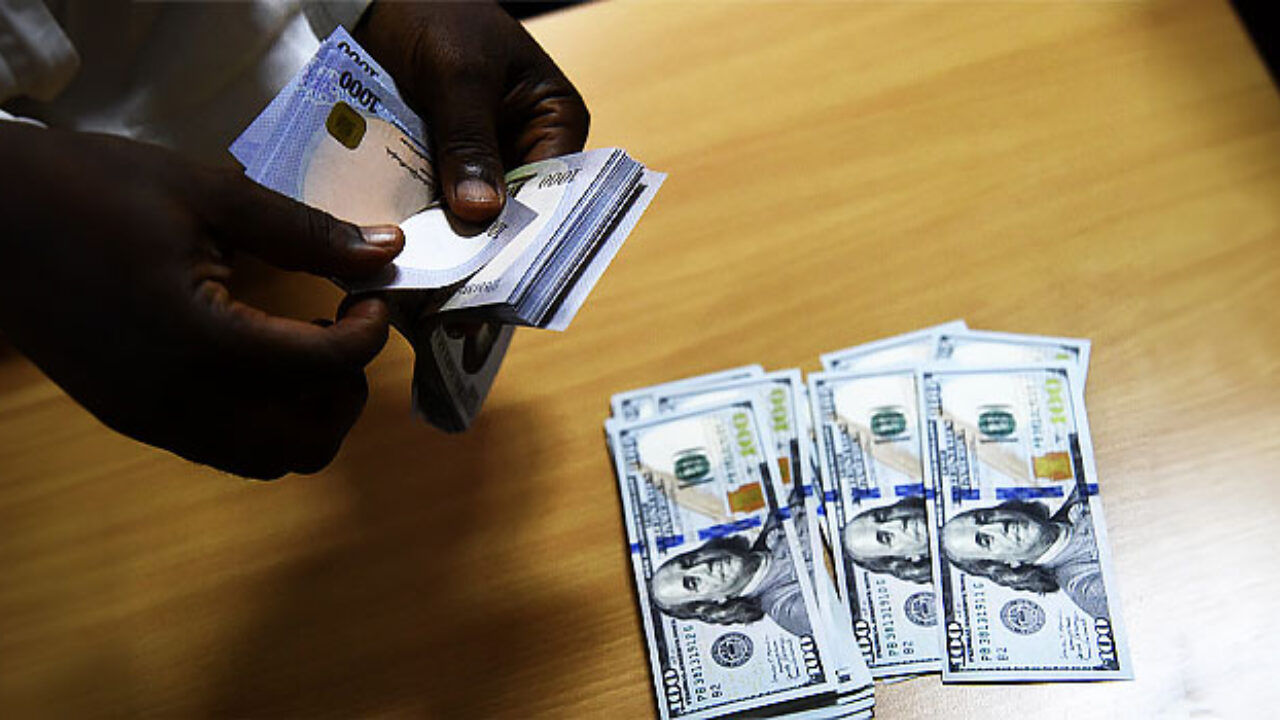
Away from the official window, street and bureau-de-change dealers in Lagos, Abuja, and Kano quoted the dollar noticeably higher on Thursday. Buying rates clustered around ₦1,408, while selling rates ranged from about ₦1,420 to as high as ₦1,425, depending on the source and location, according to multiple parallel-market trackers monitoring so-called “aboki” traders.
The spread between buying and selling quotes in the informal market, typically ₦7-₦12 per dollar, reflects the margin dealers charge to cover risk and turnover in relatively small-scale, cash-based transactions.
The premium between the official and parallel rates, now running somewhere between ₦24 and ₦40 depending on which parallel quote is used, remains far narrower than the gaps of several hundred naira per dollar that characterized the market in previous years, when multiple exchange-rate windows and tight CBN restrictions on FX access pushed black-market demand and pricing sharply higher.
Market watchers attribute the improved convergence to a mix of factors: steadier dollar supply from remittances and portfolio inflows, more consistent CBN participation in the official window, and broader confidence effects from the central bank’s ongoing unification and liberalization of the FX market.
Still, some analysts caution that seasonal import demand and cautious investor sentiment have kept the naira from strengthening further in the parallel segment, even as the official rate has held relatively firm.
The CBN continues to treat the NFEM as the country’s only official foreign exchange market, with rates there determined through the interbank system among licensed dealer banks.
The parallel market, by contrast, operates informally, with rates set by independent traders responding directly to street-level supply and demand, a segment the central bank does not regulate but which remains the practical point of access for many individuals and small businesses unable to source dollars through banks.
Because of this, foreign exchange rates can differ noticeably not just between the two markets but across banks, bureaus de change, and cities on any given day, shaped by transaction size, dealer margins, and local demand.
Market Rate:
Official NFEM ~₦1,384/$1
Parallel market (buying) ~₦1,408/$1
Parallel market (selling) ~₦1,420/$1
As the week draws to a close, traders and economists say they will be watching for further signals from the CBN, including the scale of dollar injections into the official window, for clues on whether the narrowing gap between Nigeria’s two currency markets will hold or whether renewed import and travel-season demand could put fresh pressure on the naira.
WHAT YOU SHOULD KNOW
The naira held steady near ₦1,384/$1 officially on Thursday, while the parallel market priced dollars between ₦1,408 and ₦1,420, a gap of roughly ₦24–40, far narrower than in past years.
Improved dollar liquidity and steadier CBN participation in the official market are helping close the historic divide between Nigeria’s official and black-market exchange rates, even as informal demand keeps a modest premium alive.