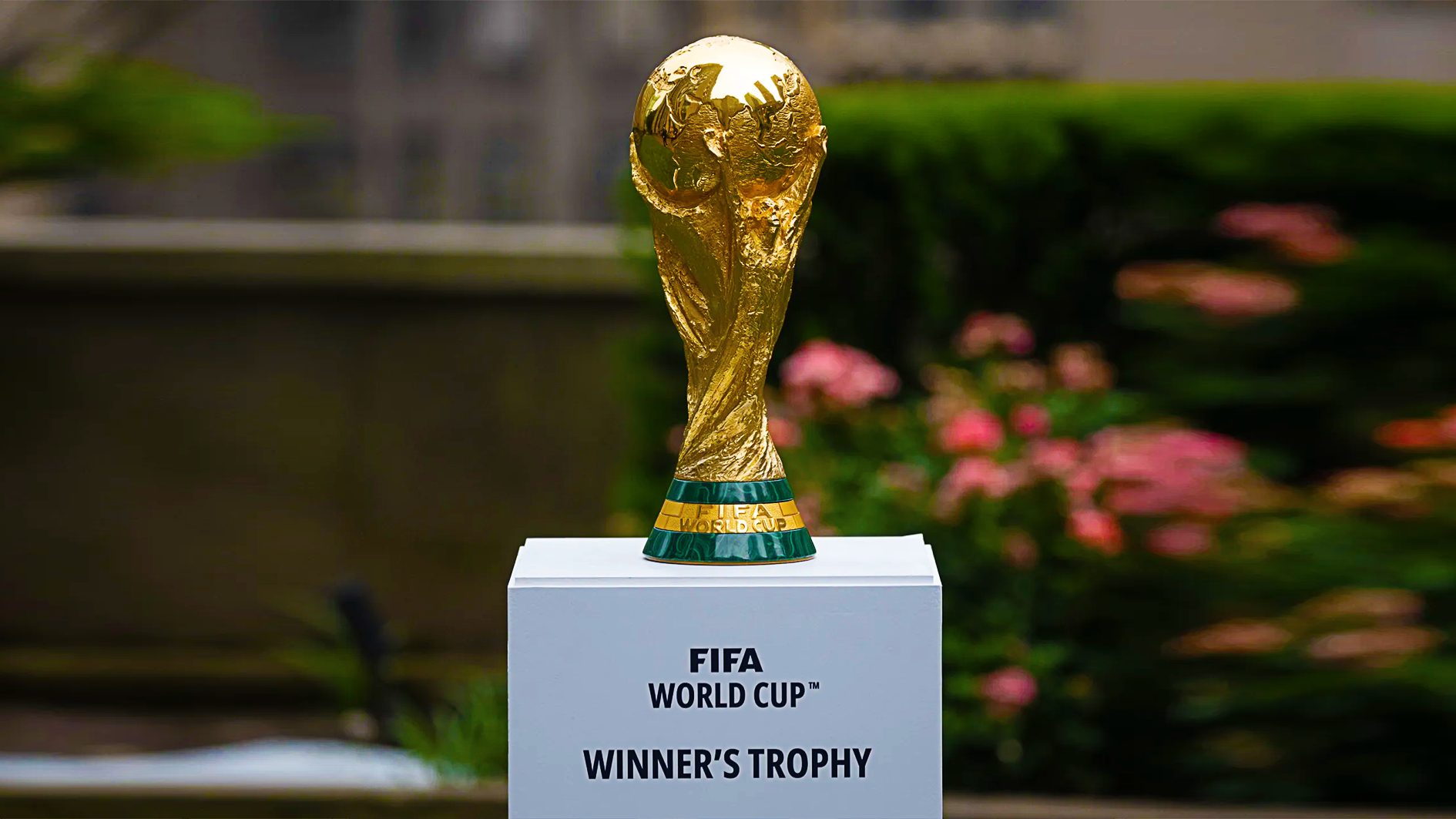
According to media reports, a proposal under consideration could turn the 2030 World Cup into the sport’s biggest tournament yet, with a 64-team field, nearly double the current line-up, just eight years after the last expansion.
The idea did not emerge from nowhere. The 64-team proposal was first raised at a FIFA Council meeting in March 2025 by Uruguay FA president Ignacio Alonso.
Later that year, CONMEBOL president Alejandro Dominguez publicly backed the proposal, calling it his “dream” and saying it would “unite the world, just once.” The timing is no accident. CONMEBOL is determined to celebrate the 100th anniversary of the World Cup by hosting as many games as possible on its continent.
That anniversary angle matters enormously. To mark the 100th anniversary of the first World Cup, held in Uruguay, three centenary matches will be played in Uruguay, Argentina, and Paraguay before the tournament officially gets underway in its three main host nations of Spain, Portugal, and Morocco.
Under the current 48-team blueprint, though, those South American nations would each stage just a single fixture, a symbolic gesture rather than a genuine hosting role.
Supporters of the expansion argue that a larger competition would allow the three South American nations to host full groups rather than single matches, giving Montevideo, Buenos Aires, and Asunción a meaningful stake in the centenary celebrations rather than a ceremonial one.
According to reports, when the proposal first gathered steam, the reaction inside FIFA was cautious. FIFA is duty-bound to consider proposals and ideas that are put forward by member associations, but a 64-team tournament is not something that is a policy priority for the current FIFA administration.
The suggestion of a 64-team World Cup would see almost a third of FIFA’s 211 member associations playing in the finals, making qualifying little more than a formality for the strongest sides while also flagging early resistance: UEFA and CONCACAF said they were opposed to another expansion.
That opposition has been voiced forcefully at the highest levels. UEFA President Aleksander Ceferin called the proposal “a bad idea” after it was first raised, saying “it is not a good idea for the World Cup itself, and it’s not a good idea for our qualifiers as well.”
By last autumn, reporting suggested the plan had lost steam altogether. French outlet RMC Sport indicated the proposal was no longer gathering the same momentum it enjoyed when CONMEBOL first raised it, with FIFA president Gianni Infantino reportedly showing little internal enthusiasm for enlarging the competition beyond its newly expanded 48-team format.
Those reports of a stalled proposal now look premature. In the days since, as the 2026 World Cup in the United States, Canada, and Mexico has reached its climax, Infantino has given the clearest signal yet that expansion remains firmly on the table.
Speaking to Swiss outlet Bluewin, Infantino said growing from 48 to 64 teams “is definitely an issue that will be examined and discussed in the relevant committees after this World Cup.”
Infantino’s reasoning leans heavily on the success of the current tournament. He said the World Cup needs to be organized “for the whole world, not just Europe and South America but effectively the entire world,” insisting every nation should be allowed to dream of participating and pointing out that nine out of 10 African teams reached the knockout stage this year compared with just five sides from Africa at the previous tournament.
He has also been unequivocal about the 48-team experiment itself: Infantino called expanding the 2026 World Cup to 48 teams “100 percent” the right decision, describing the new format as a “huge success.”
A 64-team tournament would likely feature 16 groups of four teams, with the top two from each group advancing to the knockout stage, pushing the total number of matches from 104 in 2026 towards well over 120.
The extra 16 places would most likely be filled by nations from Africa, Asia, and smaller European and North American countries that currently struggle to qualify, with proponents arguing this would accelerate football development in emerging regions and generate greater commercial revenue.
For all of Infantino’s openness, several structural hurdles stand in the way. Two confederations, CONCACAF and UEFA, have already laid out full qualifying schedules for the next World Cup cycle based on a 48-team field, and with CONCACAF’s 2030 qualifying set to begin in September 2027, any decision on expansion would need to come quickly.
And crucially, this remains Infantino’s opinion, not settled policy. FIFA has not endorsed the 64-team proposal, and there is no indication a decision is imminent; any change to the tournament format would ultimately require approval from the FIFA Council, the governing body’s main decision-making panel, and no timeline has been set.
WHAT YOU SHOULD KNOW
FIFA is seriously weighing a jump from 48 to 64 teams for the 2030 World Cup, driven by CONMEBOL’s push to mark the tournament’s centenary with fuller hosting roles for Uruguay, Argentina, and Paraguay, and Infantino has now reopened that door publicly. But nothing is decided.
UEFA and CONCACAF remain opposed; qualifying schedules for 2030 are already built around 48 teams, and any expansion still needs FIFA Council approval with no timeline set. This is a proposal under discussion, not a confirmed change.