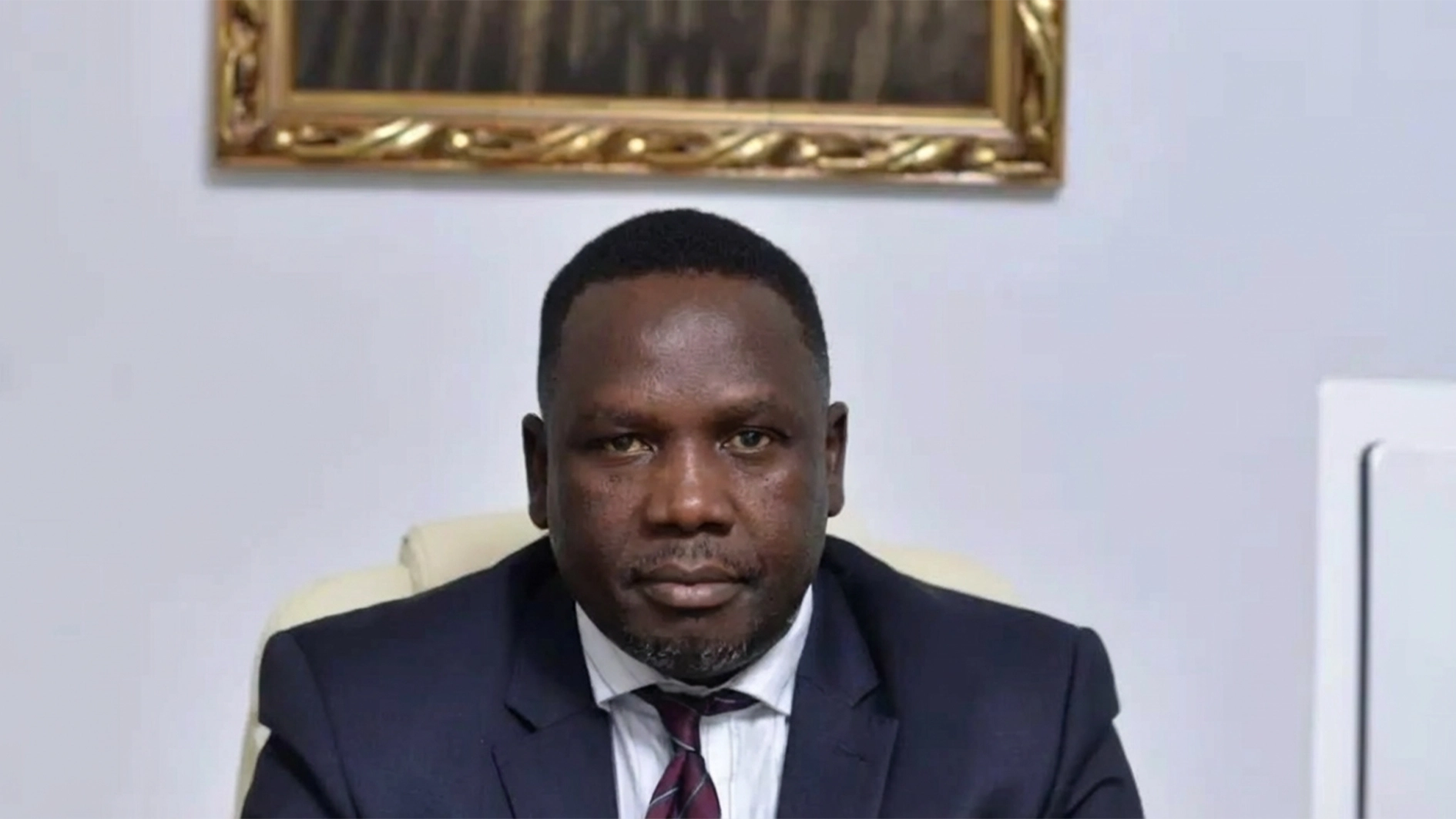
Daniel Bwala, Special Adviser to President Bola Tinubu on Policy Communication, has confirmed he is pursuing a defamation lawsuit against Al Jazeera in the United Kingdom, escalating a months-long dispute over his combative appearance on the broadcaster’s flagship “Head to Head” program.
Speaking on The Morayo Show, aired on MAP Studios, Bwala said the network had privately conceded fault over how it handled his interview with host Mehdi Hasan but balked when he demanded that the apology be made public.
“They apologized to me privately. I said they should put it on social media. They said they will not,” he said, adding that the refusal, he claimed, was rooted in concern for the credibility of Al Jazeera’s other programming, left him no option but to instruct solicitors in England to sue. “My advisers in England said it’s defamation of character,” he said, confirming that the matter is now before a UK court.
At the heart of Bwala’s grievance is arithmetic: he says the original sit-down with Hasan ran for one hour and thirty minutes, yet only 49 minutes made it to air. That gap, he argued, was not incidental trimming but a deliberate reshaping of the narrative in Hasan’s favor.
“The deeper point is that they cut out the parts where I was fact-checking him and the crowd was clapping for me and instead kept the parts where he was speaking and people were clapping for him,” Bwala said.
He also took issue with how Hasan deployed old footage during the interview, describing a pattern he called “cut and joined,” putting a question to him, letting him deny it, then rolling an archival clip of a past statement without giving him room to respond in context.
Compounding this, he said, was the removal of his own opening caveat: a line in which he’d warned Hasan upfront that he would deny questions straying outside the agreed scope of the discussion.
Leaving that remark on the cutting room floor, Bwala argued, created a misleading impression that his later denials were evasive rather than consistent with a position he’d staked out from the start.
The interview, which aired in March, went viral after Hasan repeatedly confronted Bwala with statements he had made while serving as a spokesperson for Atiku Abubakar’s 2023 presidential campaign, a period during which Bwala was a vocal critic of Tinubu, at one point even calling for the president’s arrest over corruption allegations.
Clips of Bwala responding “I never said that” to a string of Hasan’s questions circulated widely online, drawing both mockery and defenses from Nigerians reacting to the encounter.
Beyond the Al Jazeera dispute, Bwala used the platform to press a pointed argument about accountability for Nigeria’s persistent insecurity crisis.
He insisted that state governors, not just federal authorities, should bear responsibility for kidnappings occurring within their borders, since such crimes take place inside local government areas under their oversight. “Every kidnapping and abduction that takes place in any state of Nigeria holds that governor responsible,” he said.
The remarks land against a grim backdrop. In May, gunmen abducted roughly 32 people, including pupils and teachers from schools in the Oriire Local Government Area of Oyo State, an attack that later claimed the life of one victim, mathematics teacher Michael Oyedokun, who was killed in captivity.
Bwala pointed to the federal government’s Safe Schools Initiative, saying Abuja had already disbursed funds to states for measures like perimeter fencing and early-warning systems, and challenged Nigerians to ask their governors how that money had actually been spent.
He went further, alleging that some local government areas in Oyo State receive as much as ₦600 million a month in funds he said should be visibly channeled into primary healthcare, education, local security, and welfare programs. His prescription: regular public town hall meetings where residents can directly question council chairpersons on spending.
Bwala also used the appearance to address lingering questions about his return to the All Progressives Congress. He said he had quit the party in 2022 over unease that its Muslim-Muslim presidential ticket might marginalize Christians, particularly in the North.
Years later, he said, he concluded those fears hadn’t materialized, pointing to what he characterized as significant Christian representation in Tinubu’s appointments as a factor in his decision to rejoin.
His trajectory from APC defector to Atiku campaign spokesperson and Tinubu critic, to APC returnee following a meeting with the president at the Presidential Villa, and finally to his current post as Special Adviser on Policy Communication remains a recurring point of public scrutiny, one that seemed to hover in the background even as he sought to reclaim the narrative around his Al Jazeera appearance.
As of now, neither Al Jazeera nor Mehdi Hasan has issued a public response to Bwala’s claim that legal proceedings are underway in a UK court.
WHAT YOU SHOULD KNOW
Bwala isn’t just disputing a bad interview; he’s alleging that Al Jazeera privately admitted fault (cutting his 90-minute interview down to 49 minutes in a way that favored Hasan) but refused to say so publicly, which is why he’s now suing for defamation in a UK court.
That private-apology-versus-public-accountability gap is the crux of the story, and it’s still an unresolved legal claim that Al Jazeera and Hasan haven’t publicly responded to, so this remains one side of the account for now.