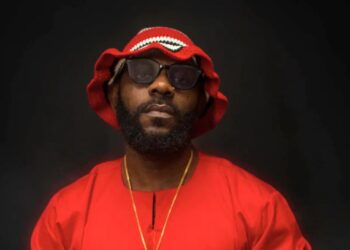
Twenty-six years after his mysterious disappearance, the fate of veteran gospel singer Dr. Remilekun Amos remains unknown, and his son, celebrated Zion gospel star Evangelist Lekan Remilekun Amos (Omo Dafidi), has now reopened the wound in an emotional podcast confession that has left fans reeling.
Speaking on the “Talk to B” podcast, hosted by Biola Bayo, the singer, also known for his viral TikTok sound “Woli Baali,” revisited the events of November 2000, when his father, a widely celebrated figure in Nigeria’s gospel music circuit, set out for what should have been a routine ministration engagement in Akure, the Ondo State capital, and never returned.
According to accounts corroborated by earlier reports, the elder Amos told family members he was traveling to Akure on November 4, 2000, apparently for a preaching and music engagement, a common undertaking for a man whose reputation as a gospel minister had made him a sought-after voice across churches and crusades in Nigeria. He was never seen or heard from again.
Twenty-six years later, nobody has been found, no explanation has surfaced, and no closure has come. “26 years counting now,” the singer said in the interview, his voice heavy with unresolved grief, invoking a Yoruba proverb to capture the peculiar agony of his situation: that a death, however painful, at least offers finality; a missing person offers none.
The disappearance did more than fracture a family; it altered the course of an entire musical dynasty. Dr. Remilekun Amos was not a fringe figure he was, by multiple accounts, a titan of Ilaje and Zion gospel music, a man who, though he never pastored a congregation of his own, was in constant demand as a guest minister across the country.
His son has spent the better part of two decades trying to walk in those same musical footsteps, releasing his debut tribute album in 2002, just two years after his father vanished, and continuing to release music that keeps his father’s memory alive.
Perhaps the most striking admission from the podcast appearance was not about the disappearance itself but about its intergenerational echo: the singer’s own children and grandchildren, whom he has never met and likely never will, have begun asking who he is. For a man who has spent 26 years without answers, having to construct those answers for his own children appears to be reopening a wound that time alone has not healed.
“No one can feel the pain more than the victim, which is me,” he said, a line that underscores a frustration familiar to families of missing persons everywhere: that public sympathy, however genuine, is no substitute for resolution.
This is not the first time the singer has spoken publicly about his father’s disappearance. For several years now, the family has organized annual remembrance events in his father’s honor, gatherings that have drawn prominent names in Nigerian gospel music, including appearances tied to milestones such as the 20th remembrance held in Lagos and a subsequent 21st edition relocated to the family’s hometown of Ilaje in Ondo State.
Nigeria has no shortage of unresolved missing-persons cases, many of which, like this one, never receive the sustained investigative attention that might bring closure to grieving families.
More than two and a half decades on, the disappearance of Dr. Remilekun Amos stands as a stark reminder of how such cases can linger indefinitely, leaving survivors to carry both grief and unanswered questions across generations.
For now, Evangelist Lekan Remilekun Amos says he will keep telling his father’s story not because he expects it to solve the mystery, but because, for his children’s sake, someone has to.
WHAT YOU SHOULD KNOW
Twenty-six years after gospel legend Dr. Remilekun Amos vanished en route to a ministration in Akure, his son Lekan Remilekun Amos has broken his silence, reminding the public that a disappearance without closure is its own unique form of grief, one that now stretches into a third generation as his children ask about a grandfather they’ve never known.