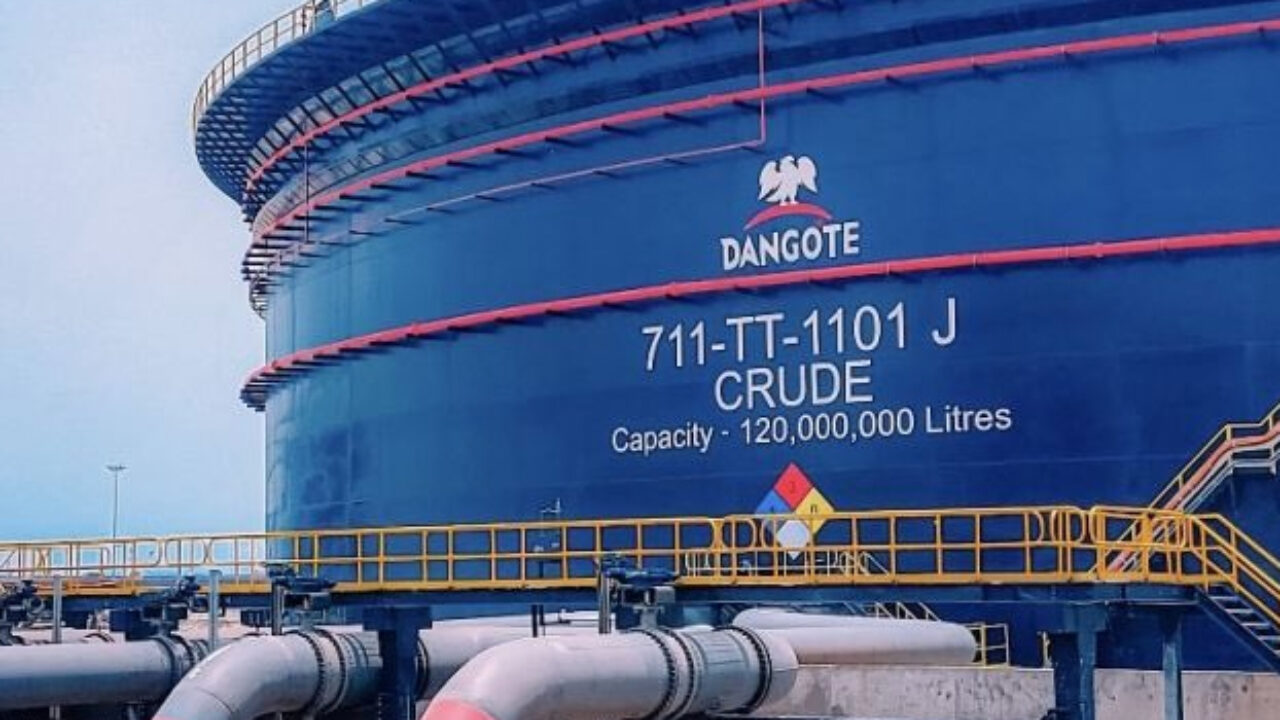
Dangote Petroleum Refinery has returned to court, filing a fresh suit at the Federal High Court in Lagos to nullify fuel import licences issued to NNPC Ltd. and several fuel marketers.
Court documents cited by Reuters confirm the filing, marking the refinery’s most aggressive legal move yet in its ongoing effort to reshape Nigeria’s downstream petroleum sector in its own image.
At the heart of the lawsuit lies a pointed legal argument: that the Nigerian Midstream and Downstream Petroleum Regulatory Authority (NMDPRA) acted unlawfully when it issued or renewed import permits to NNPC and private marketers.
Dangote’s legal team contends that Nigerian law permits fuel imports only when local supply is insufficient to meet domestic demand, a threshold the refinery insists is no longer being met, given its rapidly expanding output.
The refinery is also pressing a procedural argument with sharp teeth. It alleges that the newly issued import permits directly contravene an earlier court order requiring all parties to maintain the status quo while the matter remains before the judiciary.
If that allegation holds, it would mean a regulatory authority actively defied a sitting court order, a serious charge that could significantly strengthen Dangote’s hand in the proceedings.
What makes this legal salvo particularly striking is its timing. Data recently released by the NMDPRA shows that Nigeria’s petrol imports dropped sharply in the first quarter of 2026, as domestic supply from local refineries climbed to approximately 3.18 billion liters.
That figure represents a meaningful inflection point for a country that, for the better part of three decades, was almost entirely dependent on imported fuel due to the chronic underperformance of state-owned refineries.
Dangote’s argument, in essence, is that the numbers speak for themselves: if local refining capacity is surging, the legal and economic justification for mass fuel imports is rapidly evaporating. To continue issuing import licences in such an environment, the company argues, is not only unnecessary it is illegal.
For the refinery, which represents one of the single largest private investments in African industrial history, the stakes could not be higher. Its management has been unambiguous: the continued flood of imported fuel threatens the commercial viability of a facility that has already spent billions of dollars reaching this stage of operations.
This is not the first time Dangote has pursued this fight in court. In 2025, the refinery filed a strikingly similar suit, naming NNPC Ltd. alongside several prominent fuel marketers, AYM Shafa Ltd., A.A. Rano Ltd., T. Time Petroleum Ltd., 2015 Petroleum Ltd., and Matrix Petroleum Services Ltd.—and seeking a staggering ₦100 billion in damages.
That case never reached its conclusion. In July 2025, in a move that caught many legal observers off guard, Dangote Refinery abruptly withdrew the lawsuit, informing the court in terse, unambiguous language: “Take notice that the plaintiff herein discontinues this suit against the defendants forthwith.”
No detailed public explanation was offered at the time. Speculation was rife, ranging from behind-the-scenes negotiations with the federal government to a strategic recalibration of legal approaches. Now, with a fresh suit on the dockets, it appears that whatever accommodation may have been reached last year either fell apart or was never formalized to Dangote’s satisfaction.
Fuel marketers have not been silent. Their long-standing defense rests on a practical concern that resonates with millions of ordinary Nigerians: that importation remains a necessary safeguard against petrol shortages.
Nigeria’s painful experience with fuel scarcity, the long queues, the black market premiums, and the economic disruption are still vivid in public memory. Marketers argue that until domestic supply is demonstrably reliable and consistent across the country, removing the import safety valve would be a dangerous gamble.
It is a position that carries political weight, even if Dangote’s legal team believes the economic and legal ground has shifted decisively beneath it.
For decades, the country sat atop vast oil reserves while importing virtually all of its refined petroleum products, a paradox that cost the nation hundreds of billions of dollars in foreign exchange and left its citizens at the mercy of global market fluctuations.
The commissioning of the Dangote Refinery, widely described as the largest single-train refinery on the African continent, was always going to force a reckoning with that legacy. What few anticipated was how quickly it would translate into a full-scale legal and commercial confrontation with entrenched interests, including, notably, the state oil company itself.
The outcome of this latest court battle will not only determine the commercial fortunes of Africa’s most ambitious refinery but also the future of its energy sector.
It will help answer a deeper question: whether Nigeria is genuinely ready to transition from a nation that exports crude oil and imports refined fuel to one that finally captures value at home.
WHAT YOU SHOULD KNOW
Dangote Petroleum Refinery’s fresh lawsuit against fuel import licences is fundamentally a battle over who controls Nigeria’s downstream petroleum market.
With domestic refining output rising sharply and local supply increasingly capable of meeting demand, Dangote is using the courts to enforce what it argues is a clear legal principle: that imports should only be permitted when local supply falls short.
After withdrawing a similar suit in 2025 under unexplained circumstances, the refinery’s return to court signals that whatever informal understanding may have existed has broken down.