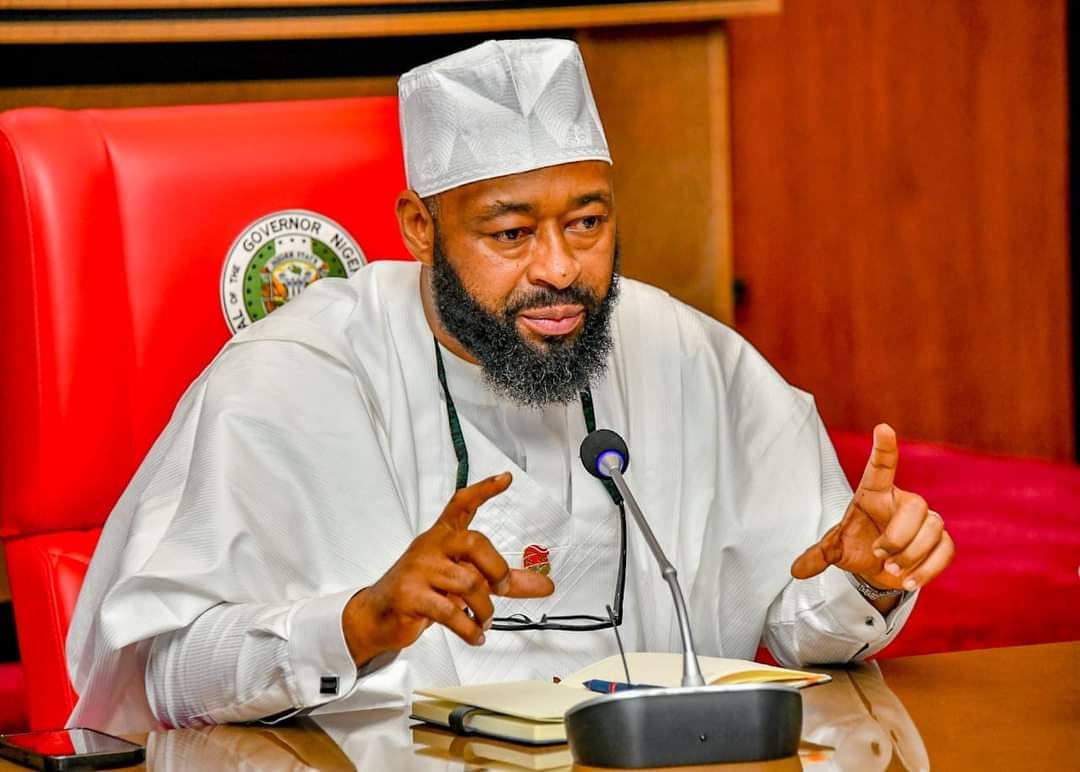
The political atmosphere in Niger State is thick with tension as Governor Umaru Mohammed Bago’s ambitious plan to secure a “consensus” slate for the All Progressives Congress (APC) ahead of the general elections faces a significant setback.
What was intended to be a masterstroke in party unity has instead triggered an “uneasy calm” and a sense of mounting uncertainty within the state chapter.
An emergency stakeholders’ meeting convened at the Government House on Wednesday night, intended to solidify the governor’s vision for a unified front, concluded with more questions than answers. Despite six hours of intense, closed-door negotiations, the governor was unable to secure a state-wide mandate for his consensus model.
The breakdown of the local government participation is as follows:
Accepted Consensus (8): Chanchaga, Gurara, Rafi, Shiroro, Munya, Mariga, Kontagora, Bosso
Resisted/No Agreement (17): The Remaining 17 LGAs, including key urban and rural constituencies
While aspirants in eight local governments opted to step down, the remaining seventeen remain locked in a standoff, signaling a deep-seated desire for competitive primaries over pre-arranged selections.
Reliable sources within the party suggest that even in the eight areas where consensus was reached, the “acceptance” is fragile. There are growing whispers that aggrieved aspirants, who felt pressured to withdraw, may be nursing grievances that could manifest as “anti-party activities” during the general elections.
Adding weight to these concerns is the Hon. Jonathan Vatsa, a party chieftain and former commissioner for information, culture, and tourism.
Vatsa has publicly broken ranks with the governor’s strategy, issuing a stern warning: “Any consensus arrangement may spell doom for the party in the general elections. Every aspirant should be given a level playing field to test their popularity. This is the only way to provide an opportunity to vote out non-performing leaders.”
In a move to de-escalate the rising friction, Governor Bago addressed the stakeholders, pivoting his tone from negotiation to assurance. He maintained that while consensus remains the preferred route to “reduce conflict,” the party is fully prepared for a direct primary election where agreements fail.
Bago promised a free, fair, and transparent process at every ward headquarters across the state. A “zero-tolerance” policy on thuggery was announced.
The governor warned that any aspirant linked to violence would face immediate disqualification, and non-party members interfering in the process would be “dealt with decisively.”
To those who stepped down, the governor offered a political olive branch, pledging that the government would “reward their sacrifices” and involve them in future governance.
With the party primaries scheduled for next week, the clock is ticking for the Bago administration. While the governor insists that the primary timetable remains unchanged, the “uneasy calm” in Minna suggests that the APC‘s path to the general election may be far more litigious and fractured than the leadership had hoped.
For now, the 17 dissenting local governments represent a significant hurdle for a governor attempting to maintain a tight grip on the party’s internal machinery.
WHAT YOU SHOULD KNOW
Governor Umaru Bago’s attempt to consolidate power through consensus has met significant grassroots resistance.
While the administration frames consensus as a tool for unity, the refusal of 17 out of 25 local governments to comply reveals a deep demand for internal democracy. The key factor to watch is whether this “forced” unity backfires; by bypassing competitive primaries, the APC risks internal sabotage and “anti-party” voting that could ultimately derail their success in the general election.