President Bola Tinubu has reassured Nigerians that his administration is determined to overcome the challenges posed by terrorism and banditry across the country.
The President gave the assurance while delivering his opening address at the ongoing National Executive Council conference on Inclusive Growth and Sustainable National Development.
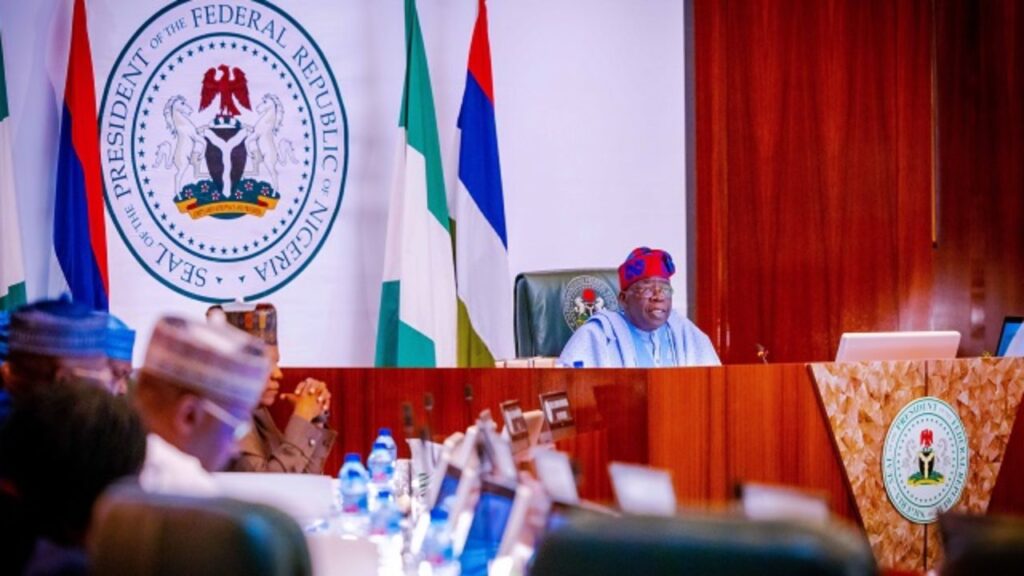
“And I am leaving here again to further find means to strengthen our security forces to defeat terrorism and banditry, that I promise you, Tinubu said.
“It is what has kept all of us sleepless at night, but I assure you that we will win with determination and resiliency. We will overcome this unacceptable terrorism and banditry; it’s not part of our culture, it’s foreign to us.”
He stressed that continued insecurity poses a serious obstacle to economic progress, noting that unresolved security challenges remain a heavy burden on national development.
“So, it’s an economic encumbrance if we do not find a solution to it.”
President Tinubu also praised several state governors for their efforts in safeguarding lives and property, singling out leaders in Borno, Katsina, and Kaduna states for special commendation.
“I commend many of you, particularly the governor of Borno State, governor of Katsina, Kaduna, and many of you who have done so much to defend our freedom, liberty and our commonwealth,” he said.
Turning to economic reforms, the President explained that his administration is focused on reinforcing macroeconomic stability as part of a broader transformation agenda.
“We are strengthening macroeconomic stability through improved revenue performance, stronger public financial management, and enhanced physical coordination. We have prioritized infrastructure development across transportation, power, digital connectivity, housing, and irrigation as catalysts for inclusive growth,” he stated.
He further revealed that the government is expanding social investment initiatives to improve the living conditions of Nigerians, particularly the most vulnerable.
“We have expanded social investment and human capital programs targeting vulnerable households, youth, women, and small businesses. The Renewed Hope Ward Development Project further demonstrates our commitment to grassroots inclusion through a bottom-up approach to national development.”
According to Tinubu, these achievements are the result of sustained cooperation among different layers of government and other stakeholders.
“These successes reflect strong collaboration among the federal government, state governments, local governments, development partners, and the private sector.”

He described the Renewed Hope National Development Plan 2026–2030 as the next critical phase in Nigeria’s development journey, explaining that it is grounded in data-driven planning and realistic projections.
“The Renewed Hope National Development Plan 2026–2030 marks the next phase of our national journey. It is evidence-based, realistic, and anchored on inclusive, balanced, and environmentally sustainable growth. The plan prioritizes economic diversification and productivity, human capital development, subnational competitiveness based on comparative advantage, and climate resilience.”
The President emphasised that the effectiveness of the plan will depend largely on implementation at the grassroots level.
“Its success largely depends on effective implementation at the state and local government levels, making it central to aligning national priorities with local realities,” President Tinubu noted.
What you should know
President Tinubu’s remarks come amid heightened national concern over insecurity and economic pressures.
By linking security challenges directly to economic performance, the President underscored why tackling terrorism and banditry remains central to his administration’s agenda.
His comments also highlight the federal government’s push for macroeconomic reforms, infrastructure expansion, and social investment as tools for inclusive growth.
The Renewed Hope National Development Plan 2026–2030 is positioned as a framework for aligning national objectives with state and local execution, reinforcing a bottom-up approach to development while addressing long-standing security and economic vulnerabilities.