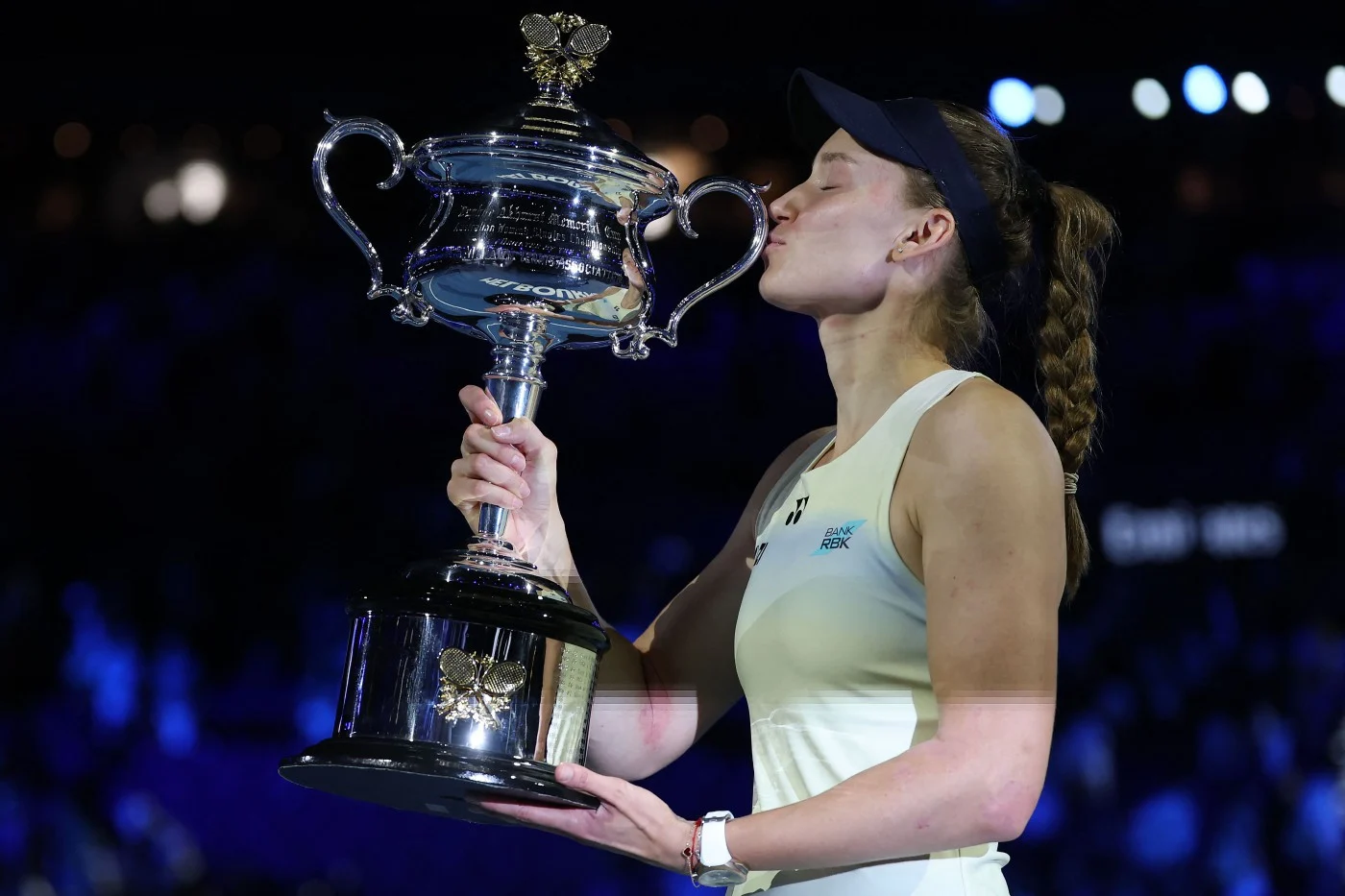
Elena Rybakina produced a composed and powerful performance to get her revenge against world number one Aryna Sabalenka, edging a gripping Australian Open final on Saturday to secure the second Grand Slam title of her career.
The hard-hitting Kazakh, seeded fifth, showed remarkable calm under pressure as she battled past Sabalenka 6-4, 4-6, 6-4 in a high-quality contest at Rod Laver Arena that lasted two hours and 18 minutes.
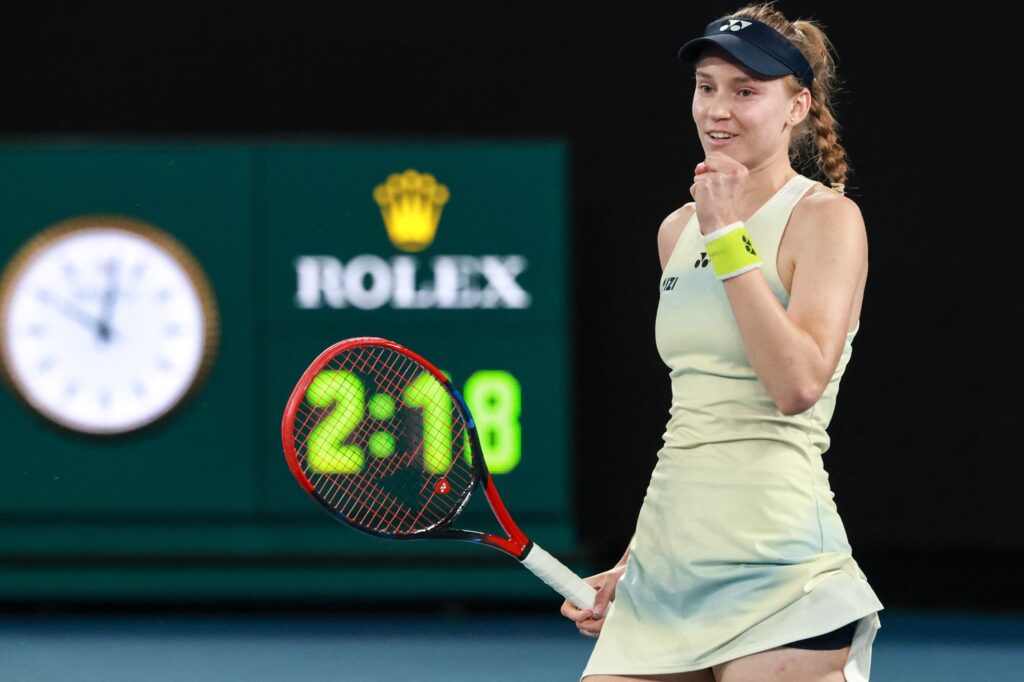
The victory served as redemption for Rybakina after the Belarusian had defeated her in the 2023 Australian Open final, a showdown that highlighted the raw power of two of the most aggressive players in women’s tennis.
At 26, the unflappable Rybakina, who was born in Moscow, added the Melbourne title to her Wimbledon triumph from 2022, further cementing her place among the elite on the women’s tour.
For Sabalenka, it marked another painful setback in a Grand Slam final. While she claimed the US Open last year for the second time, she has now fallen short in the French Open and Australian Open finals, continuing a frustrating trend on the biggest stages.
The top seed was chasing a fourth consecutive Australian Open title match appearance and had looked unstoppable throughout the tournament. However, the defeat left her visibly emotional, with tears welling up as the match slipped away.
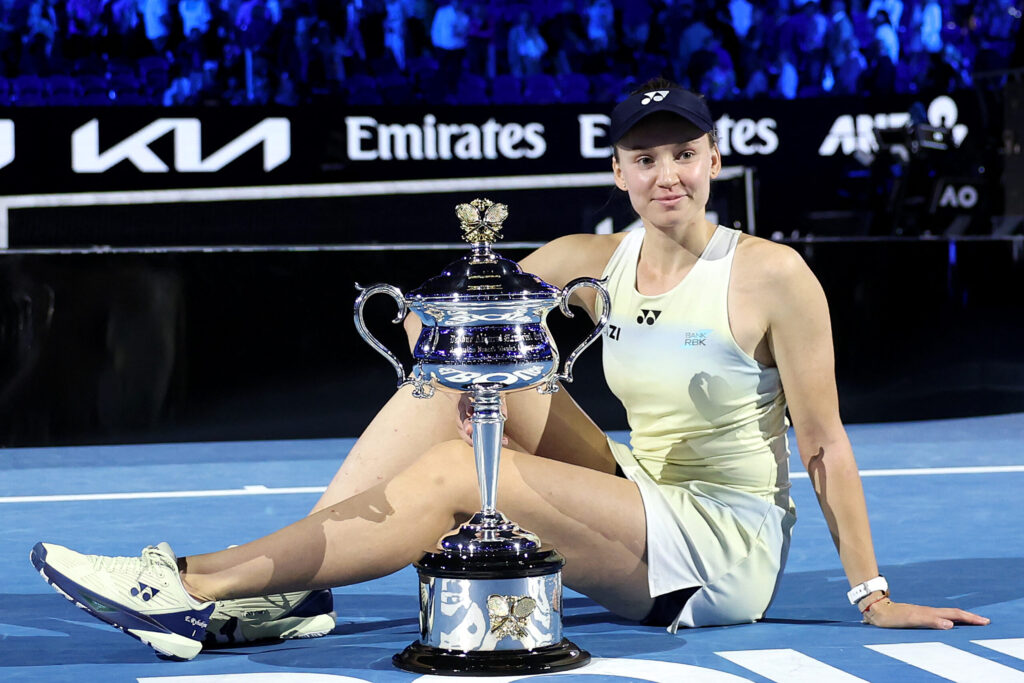
With light rain forcing the roof closed in Melbourne, Rybakina came out firing, breaking serve immediately and holding comfortably to surge into a 2-0 lead.
She was tested at 4-3 when she faced two break points, but her serve came to the rescue. An ace at a crucial moment helped her escape danger, while Sabalenka’s frustration became increasingly evident.
Rybakina maintained her focus and wrapped up the opening set in just 37 minutes, converting her first set point after Sabalenka pushed a shot long.
Remarkably, it was the first set Sabalenka had dropped at the tournament in 2026.
The second set began with tension, as Rybakina saved three break points during a gruelling 10-minute second game. Both players then settled into a rhythm, holding serve as the intensity remained sky-high.
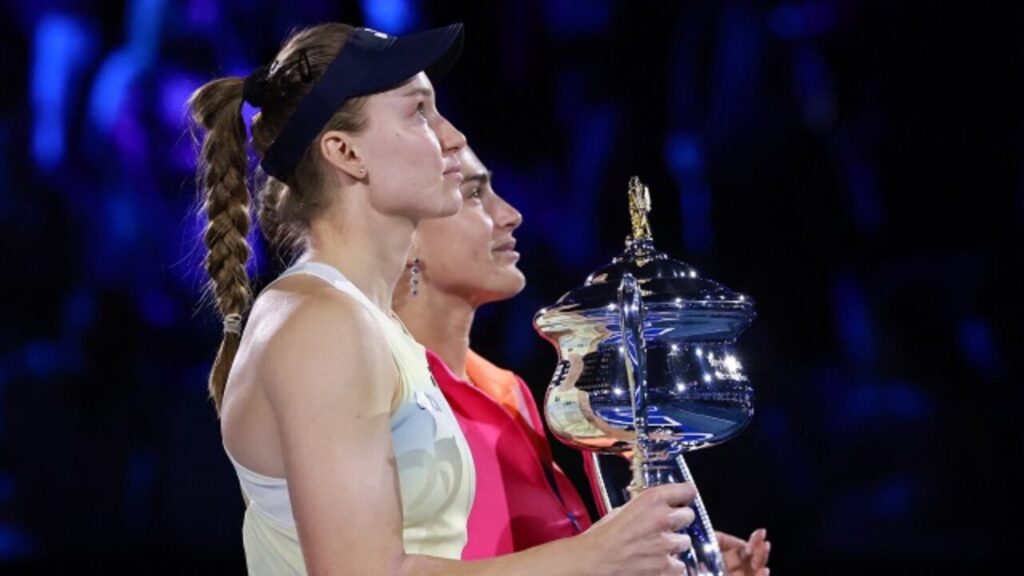
Another pivotal moment arrived in the seventh game, where Sabalenka held for 4-3 after winning the standout rally of an otherwise cautious exchange.
Sensing her opportunity, the world number one raised her level at 5-4, creating three set points on Rybakina’s serve. She seized the first chance to level the match and push the final into a deciding set.
Sabalenka carried that momentum forward, unleashing a blistering backhand to secure an early break and race to a 3-0 lead in the final set.
Rybakina, who had also not dropped a set on her way to the final, appeared momentarily unsettled as the match threatened to slip away.
However, she steadied herself with a confident hold and then clawed back the break, allowing a brief smile as she regained belief.
At 3-3, the title hung in the balance, but Rybakina surged once more, stringing together four consecutive games to break for 4-3 and then hold, placing the championship firmly within reach.
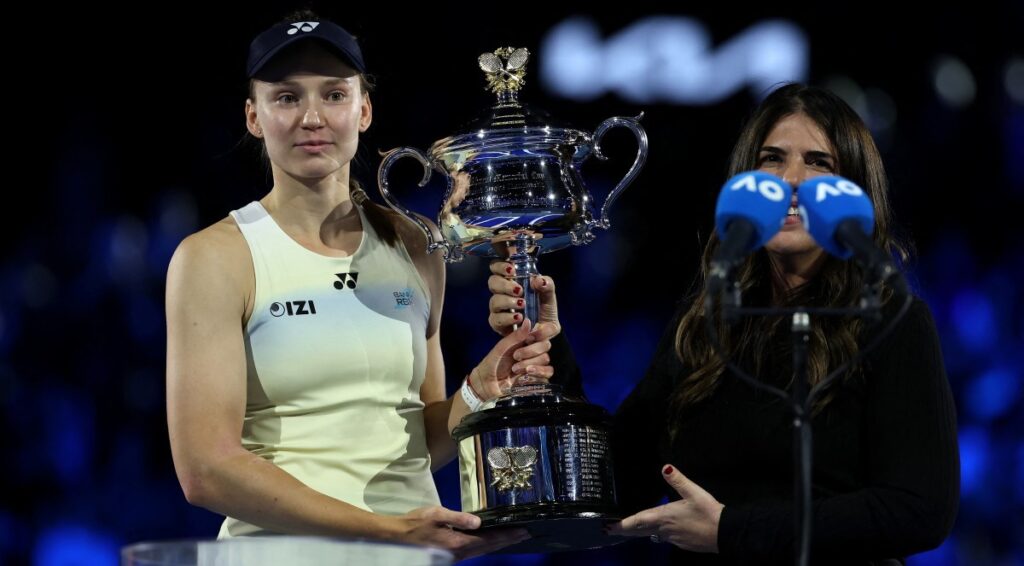
She sealed the dramatic victory with her sixth ace of the match, punctuating a performance defined by resilience and precision.
The two finalists were no strangers, having faced each other 14 times before, with Sabalenka holding an 8-6 edge in their head-to-head record.
Despite entering the final as the favourite, Sabalenka ran into a red-hot opponent. Rybakina has been one of the standout performers on the women’s circuit in recent months and had already beaten Sabalenka in the final of the season-ending WTA Finals.
Her path to the Melbourne title included impressive wins over second seed Iga Swiatek in the quarter-finals and sixth seed Jessica Pegula in the semi-finals.
Rybakina has represented Kazakhstan since 2018, having switched allegiances at the age of 19 due to financial considerations, a decision that has since reshaped her career at the highest level.
What you should know
Elena Rybakina’s Australian Open victory confirms her status as one of the most consistent and dangerous players in women’s tennis.
By defeating world number one Aryna Sabalenka in a tightly contested final, she not only avenged a previous Melbourne loss but also demonstrated her ability to handle pressure on the sport’s biggest stages. The win marks her second Grand Slam title after Wimbledon 2022 and continues her strong run against top-ranked opponents.
Rybakina’s rise, following her switch to represent Kazakhstan, highlights how strategic career decisions and steady development can lead to sustained success at the elite level.