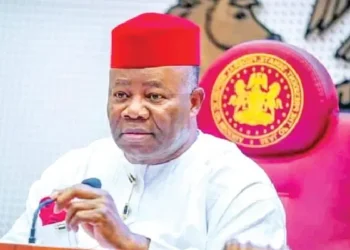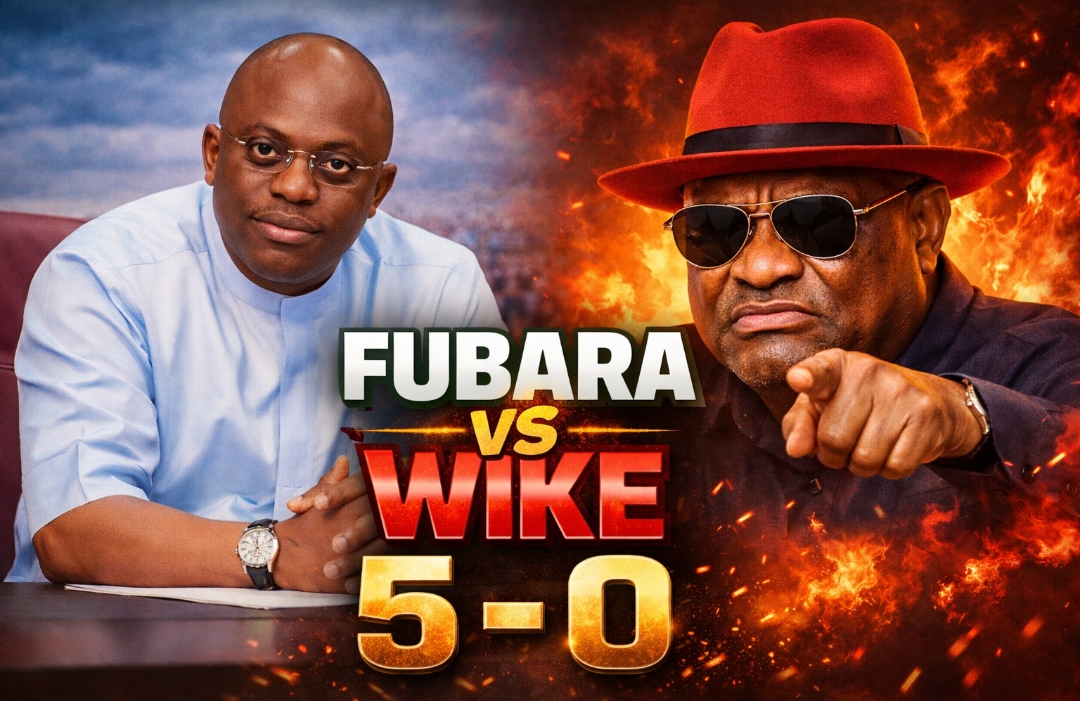
The presidency’s confirmation of Governor Siminalayi Fubara as the APC leader in Rivers State may appear to be a routine party clarification, but it carries deep political meaning.
Delivered by Daniel Bwala, a key aide to President Bola Tinubu, the statement has added a new layer to the long and bitter power struggle between Fubara and his former political godfather, Nyesom Wike.
Beyond settling who leads the ruling party in Rivers, the message points to a larger shift in power, loyalty and federal backing.
It raises questions about where the presidency now stands in the Rivers crisis, what this means for Wike’s influence at the centre, and how the battle for control of the state could shape alliances ahead of the 2027 elections.
A Power Struggle That Refuses To Die
Rivers politics has for months been dominated by the open break between Governor Fubara and Wike, the man who brought him into office.
What started as a quiet disagreement quickly turned into a full political war involving the State House of Assembly, party leaders, court cases and rival camps within government.
Wike, now Minister of the Federal Capital Territory, has continued to project strength, relying on his long years of control in the state and his close relationship with the presidency.
Fubara, on the other hand, has fought to free himself from Wike’s shadow and build an independent power base.
Until now, the presidency appeared careful not to openly take sides. But Bwala’s statement has changed that perception.
More Than A Party Clarification
By declaring Fubara as the recognized APC leader in Rivers, the presidency has done more than interprete party rules.
In Nigerian politics, leadership recognition often determines who controls structures, delegates, candidates and future political direction.
This public confirmation shows that the centre now sees Fubara as the rightful political authority in the state, at least within the ruling party.
It quietly shifts legitimacy away from Wike, who for years was seen as the final voice in Rivers politics.
More importantly, it shows that the presidency is now willing to speak clearly on an issue it once treated with caution.
Fubara’s Defection And The Politics of Loyalty
The timing of the statement is not accidental.
Fubara’s recent defection away from the PDP structure and closer alignment with the APC placed him directly within the ruling party’s political family.
In Nigerian politics, defection is often rewarded when it strengthens the ruling camp.
By recognising Fubara as APC leader, the presidency appears to be welcoming him fully and offering him protection and legitimacy.
This recognition sends a wider message to other governors and politicians across the country: alignment with the centre brings political safety, influence and support.
A Subtle Demotion For Wike
While the statement did not directly attack Wike, its effect on his political standing is serious.
By stressing that Wike is not an APC member and therefore cannot lead or speak for the party in Rivers, the presidency has narrowed his space.
For a politician who once controlled the state’s party machinery and dictated political outcomes, this is a major reduction of influence.
It shows that Wike’s power may now be limited to his ministerial role and personal networks, rather than formal party authority in Rivers.
It also raises an uncomfortable question: is Wike slowly losing favour at the centre?
When Gra-Gra Politics Meets Federal Discipline
Wike’s political career has been built on toughness, open confrontation and what many describe as gra-gra politics.
This approach helped him defeat rivals, control party structures and dominate Rivers politics for years.
But federal politics often runs on a different logic.
Power at the centre depends less on intimidation and more on loyalty, negotiation and long-term calculations.
By quietly backing Fubara, the presidency may be signalling that Wike’s confrontational style is now more of a liability than an asset.
The centre may be choosing stability over drama, and loyalty over noise.
The Battle For Control Of Rivers
With Fubara now recognized as APC leader, the struggle for control of Rivers politics enters a new phase.
Party structures, local government networks, lawmakers and political appointees may gradually realign towards the governor.
This could weaken opposition within the state and strengthen the ruling party ahead of future elections.
It also gives Fubara a stronger hand in negotiations with rivals and in dealing with the lingering crisis in the State House of Assembly.
For Wike’s camp, the challenge will be how to maintain relevance in a political environment where federal backing may no longer be assured.
The Long Shadow Of 2027
The development cannot be separated from the coming 2027 general elections.
Rivers is one of the most politically valuable states in the South-South, with a large voting population and strong influence in regional politics.
Any politician who controls its party structure and alliances will play a major role in shaping national outcomes.
By backing Fubara now, the presidency may be securing a loyal base in the region and weakening any rival power centre that could become difficult to manage in the future.
It also sends a message that the ruling party is already positioning its trusted allies for the next election cycle.
What You Should Know
Daniel Bwala, a presidential aide, said during Channels TV Hard Copy programme that Governor Siminalayi Fubara is the recognised APC leader in Rivers State.
He said Nyesom Wike cannot lead or speak for the APC in the state because he is not a member of the party.
Fubara recently moved closer to the APC after breaking away from the PDP structure linked to Wike.
The statement suggests the presidency may now be backing Fubara in the Rivers political crisis.
The move could weaken Wike’s influence in the state and strengthen Fubara’s control of party structures.
The decision may affect alliances and preparations ahead of the 2027 elections.