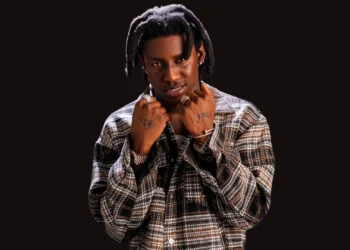
In a development that underscores the seismic shift occurring in global music consumption, Nigerian superstars Wizkid and Asake have rewritten the record books with their collaborative single “Jogodo,” which has become the fastest African track ever to reach 10 million streams on Spotify.
The milestone, achieved in less than one week following the song’s release, represents not merely a numerical achievement but a watershed moment for African music’s expanding presence on the world stage. Charts Africa, the continent’s leading music data tracking service, confirmed the record-breaking performance in a statement posted to the social media platform X.
“Wizkid and Asake make history as ‘Jogodo’ breaks the record for the fastest African song to hit 10 million streams on Spotify, doing so in less than a week,” the data analytics firm announced, highlighting what industry observers are describing as unprecedented streaming velocity for an African release.
The track’s meteoric rise began within days of its debut, when it crossed the 5 million stream threshold to establish a new Spotify Nigeria record for both the biggest opening and the highest-performing streaming week ever documented in the country’s music history. That early momentum has since translated into what analysts consider a paradigm-shifting moment for the Nigerian music industry.
The success of “Jogodo” arrives against the backdrop of fundamental transformations in Nigeria’s music economy, where digital streaming has evolved from a promotional tool into a critical revenue indicator that directly influences artists’ commercial viability and global positioning.
According to industry data previously compiled by Nairametrics, Nigerian artists generated an estimated $395 million from touring and live performances spanning 2024 and 2025. While concerts, festivals, and international tours remain the primary revenue engines for top-tier performers, streaming platforms have emerged as indispensable discovery channels that translate digital engagement into sold-out venues and lucrative booking fees.
Music industry stakeholders point to a symbiotic relationship between streaming numbers and touring revenue: strong performance on platforms like Spotify, Apple Music, and Audiomack serves as validation of an artist’s cross-border appeal, which international promoters increasingly factor into booking decisions and guarantee negotiations.
Central to this streaming revolution is a demographic reality that has reshaped listening behaviors across the continent and throughout the African diaspora. Generation Z listeners, who have grown up with smartphones and streaming services as default modes of music consumption, have become the engine driving Afrobeats’ global expansion.
These younger audiences consume music differently than previous generations, favoring playlist discovery, algorithm-driven recommendations, and social media virality over traditional radio promotion. The speed with which “Jogodo” accumulated streams reflects these new consumption patterns, where a track can achieve continental and global reach within hours of release through coordinated promotional pushes across streaming platforms and social media ecosystems.
The genre’s trajectory has accelerated dramatically in recent years, with Afrobeats artists securing high-profile collaborations with Western pop stars, headlining major international festivals, and earning placements on influential playlists curated by streaming platforms’ editorial teams.
For artists operating in this environment, streaming metrics have transcended their function as vanity statistics to become tangible markers of global relevance and earning potential. Record labels, brand partnerships, and festival billing positions are increasingly determined by an artist’s ability to generate and sustain streaming momentum across multiple territories simultaneously.
The achievement by Wizkid and Asake demonstrates that the commercial ceiling for Afrobeats continues to rise, with both artists leveraging their established fan bases and the genre’s growing international profile to achieve numbers that would have seemed impossible for African artists just a decade ago.
Industry analysts suggest the “Jogodo” milestone will likely accelerate existing trends, encouraging more African artists to prioritize international streaming strategies while emboldening platforms to invest more heavily in African music discovery and promotion.
For the Nigerian music industry specifically, the record reinforces the country’s position as the dominant force in African popular music, with Lagos serving as the creative and commercial hub for a genre that now commands attention from Tokyo to Toronto.
As streaming platforms continue to expand their presence across Africa and global audiences grow more receptive to non-English language music, records like those set by “Jogodo” may become more common. For now, however, Wizkid and Asake stand alone at the top, having achieved what no African artist had accomplished before them—and doing so with remarkable speed.
The message from Lagos is clear: Afrobeats has arrived as a global commercial force, and the numbers prove it.
WHAT YOU SHOULD KNOW
Wizkid and Asake’s “Jogodo” has shattered African music records by becoming the fastest track from the continent to hit 10 million Spotify streams in under a week—a milestone that confirms Afrobeats has evolved from a regional sound into a global commercial powerhouse.
This isn’t just about streaming numbers; it’s evidence of a fundamental shift where Nigerian artists are now competing at the highest levels of the international music industry, translating digital dominance into real economic power.
African music, led by Nigeria’s Afrobeats movement, has definitively arrived on the world stage, and the financial and cultural impact will only accelerate from here.