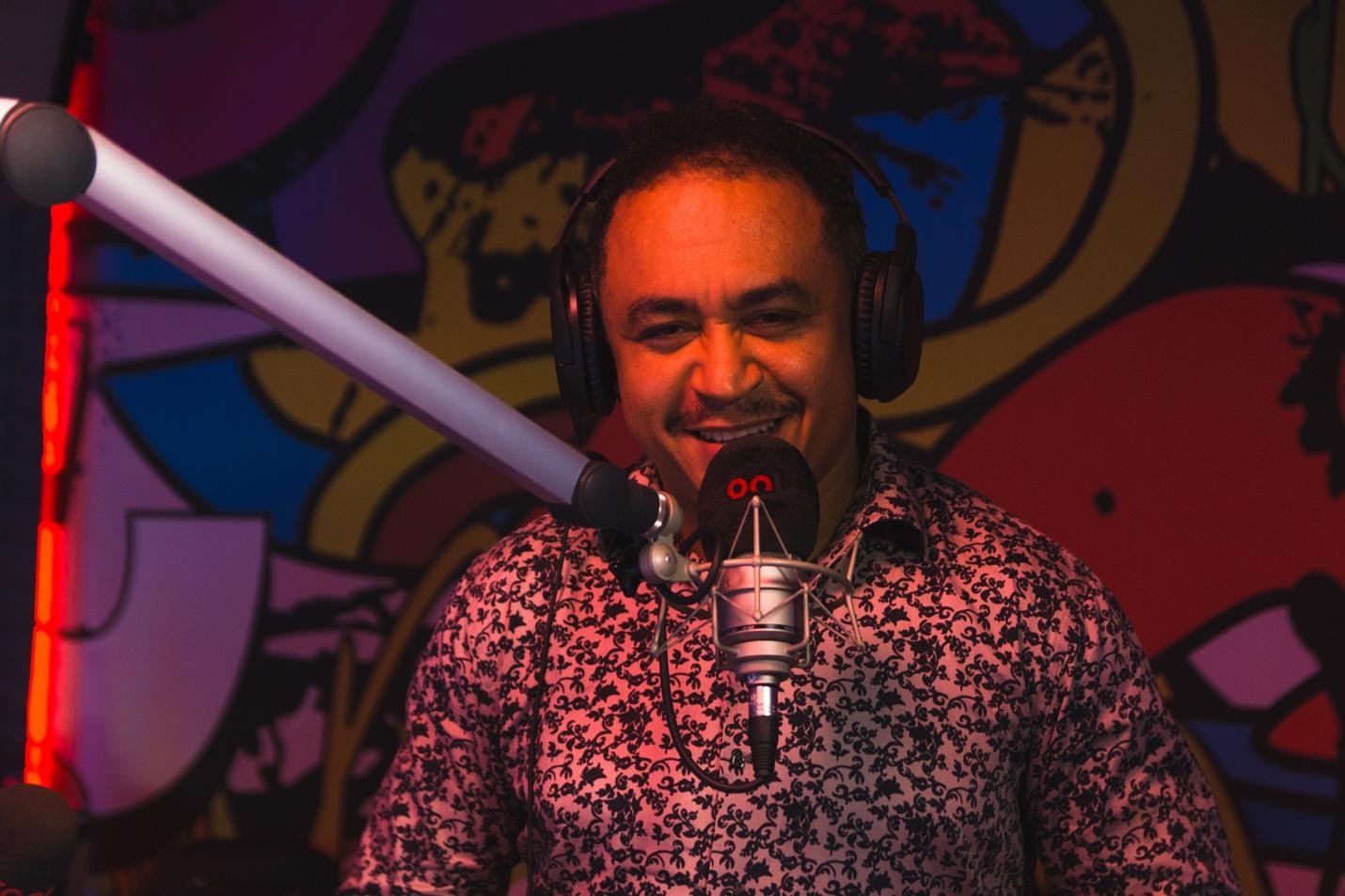
Media personality Ifedayo Olarinde, widely known as Daddy Freeze, has waded into ongoing debates comparing contemporary Afrobeats superstar Wizkid to the late Afrobeat pioneer Fela Anikulapo-Kuti, arguing that the two artists operate in fundamentally different leagues.
In a video statement that has sparked fresh conversations across Nigerian social media, the controversial broadcaster and social commentator made clear his position: Wizkid, despite his global musical success, cannot be measured against Fela’s towering legacy until he demonstrates a similar commitment to activism and social justice.
“Until Wizkid is ready to stand up and stone the government, he shouldn’t compare himself to Fela,” Daddy Freeze declared, invoking the confrontational spirit that defined much of Fela’s career. The media personality emphasized that Fela’s influence extended far beyond his revolutionary sound, encompassing his role as a fierce critic of governmental corruption and human rights abuses.
Daddy Freeze drew on historical memory to underscore his point, recalling Fela’s final imprisonment in the mid-1990s. “Did you know that Fela was released from prison just to prevent him from dying there?” he asked. “They released him to go and die at his home because they knew his death would spark an uproar if he died in prison. That was 1995; I was a fresher in the university then.”
The broadcaster’s comments highlight a tension that has simmered in Nigerian music discourse for years: whether contemporary Afrobeats artists, who have achieved unprecedented global commercial success, can claim the mantle of their predecessors who paid steep personal prices for their art and activism.
According to Daddy Freeze, Fela wasn’t merely an entertainer but a multifaceted figure whose philanthropy and political activism were inseparable from his musical output. “Fela was not a troublemaker; he was a freedom fighter,” he stated emphatically. “We are talking about music, but I cannot talk about Fela if I don’t talk about everything he stood for. His activism and music went hand-in-glove. You can’t separate the two.”
The comparison between Wizkid and Fela has become increasingly common as the Grammy-winning artist continues to dominate international charts and push Afrobeats to unprecedented global heights. However, critics like Daddy Freeze argue that musical achievement alone doesn’t constitute a fair comparison to Fela, whose Kalakuta Republic commune, confrontations with military regimes, and use of music as protest positioned him as one of Africa’s most consequential cultural figures.
Fela Anikulapo-Kuti died in August 1997 from complications related to AIDS, but his legacy as both musician and activist continues to loom large over Nigerian popular culture. His willingness to challenge authority cost him repeated imprisonments, brutal beatings, and the destruction of his compound by military forces.
Whether today’s Afrobeats stars should bear the burden of activism alongside their artistry remains a contentious question in Nigerian entertainment circles, with Daddy Freeze’s latest intervention ensuring the debate will continue.
WHAT YOU SHOULD KNOW
Media personality Daddy Freeze has firmly rejected comparisons between Wizkid and Fela Kuti, arguing that Fela’s legacy transcends music. According to Freeze, Fela was a freedom fighter whose activism and willingness to confront government oppression—enduring imprisonment, brutality, and persecution—were inseparable from his artistry.
Until Wizkid demonstrates similar courage in challenging authority and fighting for civil rights, Freeze maintains that any comparison is premature and fundamentally misses what made Fela legendary: his sacrifice for social justice, not just his musical genius.