The Trade Union Congress (TUC) has thrown its full weight behind the ongoing industrial action by the Joint Health Sector Unions (JOHESU), reaffirming its support despite the Federal Government’s enforcement of a ‘no work, no pay’ policy.
JOHESU, which operates as an affiliate of the TUC, instructed its members to sustain the strike that began on November 15, 2025. This decision came even after the Federal Government issued a directive insisting on the implementation of the policy.
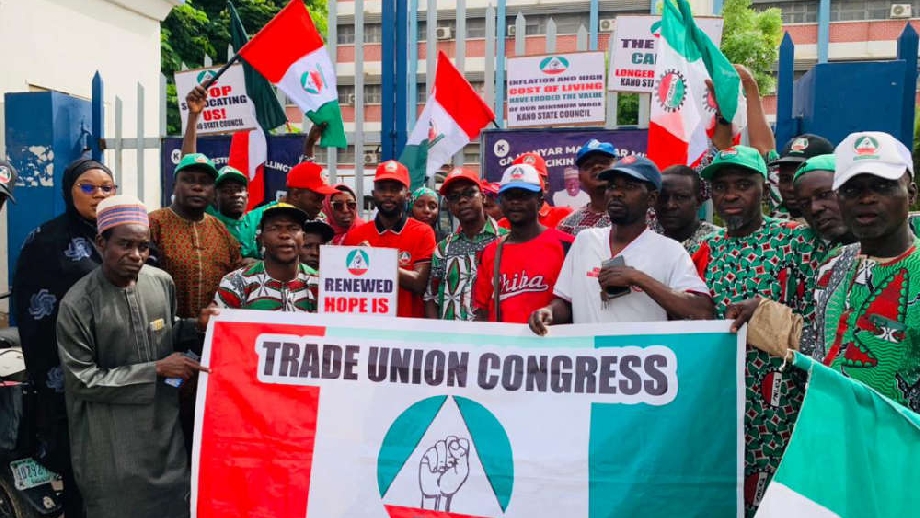
The union’s stance followed an emergency virtual meeting of its national leadership held on Monday, January 12, after the lapse of a 72-hour extension granted to the government.
In response, the TUC criticised the Federal Government, accusing it of attempting to intimidate health workers without due consideration for the prevailing economic conditions in the country.
The congress firmly rejected a circular released by the Federal Ministry of Health and Social Welfare that announced the application of a “No Work, No Pay” policy and the suspension of salaries for JOHESU members through the Integrated Payroll and Personnel Information System, scheduled to take effect from January 2026.
In a statement issued on Wednesday and jointly signed by TUC President, Festus Osifo, and Secretary General, N.A. Toro, the congress described the directive as unacceptable, arguing that it directly undermined ongoing negotiations between the government and health sector unions.
According to the TUC, the move violated established principles of industrial relations and amounted to unilateral action by the ministry while discussions were still in progress.
The congress further warned that halting the salaries of JOHESU members would intensify the difficulties already confronting health workers, especially in the face of rising inflation, increasing fuel prices and broader economic pressures.
The statement reads, “The Trade Union Congress of Nigeria unequivocally, vehemently, and totally rejects the circular issued by the Federal Ministry of Health and Social Welfare on the so-called implementation of ‘No Work, No Pay’ and the stoppage of salaries of members of the JOHESU through IPPIS, effective January 2026.
“Congress states in the clearest terms that this action is a gross abuse of power, a deliberate sabotage of ongoing negotiations, and a flagrant violation of established industrial relations principles.
“It represents a return to command-and-control labour administration, which has no place in a democratic society. Let it be clearly understood: You cannot negotiate with workers on one hand and unleash punishment with the other. This circular is not policy; it is intimidation, and Congress will not accept it.”
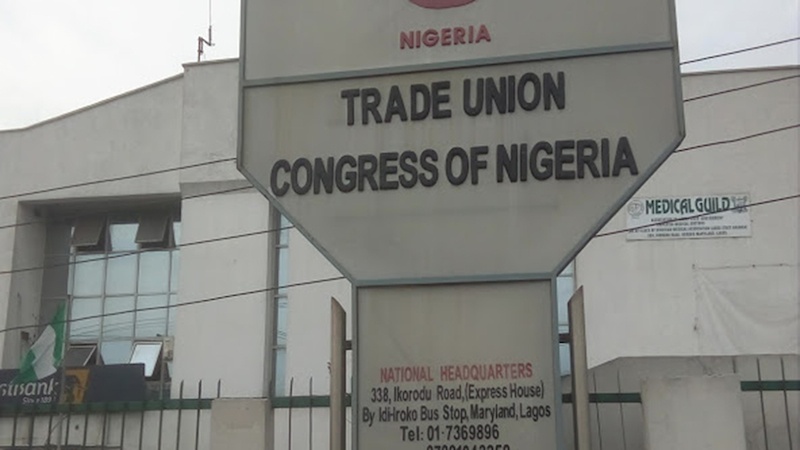
The TUC also cautioned against what it described as the misuse of the IPPIS platform to penalise workers, stressing that it would oppose any effort to coerce workers through the stoppage of salaries.
“Let it be clearly understood: You cannot negotiate with workers on one hand and unleash punishment with the other. This circular is not policy; it is intimidation, and Congress will not accept it. The stoppage of salaries of JOHESU members, workers who daily save lives, is wicked, insensitive, provocative, and profoundly unpatriotic, especially at a time when Nigerian workers are already being crushed by inflation, fuel price hikes, and economic hardship imposed by government policies.
“The TUC warns that the weaponisation of IPPIS to punish workers is an abuse of state machinery, and Congress will resist any attempt to starve workers into submission,” the union said.
The congress called for the immediate and unconditional withdrawal of the circular, the reinstatement of all affected salaries, and a return to negotiations within seven days. It further warned that failure by the ministry to reverse the directive within the specified timeframe would compel the TUC to mobilise workers across multiple sectors for collective action.
What you should know
The dispute between the Federal Government and health sector unions centres on wage issues, working conditions and the implementation of policies such as ‘no work, no pay’ during strikes.
JOHESU represents a wide range of health professionals who play critical roles in Nigeria’s healthcare system. The TUC’s intervention highlights growing tensions between organised labour and the government amid economic hardship, inflation and rising living costs.
How the government responds to the ultimatum could determine whether the strike escalates into a broader labour action affecting multiple sectors nationwide.