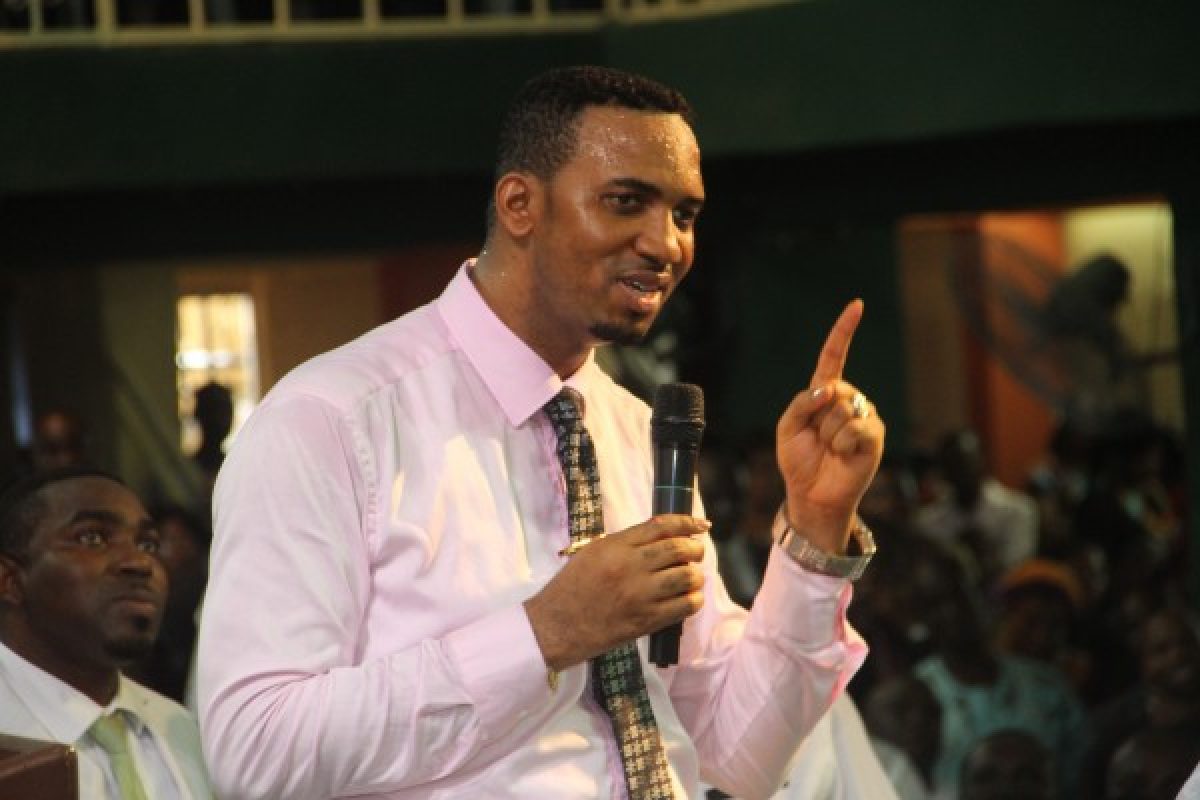
Pastor Chris Okafor, the leader of the Mountain of Liberation and Miracles Ministries, has stepped down from his pastoral duties following an avalanche of sexual misconduct allegations that have dominated social media and triggered intense debate about accountability within Nigeria’s powerful Pentecostal movement.
The controversy, which erupted publicly in mid-December, centers on accusations from multiple women who claim the charismatic preacher engaged in long-term sexual relationships marked by broken promises of marriage, manipulation, and alleged abuse of spiritual authority.
The scandal has exposed deep tensions between traditional church discipline and modern demands for transparency, raising uncomfortable questions about how religious institutions handle allegations against their most prominent figures.
The crisis reached a crescendo last Sunday when Okafor, in an extraordinary display of contrition, knelt on his own pulpit to apologize to Nollywood actress Doris Ogala, who had become the most vocal of his accusers. The image of the once-commanding pastor on his knees, admitting to unspecified “mistakes” before his congregation, marked a stunning reversal for a man accustomed to spiritual authority rather than public humiliation.
Days later, during his church’s New Year crossover service on Wednesday night, Okafor announced he would be stepping aside. However, he framed the decision in decidedly different terms than his critics. Rather than acknowledging the pressure campaign that sources say forced his hand, the pastor characterized his absence as a period of “spiritual renewal” and a belated honeymoon with his new wife, Pearl, whom he married on December 16 in a ceremony attended by prominent clergy.
“I will be resting. It would be time for personal retreat with God and time for me and my wife to rest,” Okafor told his congregation, insisting the break would last only until February and that he would not be absent from church activities. “Since our wedding, we have not rested. We have not had time. We have not even done our honeymoon.”
The carefully worded explanation stood in stark contrast to accounts from sources within the Pentecostal Fellowship of Nigeria (PFN), who painted a picture of intense behind-the-scenes pressure from respected Christian leaders alarmed by the scandal’s escalation and its potential to damage the broader religious community’s credibility.
This firestorm began on December 14 when Nollywood actress Doris Ogala posted a series of emotional videos to her Instagram account, leveling explosive accusations against the pastor. The actress claimed she had maintained a sexual relationship with Okafor that began in 2017 and lasted nine years, during which he repeatedly promised marriage before ultimately marrying another woman just two days after her public accusations started.
Ogala’s allegations went beyond broken promises. She accused the pastor of sharing explicit photos and videos of her, contributing to the breakdown of her previous marriage, and causing severe emotional and financial harm. In support of her claims, she shared bedroom photographs and screenshots of conversations, including what she alleged was evidence that Okafor offered her $10,000 to retract her statements and falsely claim that a rival pastor had orchestrated the accusations.
Through her legal team, Ogala has since filed a formal notice demanding N1 billion in damages, alleging threats and intimidation that she says culminated in her arrest and detention by police.
But Ogala’s accusations proved to be merely the opening salvo. As media attention intensified, other women emerged from the shadows, each adding layers to what appeared to be a disturbing pattern of behavior spanning more than a decade.
Bessem Okafor, the pastor’s former wife, broke a 14-year silence in an interview with popular YouTuber Aunty Adunni, accusing her ex-husband of infidelity, deception, and physical assault. She described the shame that drove her to leave the marriage more than a decade ago, lending historical context to the current allegations.
A woman identified only as Ebere, described as a former member of the church choir, claimed in another video on the same YouTube channel that her relationship with Okafor began around 2015 and lasted for years. In harrowing detail, she alleged she underwent four abortions at his behest before ultimately keeping one pregnancy that resulted in a child she claims is his. Like Ogala, Ebere said the pastor made repeated promises of marriage that never materialized.
More recently, another woman came forward with perhaps the most disturbing allegation yet, claiming that Okafor had sexual relationships with both her and her sister, resulting in pregnancies. She has called for DNA testing to establish paternity and insists she possesses evidence to support her claims.
Adding a deeply troubling dimension to the scandal, social media activist Martin Otse, known as VeryDarkMan, shared an audio clip in which a woman identifying herself as Chidera Okafor—allegedly the pastor’s daughter—accused him of making sexual advances toward her in their home, a situation she said forced her to flee in 2020 after reporting the matter to her mother. Okafor has denied this particular allegation in a viral video response.
The allegations have thrust Nigeria’s Christian leadership into an uncomfortable spotlight, exposing the limitations of religious authority in addressing what many consider criminal matters.
A senior official within the Pentecostal Fellowship of Nigeria, speaking on condition of anonymity, confirmed that the organization had applied “spiritual pressure” to compel Okafor’s one-month sabbatical. However, the official was careful to draw a clear line between religious discipline and criminal investigation, insisting that the latter falls outside the PFN’s mandate.
“I don’t think it is the PFN that should do that,” the official stated bluntly. “We are not the police, nor are we a law enforcement agency. If there is an allegation of rape against a pastor, it is not the PFN that should investigate it. Even if we do any form of inquiry, we cannot arrest anyone. This is a criminal case, and the government should step in.”
The official acknowledged that the festive season had slowed institutional deliberations, preventing formal meetings to address the scandal. Nevertheless, he insisted the PFN was actively engaged behind the scenes, applying the “spiritual pressure and discipline” that led to Okafor’s decision to step down.
“On Pastor Okafor’s matter, there are a lot of things PFN is doing behind the scenes, but I don’t want to call these things an investigation,” the source explained. “It is not for public consumption for now. His stepping down is part of the action that PFN and the body of Christ pressured him to take.”
The official expressed hope that formal decisions regarding Okafor’s future would be made before the end of his one-month absence, though the nature of those potential sanctions remains unclear.
Despite the serious nature of the allegations—some of which could potentially constitute criminal offenses—law enforcement has remained conspicuously absent from the controversy. Lagos State Police Command spokesperson Abimbola Adebisi told reporters she was unaware of any formal complaints against Okafor, emphasizing that action requires official petitions from alleged victims.
“If there is any, the department handling it would have briefed me,” Adebisi said. “Anyone with a petition can come forward.”
The statement highlights a critical gap in Nigeria’s handling of sexual misconduct allegations, particularly those involving powerful religious figures. Despite weeks of public accusations and social media documentation, the absence of formal police complaints has allowed the matter to remain primarily within the realm of religious discipline rather than criminal investigation.
Legal experts note that this pattern is common in cases involving prominent religious leaders in Nigeria, where alleged victims often face immense social pressure, fear of retaliation, and skepticism from communities deeply invested in protecting their spiritual leaders.
The scandal has created a sharp divide within Okafor’s congregation and the broader Christian community. While accusers have found support on social media and among some religious leaders, loyal church members have rallied to their pastor’s defense with equal fervor.
Several congregants interviewed by reporters dismissed the allegations as “desperate moves by individuals trying to extort money from their ‘man of God.'” This framing—characterizing accusers as opportunistic extortionists rather than victims—reflects a common defense mechanism in religious communities facing scandals involving beloved leaders.
The narrative of financial motivation gained some traction following Ogala’s legal demand for N1 billion in damages, though legal experts note that seeking compensation for alleged harm is a standard legal remedy distinct from criminal extortion.
The polarization extends beyond Okafor’s immediate congregation. On Nigerian social media, the hashtags related to the scandal have generated fierce debate about accountability, the protection of religious leaders, and the credibility of women making allegations against powerful men—particularly when those allegations involve consensual relationships that allegedly turned sour.
The Okafor scandal unfolds against a backdrop of growing scrutiny of Nigeria’s influential Pentecostal movement, where charismatic pastors often wield enormous spiritual, social, and financial power with limited institutional oversight.
Nigeria’s megachurch phenomenon has created what critics describe as personality cults around individual pastors, who are frequently treated as divinely appointed and therefore beyond reproach. This dynamic, observers note, can create environments where misconduct goes unreported and unaddressed, with victims reluctant to challenge figures seen as God’s anointed representatives.
The PFN official’s clear delineation between spiritual discipline and criminal investigation underscores a fundamental challenge: religious institutions lack the investigative capacity and legal authority to address serious allegations, yet cultural and social dynamics often prevent cases from reaching secular law enforcement.
“The body of Christ needs to develop clearer protocols for addressing allegations of misconduct,” said Dr. Emmanuel Adekunle, a professor of religious studies at the University of Lagos who has studied Nigeria’s Pentecostal movement. “The current system relies too heavily on informal pressure and private negotiations, which can protect institutions at the expense of alleged victims.”
As Okafor begins his “retreat”—whether genuine spiritual renewal or strategic withdrawal under pressure—multiple threads of this crisis remain unresolved.
Will any of the accusers file formal police complaints that could trigger criminal investigations? Will the PFN’s behind-the-scenes deliberations result in meaningful consequences beyond a temporary sabbatical? Will Okafor’s congregation stand by their embattled pastor or demand greater accountability?
Most fundamentally, the scandal raises questions that extend far beyond one controversial pastor: How should religious institutions balance pastoral care with accountability? What protections exist for individuals who allege misconduct by powerful religious figures? And in a country where religious leaders often command more public trust and influence than government officials, who watches the watchmen?
For now, the Mountain of Liberation and Miracles Ministries continues its activities under interim leadership, awaiting the return of its founder. But whether Okafor can rebuild his reputation, restore his ministry, and escape legal consequences remains uncertain as February approaches and Nigeria’s Christian community grapples with uncomfortable questions about power, accountability, and the price of silence.
WHAT YOU SHOULD KNOW
Pastor Chris Okafor has stepped down for one month amid multiple sexual misconduct allegations spanning nearly a decade. While he frames this as a spiritual retreat and honeymoon break, sources reveal he was pressured by Christian leaders following escalating accusations from at least five women, including actress Doris Ogala, his ex-wife, and former church members who claim he engaged in long-term affairs, made false marriage promises, and in some cases, allegedly fathered children.