Introduction
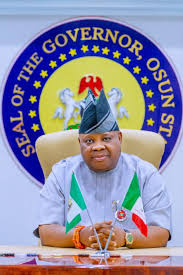
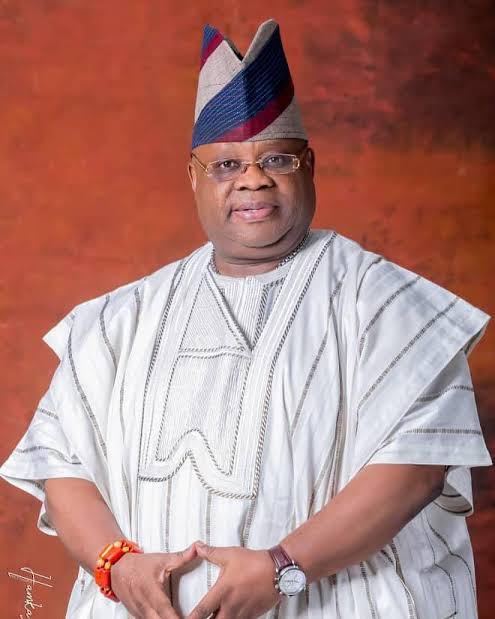
In the often-serious world of Nigerian politics, one figure stands out for bringing unprecedented energy, controversy, and a unique personal brand to governance: Senator Ademola Jackson Nurudeen Adeleke, the current Executive Governor of Osun State. Fondly nicknamed the “Dancing Governor” for his signature energetic dance moves at public events, Adeleke has become one of Nigeria’s most talked-about political figures. His journey from businessman to senator to governor has been marked by electoral battles, educational controversies, family legacy, and an unwavering commitment to what he calls “people-centered governance.” As he approaches the 2026 gubernatorial election under a new political party, Adeleke’s story embodies both the possibilities and complexities of contemporary Nigerian democracy.
Early Life and the Adeleke Dynasty
Ademola Nurudeen Jackson Adeleke was born on May 13, 1960, in Enugu, Enugu State, Nigeria, though his roots are deeply planted in Ede, Osun State. He hails from the illustrious Adeleke family of Ede North Local Government, one of southwestern Nigeria’s most prominent political and business dynasties.
His father, Senator Ayoola Adeleke, was a progressive senator during Nigeria’s Second Republic (1979-1983), instilling political consciousness in his children from an early age. His elder brother, Senator Isiaka Adetunji Adeleke (1955-2017), made history as the first civilian governor of Osun State (1992-1993) and later served as a two-term senator representing Osun West (2007-2011, 2015-2017).
Another brother, Dr. Adedeji Adeleke, is a global business mogul and billionaire entrepreneur whose business empire spans multiple continents. Adedeji’s son, David Adedeji Adeleke, known worldwide as Davido, is one of Africa’s biggest music superstars. Ademola’s sister, Chief (Mrs.) Dupe Adeleke Sanni, the Yeyeluwa of Edeland, has also been instrumental in strengthening the family’s political presence.
Growing up in this environment of political engagement, business acumen, and cultural influence, young Ademola was groomed for leadership from childhood.
Educational Journey: From Nigeria to America and Back
Primary and Secondary Education
Adeleke commenced his primary education at Methodist Primary School in Surulere, Lagos State, before the family relocated to what was then Old Oyo State. He attended Nawarudeen Primary School in Ikire, where he continued his foundational education.
For secondary school, Adeleke progressed to The Seventh Day Adventist Secondary School in Ede, also in Old Oyo State, before later moving to Ede Muslim Grammar School (also referenced as Ede Muslim High School) in Ede, where he completed his secondary education.
Higher Education in the United States
After finishing secondary school in Nigeria, Adeleke relocated to the United States to pursue higher education. He initially enrolled at Jacksonville State University in Alabama, where he majored in criminal justice with a minor in political science.
The Educational Qualification Controversy
Adeleke’s educational credentials became a major political flashpoint during his 2018 gubernatorial campaign. He was accused of forging his secondary school testimonial and WAEC results. Critics pointed out several anomalies:
- A testimonial dated July 20, 1988, listed its heading as “Ede Muslim Grammar School, Osun State,” yet Osun State was not created until 1991 (it was part of Oyo State in 1988).
- The SSCE results indicated a mode of examination that critics claimed wasn’t in use in 1981.
- A 2018 testimonial from “Ede Muslim High School” appeared to have been signed by the same principal who allegedly signed the 1988 document, raising questions about authenticity.
These allegations led to criminal charges at an Osogbo High Court and the arrest of the school principal by the police. However, Adeleke’s legal team successfully defended him, arguing that his secondary school had not officially denied the testimonial. The court ultimately dismissed the suit, ruling that the plaintiffs could not prove forgery.
Returning to School at 59
In a remarkable demonstration of commitment to education and self-improvement, Adeleke responded to the controversy by re-enrolling in school. In 2019, after his disputed loss in the 2018 gubernatorial election, he enrolled at Atlanta Metropolitan State College in the United States. In 2021, at age 61, he earned a Bachelor of Science degree in Criminal Justice, a powerful statement that silenced many critics and demonstrated that it’s never too late to pursue education.
Business Career: Corporate Experience
Before entering politics full-time, Adeleke built substantial business experience both in the United States and Nigeria:
United States (1985-1994):
- Quicksilver Courier Company (Atlanta, Georgia): Service contractor (1985-1989)
- Origin International LLC (Atlanta, Georgia): Vice President at this flavours and fragrance manufacturing company (1990-1994)
Nigeria (1992-2016):
- Guinness Nigeria Plc: Executive Director (1992-1999), serving alongside distinguished figures, including General Theophilus Danjuma
- Pacific Holdings Limited: Group Executive Director at his brother Dr. Adedeji Adeleke’s company (2001-2016)
This diverse corporate experience across continents provided Adeleke with business acumen, international exposure, and an understanding of organizational management, skills he would later apply to governance.
Political Career: From APC to PDP to Accord
Early Political Involvement (2001-2017)
Adeleke’s political journey began in 2001 alongside his late brother, Senator Isiaka Adeleke. For years, he worked behind the scenes, supporting his brother’s political career while managing his business interests. He was initially a member of the All Progressives Congress (APC).
The Tragic Loss and Political Breakthrough (2017)
On April 23, 2017, Senator Isiaka Adeleke died suddenly at age 62, leaving a political vacuum in Osun West. The circumstances of his death remain controversial, with many family members and supporters suspecting foul play, though official reports attributed it to a drug overdose.
Shortly after his brother’s death, Ademola decamped from the APC to the Peoples Democratic Party (PDP) in April 2017, citing concerns about how the APC handled his brother’s death and the party’s direction.
In July 2017, Adeleke contested the Osun West Senatorial by-election under the PDP platform and won, succeeding his late brother. His victory marked his emergence as a political force in his own right, no longer just Senator Isiaka’s younger brother but a senator representing Osun West (2017-2019).
During his Senate tenure, Adeleke gained national attention for his energetic personality and his signature dance moves, earning him the nickname “Dancing Senator.”
The Gubernatorial Quest: Persistence Through Defeat
2018 Election: Victory Turned to Defeat
On July 23, 2018, Adeleke emerged as the PDP’s governorship candidate for Osun State after defeating Akin Ogunbiyi by just seven votes in a closely contested primary, a narrow margin that foreshadowed the electoral battles ahead.
The September 22, 2018, gubernatorial election was fiercely competitive. Adeleke faced Alhaji Gboyega Oyetola of the APC (then incumbent governor Rauf Aregbesola’s candidate) and Iyiola Omisore of the Social Democratic Party (SDP).
Initial results showed Adeleke leading, but INEC declared the election inconclusive due to irregularities in some polling units. A rerun was scheduled for September 27, 2018. After the rerun, Oyetola was declared the winner, defeating Adeleke narrowly.
Adeleke protested vehemently, describing the election as a “coup” and insisting he had been rigged out. His supporters believed the election was stolen through manipulation.
The Legal Battle
On March 22, 2019, the election petition tribunal sitting in Abuja declared Adeleke the winner of the 2018 election, a momentary victory that seemed to vindicate his claims of electoral theft.
However, this triumph was short-lived. On July 5, 2019, the Supreme Court affirmed Gboyega Oyetola as the authentic winner of the 2018 Osun State governorship election. It was a crushing blow that would have ended many political careers.
Instead, Adeleke returned to school, earning his degree and preparing for another run.
2022 Election: Redemption
On July 16, 2022, Adeleke returned to face Oyetola in a rematch. This time, the outcome was decisively different. According to INEC, Adeleke secured 403,371 votes (some sources report 402,979) compared to Oyetola’s 375,027 (or 375,077), winning by a margin of approximately 28,344 votes.
Adeleke won in 17 of Osun’s 30 Local Government Areas, including Olorunda, Ede South, Orolu, Osogbo, Odo Otin, Ifelodun, Atakumosa West, and Ila. His victory was attributed to several factors:
- PDP Unity: Unlike previous cycles, the PDP entered the election relatively united with minimal post-primary litigation
- APC Divisions: Internal fractures within the APC, particularly between supporters of Governor Oyetola and former governor Rauf Aregbesola
- Grassroots Mobilization: Effective voter mobilization in rural areas
- Family Resources: The Adeleke family’s substantial financial and organizational resources
- Popular Appeal: His energetic personality and “man of the people” image resonated with voters
On November 27, 2022, Ademola Adeleke was sworn in as the sixth democratically elected Governor of Osun State.
Governorship: The “Imole” Administration
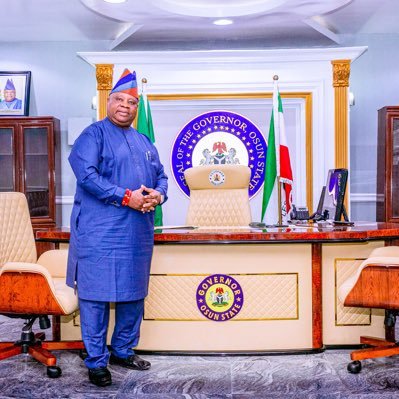
Adeleke branded his administration “Imole” (meaning “Light” in Yoruba), signaling his intention to bring illumination, progress, and development to Osun State.
Key Achievements and Initiatives
According to official government sources, Adeleke’s administration has undertaken numerous projects in its first three years:
Infrastructure Development:
- Dualization of the Osogbo-Ikirun road with street lights (10.5km)
- Construction and rehabilitation of multiple roads across the state
- Resumption of the abandoned Osogbo/Ikirun/Kwara boundary road
- Construction of failed bridges and culverts, including the Bokusoro/Adeeke bridge in Iwo
Healthcare:
- Imole Surgical and Medical Outreach: Providing free surgeries (cataracts, hernias) and medical care to 18,000 beneficiaries across all nine federal constituencies (2,000 persons per constituency)
- Enrollment of 3,000 Osun indigenes on the Osun Health Insurance Scheme (OHIS)
Water and Electrification:
- Provision of portable borehole water in each of Osun’s 333 wards
- Rural electrification projects, including transformers and electrical infrastructure
Community Development:
- Distribution of ₦518 million to 40 communities for infrastructural development
Technology and Innovation:
- Launch of “Osun on Tech Revolution” with new ICT policies
- Domestication of Nigeria’s Startup Act
- Osun Google Mapping Project
Education:
- Various education sector improvements are branded as part of the “Imole Education Scorecard.”
Agriculture:
- “Imole Agro-Revolution” initiatives aimed at boosting agricultural productivity
Governance Style and Controversies
Adeleke’s governorship has been characterized by:
Accessibility: Known for maintaining close contact with grassroots communities and being accessible to ordinary citizens
Energy: His high-energy personality extends to governance, with frequent visits to project sites and communities
Family Involvement: The Adeleke family’s collective engagement in Osun politics and governance
Criticism: Opponents argue that his dancing and cheerful persona reflect a lack of seriousness, though supporters counter that joy doesn’t preclude effective governance
The “Dancing Governor” Phenomenon
Origins and Meaning
Adeleke’s love for dancing predates his governorship. As a senator, he was already known for breaking into dance at political rallies, celebrations, and even formal events. His moves, often spontaneous and energetic, quickly went viral on social media.
Cultural Impact
The “Dancing Governor” nickname has become both his greatest asset and his most criticized attribute:
Supporters’ View:
- Represents authenticity and joy in leadership
- Makes politics more accessible and relatable
- Demonstrates that governance doesn’t require somber rigidity
- Reflects Yoruba cultural appreciation for celebration and vitality
- Shows humility and willingness to connect with ordinary people
Critics’ Perspective:
- Suggests a lack of seriousness about governance
- Undermines the dignity of the office
- Distracts from substantive policy discussions
- Reflects poor judgment about appropriate behavior for a governor
Recent Controversies
In December 2025, a viral video showed First Lady Oluremi Tinubu apparently rebuking Adeleke for singing praises instead of proceeding with his speech at a public event. The incident sparked debate about protocol, spontaneity, and respect for ceremonial occasions.
Adeleke’s Defense
In a December 2025 interview on Channels Television’s “Politics Today,” Adeleke directly addressed the criticism:
“I will keep dancing because I love to dance, I love to praise my God, and that doesn’t change anything. So, I will still dance, praise my God, and do my work. Everybody has their way of relaxing. My hobby is to dance and praise my God; that does not affect my work.”
He emphasized that dancing gives him joy, but delivering on electoral promises gives him even greater satisfaction, and insisted his re-election prospects in 2026 won’t be harmed by his trademark moves.
The 2025 Political Earthquake: Defection to the Accord Party
Leaving the PDP
In December 2025, Adeleke shocked Nigerian politics by announcing his defection from the PDP, the party that brought him to power, to the Accord Party. This move came ahead of the August 8, 2026, gubernatorial election, where he seeks a second term.
In explaining his decision, Adeleke cited “persistent leadership turmoil at the party’s national level” and the need to protect the progress his administration has made. He stated:
“To ensure continuity and the long-term sustainability of our people-centered governance agenda beyond 2026, we have taken the bold step of moving to the Accord Party. This decision is driven by our commitment to protect the progress we have made together and to secure a stronger future for our dear state.”
The Political Calculus
The defection has generated significant analysis among political observers:
Potential Advantages:
- Escaping PDP’s internal crises and leadership instability
- Positioning himself above partisan politics
- Creating a new political platform that could attract diverse supporters
Significant Risks:
- Losing PDP’s national infrastructure and resources
- The Accord Party lacks the organizational strength of major parties
- Potential alienation of PDP loyalists who supported him in 2022
- The federal government (controlled by the APC) may intensify opposition
The 2026 Challenge
Unlike 2022, Adeleke now faces a significantly more difficult political landscape:
- APC Unity: The APC appears more cohesive than in 2022
- Loss of PDP Support: The party infrastructure that helped him win is no longer available
- Federal Power: The APC-controlled federal government may deploy resources against him
- Incumbency Scrutiny: His performance will be rigorously examined
- Accord Party Weakness: His new party lacks a strong grassroots presence
Political analysts note that Adeleke is “dancing on a political tightrope” and that his re-election will be “tough but not impossible,” given Osun voters’ history of defying elite consensus.
Personal Life and Family
Wife and Children
Adeleke is married and has three children, all of whom have pursued careers in Nigeria’s entertainment industry:
- Adebayo Adeleke (known as B-Red): A musician in Nigeria’s Afrobeats scene
- Shina Adeleke (known as Sina Rambo): Also a musician
- A daughter who resides and works in the United States
The entertainment genes clearly run strong in the family, explaining Adeleke’s comfort with public performance and his close relationship with his nephew Davido, whom many joke he treats more like a son than a nephew.
The Davido Connection
Governor Adeleke‘s relationship with his superstar nephew Davido has become legendary. The two are frequently seen together, with Adeleke enthusiastically supporting Davido’s music career and Davido reciprocating with political support. Videos of the governor dancing to Davido’s songs regularly go viral, further cementing his “Dancing Governor” image.
At Davido’s star-studded 2024 wedding, Uncle Ademola was prominently featured, dancing energetically and celebrating his nephew’s happiness, a moment that showcased their strong family bond.
Legacy and Historical Significance
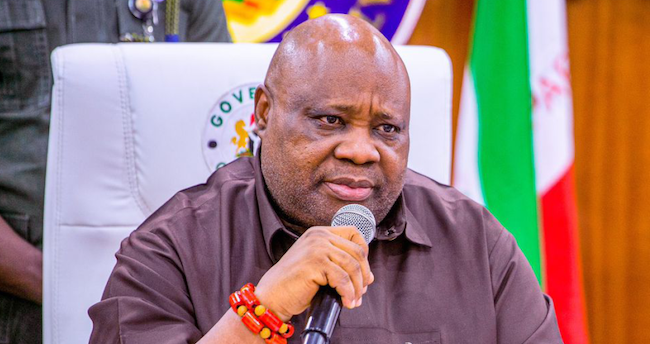
Breaking the Mold
Adeleke represents a new archetype in Nigerian politics, a leader who refuses to conform to traditional expectations of gubernatorial gravitas. Whether this approach succeeds long-term or becomes a cautionary tale will be determined by the 2026 election results and his administration’s ultimate impact.
The Adeleke Dynasty Continues
As the current president of the Adeleke dynasty and governor of Osun State, Ademola carries the family legacy forward. Following his father, Senator Ayoola Adelek, and his brother Senator Isiaka Adeleke, he represents the third generation of Adeleke political leadership.
Educational Redemption
His return to school at 59 to earn his bachelor’s degree stands as an inspiring story of persistence and the importance of education, a powerful message for older Nigerians who may have deferred educational goals.
Conclusion: A Governor at the Crossroads
As Governor Ademola Adeleke approaches the crucial 2026 election, he stands at a crossroads. His defection to the Accord Party represents either a bold strategic move that will secure his legacy or a political miscalculation that ends his governorship after one term.
What’s undeniable is that Adeleke has brought unprecedented energy, visibility, and personality to Osun State governance. Whether dancing to his nephew’s songs, launching healthcare initiatives, or defying political expectations, he has made his mark on Nigerian politics.
His story embodies both the promise and perils of contemporary Nigerian democracy: family dynasties, educational controversies, electoral battles, party defections, and the tension between tradition and innovation in political leadership.
As he continues to dance, both literally and figuratively, through Nigeria’s complex political landscape, Governor Ademola Adeleke remains one of the most fascinating figures in Nigerian politics. His ultimate legacy will be written in the coming years, determined by his administration’s achievements, the 2026 election outcome, and his ability to prove that joy, energy, and governance can indeed coexist.
For now, the “Dancing Governor” keeps dancing, keeps governing, and keeps defying conventional expectations, and that, perhaps, is his most enduring contribution to Nigerian political culture.
Quick Reference: Governor Ademola Adeleke at a Glance
Full Name: Ademola Jackson Nurudeen Adeleke
Date of Birth: May 13, 1960
Age: 65 years (as of 2025)
Place of Birth: Enugu, Enugu State
State of Origin: Osun State (Ede)
Education:
- Methodist Primary School, Surulere, Lagos
- Nawarudeen Primary School, Ikire
- Seventh Day Adventist Secondary School, Ede
- Ede Muslim Grammar School, Ede
- Jacksonville State University, Alabama (Criminal Justice/Political Science – incomplete)
- Atlanta Metropolitan State College (B.Sc. Criminal Justice, 2021)
Political Career:
- Senator, Osun West (2017-2019)
- Governor of Osun State (November 27, 2022 – Present)
Political Parties:
- All Progressives Congress (APC) – until April 2017, People’s Democratic Party (PDP) – 2017-2025
- Accord Party – December 2025-Present
Corporate Experience:
- Quicksilver Courier Company, Atlanta (1985-1989)
- Origin International LLC, Atlanta (VP, 1990-1994)
- Guinness Nigeria Plc (Executive Director, 1992-1999)
- Pacific Holdings Limited (Group Executive Director, 2001-2016)
Family:
- Father: Senator Ayoola Adeleke
- Brother: Late Senator Isiaka Adeleke (First Osun State Governor)
- Brother: Dr. Adedeji Adeleke (Billionaire businessman)
- Nephew: Davido (Afrobeats superstar)
- Children: Three (B-Red, Sina Rambo, one daughter)
Nickname: “The Dancing Governor” / “Dancing Senator”
Administration Brand: “Imole” (Light)
Next Election: August 8, 2026 (Osun Gubernatorial Election)
Current Party Platform: Accord Party
Known For: Energetic dancing, people-centered governance, educational redemption story, Adeleke family dynasty, political resilience