Introduction
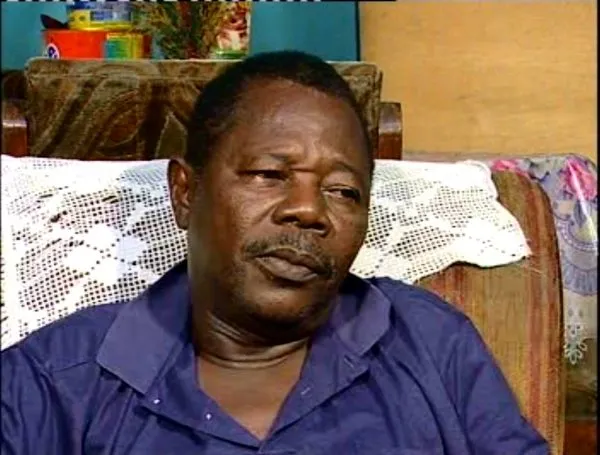
In the golden era of Nigerian entertainment, one name stood out as the embodiment of authentic African comedy: Sam Loco Efe. Born Samuel Arase Efeimwonkiyeke, this legendary actor, producer, and director brought laughter to millions of homes across Africa for over four decades. From his unforgettable performances in “New Masquerade” to his countless roles in Nollywood films, Sam Loco became more than just an actor; he became a cultural institution, a symbol of Nigerian humor at its finest. His sudden death in 2011 left an irreplaceable void in Nigerian cinema, but his legacy continues to inspire generations of comedians and actors. This is the story of a man who overcame poverty, fought in a civil war, and went on to become one of Africa’s most beloved entertainers.
Early Life: From Tragedy to Triumph
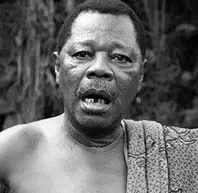
Samuel Arase Efeimwonkiyeke was born on December 25, 1945 (some sources cite December 25, 1939), in Enugu State, eastern Nigeria. His father, Arase Efeimwonkiyeke, was a prison warder of ethnic Edo ancestry from Ogboka in Benin City, Edo State, who worked in Eastern Nigeria. His mother was a petty trader who sold bean cakes (akara), struggling to provide for her family through small-scale commerce.
Sam Loco spent a considerable part of his childhood in the town of Abakaliki in present-day Ebonyi State, southeastern Nigeria. His early life was marked by tragedy when he lost his father during his elementary school years. This devastating loss thrust enormous responsibility upon young Sam’s shoulders, forcing him to help his mother with her bean cake trade to earn income for the family.
The financial hardship meant that Sam Loco spent more than the normal years obtaining his elementary education. While his peers progressed through school at the standard pace, he had to balance his studies with work, often missing classes to help his mother at the market. This challenging childhood taught him resilience, hard work, and empathy for ordinary Nigerians, qualities that would later define his comedic characters.
Education: The Birth of an Actor
Elementary School Discovery
Sam Loco’s first encounter with acting came during his elementary school days when a theatre group visited his school to stage a play called “The Doctor Despite Himself.” Mesmerized by the performance, young Sam engaged the actors in conversation afterward, discussing theatre and performance arts with an enthusiasm that revealed his burgeoning passion.
He became a member of several drama societies in primary school, including one that performed a rendition of Shakespeare’s “Julius Caesar” at an Eastern regional arts festival in Abakaliki. Although the play finished last in the drama competition, Sam Loco was recognized as the best actor, earning him a scholarship to complete his elementary school education. This recognition was both a validation of his talent and a lifeline that allowed him to continue his education despite his family’s financial struggles.
Secondary Education
After completing elementary school, Sam Loco attended numerous secondary schools, though specific details about these institutions vary across sources. Some accounts mention St. Michael’s Primary School in Enugu and St. John’s College in Aba, Abia State, followed by Edo College in Benin City.
Throughout his secondary education, he remained active in drama societies, organizing productions including “The Doctor Despite Himself” and a play called “Vendetta.” His passion for theatre grew with each performance, and it became increasingly clear that acting was not just a hobby but a calling.
The Civil War Interruption (1967-1970)
Sam Loco’s educational journey was interrupted by the Nigerian Civil War (1967-1970). He fought on the Biafran side until 1968, experiencing the horrors of war firsthand. The conflict forced him to flee from the East, eventually settling in Benin City, where he stayed with Pa Aghedo.
This wartime experience profoundly impacted Sam Loco, giving him a deeper understanding of human suffering, resilience, and the healing power of laughter, insights that would later inform his comedic performances.
The Journey to Stardom
The Ovonranwen Theatre Group (1960s-1970s)
While in Benin City during and after the civil war, Sam Loco founded the Ovonranwen Theatre Group in the late 1960s. This was his first major step toward professionalizing his passion for acting. The group produced their debut production, “Obaiwape,” which showcased Sam Loco’s growing skills as both performer and organizer.
However, the financial rewards from the theatre were meager, barely enough to sustain him. Facing economic reality, Sam Loco sought additional employment opportunities in Lagos.
The “Locomotive” Nickname
After the war subsided in 1969, Sam Loco joined the ECN (Electricity Corporation of Nigeria, now PHCN, Power Holding Company of Nigeria) as a footballer. His exceptional speed on the football pitch earned him the nickname “Locomotive,” which was later shortened to “Loco.” This nickname would become his professional identity, eventually forming the stage name by which millions would know him: Sam Loco Efe.
Corporate Jobs and the Call to Theatre
To make ends meet, Sam Loco worked for several companies in Lagos, including Michelin Tyres and Dunlop Tyres, in sales positions. But the corporate world couldn’t contain his artistic spirit. The pull of the stage remained irresistible.
In 1977, at a point when many would have settled into stable corporate careers, Sam Loco made a bold decision: he would leave sales and pursue theatre full-time. He was 32 years old (or 38, depending on the birth year source), an age when such career pivots are considered risky.
The FESTAC ’77 Breakthrough
His gamble paid off almost immediately. Sam Loco auditioned and secured the lead role of Langbodo in a play by renowned playwright Dapo Adelugba, presented during FESTAC ’77 (the Second World Black and African Festival of Arts and Culture), one of Africa’s most significant cultural events.
His performance was outstanding. At the end of FESTAC, Adelugba introduced Sam Loco to a friend at the University of Ibadan, who helped him secure a position as a senior artiste at the institution. This appointment provided both financial stability and artistic credibility, allowing him to develop his craft while performing regularly.
Television Stardom: “New Masquerade”
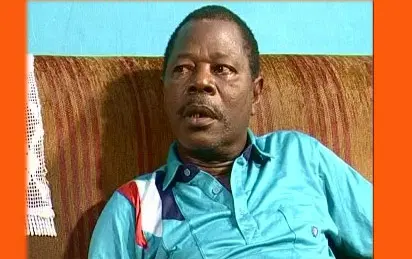
Sam Loco’s breakthrough into mainstream Nigerian consciousness came through his role in “New Masquerade,” the legendary Nigerian Television Authority (NTA) comedy series that aired from 1984 to the early 1990s. This sitcom became a cultural phenomenon, with millions of Nigerians tuning in weekly to watch the misadventures of Chief Zebrudaya (played by Chika Okpala), his wife Ovuleria (Lizzy Evoeme), their servant Giringory (Claude Eke), and other colorful characters.
Sam Loco’s appearances on “New Masquerade” showcased his impeccable comedic timing, his ability to improvise, and his natural chemistry with other actors. The show’s influence on Nigerian popular culture cannot be overstated; it created catchphrases, influenced Nigerian English, and established comedic archetypes that endure today.
Nollywood Era: A Prolific Career
The Nollywood Boom (1990s-2000s)
When Nollywood, Nigeria’s home video film industry, exploded in the 1990s following the success of “Living in Bondage” (1992), Sam Loco was perfectly positioned to capitalize on the opportunity. His television experience, theatrical background, and established popularity made him one of the industry’s most sought-after actors.
Notable Films and Television Series
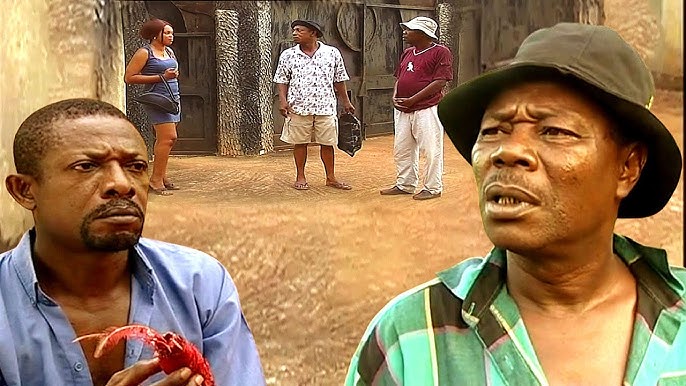
Throughout the 1990s and 2000s, Sam Loco appeared in over 200 films and television productions, becoming one of Nollywood’s most prolific actors. Some of his most memorable works include:
Television Series:
- “Hotel de Jordan” (1990s) – A comedy series that became a household favorite
- “Everyday People” – A popular soap opera where he was a major character
- “New Masquerade” (1984-1990s) – The legendary NTA comedy
Films:
- “Tom and Jerry” – Alongside child stars Chinedu Ikedieze (Aki) and Osita Iheme (Pawpaw)
- “Game Fools Play” (2007) and “Game Fools Play 2” (2007)
- “Vigilante” (1988)
- “Tears and Pain”
- “Save My Twins”
- “Koboko and The Rule”
- “Spirit of Twins”
- Hundreds of other titles spanning comedy, drama, and various genres
Acting Style and Character Range
Sam Loco was renowned for his versatility. While he became synonymous with comedy, particularly playing eccentric, lovable characters, he could also deliver serious, dramatic performances. His comedic style relied on:
- Physical comedy – Exaggerated gestures and facial expressions
- Timing – Impeccable sense of comedic rhythm
- Improvisation – Ability to enhance scripts with spontaneous humor
- Authenticity – Portraying genuine Nigerian characters and situations
- Cultural relatability – Drawing humor from everyday Nigerian life
His characters often represented ordinary Nigerians, traders, struggling workers, and village elders, making them immediately recognizable and beloved by audiences across socioeconomic backgrounds.
Mentorship and Industry Contributions
Sam Loco played a significant mentorship role to younger actors, particularly Igbo actors, including Osita Iheme (Pawpaw) and Chinedu Ikedieze (Aki). His willingness to work with child actors and support emerging talent demonstrated his commitment to Nollywood’s future.
He also contributed behind the scenes as a producer and director, helping to develop projects and nurture new creative voices in the industry. His experience in theatre gave him insights into storytelling, character development, and production management that benefited countless productions.
Awards and Recognition
Sam Loco Efe’s contributions to Nigerian cinema earned him numerous honors:
- Best Actor in Comedy – Africa Movie Academy Awards (AMAA), 2005
- Best Comic Actor in Nigeria – Africa Movie Academy Awards
- Most Prominent Actor in Nigeria – Africa Magic Viewers’ Choice Awards
- Lifetime Achievement Award – Nollywood Film Festival, 2010
- Member of the Order of the Niger (MON) – 2008, for his contributions to Nigerian cinema
These awards represented not just recognition of his talent but acknowledgment of his pioneering role in establishing Nigerian comedy as a respected art form.
Personal Life and Family
Sam Loco Efe was married to Arase Efeimwonkiyeke (sharing his father’s name). Together, they had six children:
- Mrs. Sandra Ebun Leonardo
- Bola Adesuwa Efe
- Bismarck Nosa Efe
- Julia Orobosa Omozusi
- Precious Osariemen Efe
- Omoruyi Efe
According to some accounts, his eldest son became a medical doctor, and his daughter pursued law, suggesting that Sam Loco’s emphasis on education, born from his own struggles, successfully influenced his children’s paths.
Despite his public persona as a comedian, those who knew him personally described Sam Loco as a serious, thoughtful man who understood the difference between his on-screen characters and his real identity. He was reportedly humble, generous with colleagues, and deeply committed to his family.
Controversies and Industry Disputes
Nkem Owoh Fallout (2007)
In 2007, rumors surfaced about a fallout between Sam Loco and fellow actor Nkem Owoh (Osuofia). Industry insiders suggested the dispute stemmed from disagreements over revenue sharing in a joint project. While neither party publicly addressed the issue in detail, the incident created significant buzz in Nollywood.
The two actors eventually reconciled and appeared together in subsequent films, demonstrating professionalism and the industry’s collaborative spirit.
Production Fund Dispute (2009)
During the production of a film in Enugu in 2009, allegations arose that Sam Loco had a heated altercation with the director, accusing him of mismanaging production funds. Sam Loco denied the claims, attributing the misunderstanding to poor communication. The issue was resolved amicably, but it highlighted the financial and management challenges that plagued Nollywood productions.
The Sudden Death: August 7, 2011
On Sunday morning, August 7, 2011, Sam Loco Efe was found dead in his hotel room at Amakohia (also spelled Amakha), Owerri, Imo State. He was in town filming a movie. After he failed to come down from his room following the previous night’s retirement, hotel staff forced the door open.
The discovery was heartbreaking: Sam Loco was sitting on a chair, with Ventolin inhalers beside him. Ventolin is used to treat asthma and breathing difficulties, and it was known that Sam Loco suffered from asthma. However, the exact cause of death has never been officially determined or publicly disclosed.
He was 65 years old (or 71, depending on the birth year source).
The Unrealized Dream
Steve Eboh, former vice president of the Actors Guild of Nigeria (AGN) and a close friend and confidant of Sam Loco, revealed that the actor had plans to visit his farmhouse in Ebonyi State to rest for a while. This desire was never fulfilled. The tragedy of his death was compounded by the fact that he died while working, still committed to his craft until the very end.
Legacy: An Irreplaceable Icon
Cultural Impact
Sam Loco Efe’s influence on Nigerian entertainment is immeasurable. He:
- Pioneered Nigerian comedy on television and film, establishing templates that continue to influence comedians
- Elevated Nollywood’s production standards through his professionalism and commitment to quality
- Mentored a generation of actors who would go on to define the next era of Nigerian cinema
- Represented authentic Nigerian culture on screen, helping audiences see themselves reflected with dignity and humor
- Demonstrated that comedy deserves respect as a serious art form requiring skill, timing, and intelligence
Net Worth and Financial Success
At the time of his death, Sam Loco Efe’s net worth was estimated between $400,000 $1 million. While this may seem modest by contemporary standards, it represented significant success for a Nollywood actor in that era, especially considering he started from poverty and built his wealth entirely through his craft.
Remembrance and Continuing Influence
Over a decade after his passing, Sam Loco Efe remains beloved by Nigerian audiences. His films continue to air on television and streaming platforms, introducing new generations to his genius. Young comedians and actors study his performances, learning from his timing, his authenticity, and his ability to find humor in ordinary situations.
Various tributes and retrospectives have honored his memory, including anniversary articles, film festivals featuring his work, and testimonials from colleagues who worked with him.
Conclusion: The Man Behind the Laughter
Sam Loco Efe’s journey, from a poor boy selling bean cakes with his mother to one of Africa’s most celebrated entertainers, is a testament to talent, determination, and the transformative power of art. He overcame poverty, war, and numerous obstacles to achieve greatness in his chosen field.
But his greatest achievement was simpler and more profound: he made people laugh. In a country often burdened by economic hardship, political instability, and social challenges, Sam Loco provided relief, joy, and momentary escape. His characters reflected Nigerians back to themselves with affection, humor, and dignity.
He showed that comedy wasn’t just entertainment; it was healing, community-building, and cultural preservation. Through laughter, he connected millions of people across ethnic, religious, and class divides, reminding them of their shared humanity.
Sam Loco Efe died as he lived, working, creating, and bringing joy to others. Though his voice is silent, his laughter echoes through the countless films and performances that preserve his genius for future generations.
Rest in peace, Sam Loco Efe. Nigeria’s beloved comedian. Africa’s gift to laughter.
Quick Reference: Sam Loco Efe at a Glance
Full Name: Samuel Arase Efeimwonkiyeke
Stage Name: Sam Loco Efe
Date of Birth: December 25, 1945 (some sources cite 1939)
Date of Death: August 7, 2011
Age at Death: 65 years (or 71 years)
Place of Birth: Enugu State, Nigeria
Childhood Home: Abakaliki, Ebonyi State
Father: Arase Efeimwonkiyeke (prison warder, Edo origin)
Mother: Petty trader (bean cake seller)
Nickname Origin: “Locomotive” (from football speed), shortened to “Loco.”
Career Start: 1970s (theatre), 1977 (professional full-time)
Breakthrough: Lead role in “Langbodo” at FESTAC ’77
Major TV Shows: “New Masquerade,” “Hotel de Jordan,” “Everyday People”
Films: 200+ Nollywood productions
Spouse: Arase Efeimwonkiyeke
Children: Six (Sandra Ebun Leonardo, Bola Adesuwa, Bismarck Nosa, Julia Orobosa, Precious Osariemen, Omoruyi)
Major Awards: AMAA Best Actor in Comedy (2005), MON (2008), Lifetime Achievement Award (2010)
Known Health Condition: Asthma
Place of Death: Hotel room, Amakohia, Owerri, Imo State
Cause of Death: Undetermined (Ventolin inhalers found beside him)
Net Worth: $400,000 – $1 million
Legacy: Pioneer of Nigerian comedy, mentor to younger actors, cultural icon