Introduction
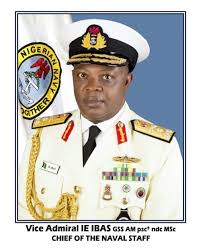
In the annals of Nigeria’s military history, few names evoke the respect and admiration commanded by Vice Admiral Ibok-Ete Ekwe Ibas (Rtd), CFR. With a remarkable career spanning over four decades, this distinguished naval officer has served Nigeria in multiple capacities, from commanding naval vessels in the heat of operations to leading the entire Nigerian Navy as its 22nd Chief of Naval Staff, and later representing the nation as a diplomat in Ghana. In March 2025, President Bola Ahmed Tinubu appointed him as the Sole Administrator of Rivers State, further demonstrating the trust placed in his leadership during challenging times. His story is one of dedication, excellence, and unwavering commitment to the Nigerian nation.
Early Life and Background
Vice Admiral Ibok-Ete Ekwe Ibas was born on September 27, 1960, in the serene town of Nko, located in Yakurr Local Government Area of Cross River State, in Nigeria’s South-South geopolitical zone. Growing up in this predominantly Yakurr community, young Ibas was raised in a Christian household where values of discipline, integrity, and service were deeply ingrained.
His parents, Mr. and Mrs. Ibas, instilled in him the importance of education and hard work from an early age. These foundational values would later become the bedrock of his distinguished military career. As a member of the Yakurr ethnic group, Ibas has maintained strong ties to his roots throughout his illustrious career, often acknowledging the role his upbringing played in shaping his character and worldview.
Educational Journey
Primary and Secondary Education
Ibas began his academic journey in 1966 at Nko Primary School in his hometown. His early education provided him with a solid foundation in basic literacy and numeracy. In 1971, he completed his primary education at Big Qua Primary School in Calabar, the capital of Cross River State, marking the beginning of his exposure to urban educational environments.
For his secondary education, young Ibas attended the prestigious Hope Waddell Training Institute in Calabar from 1972 to 1976. This historic institution, founded in 1895 by the Scottish missionary Hope Masterton Waddell, has a long tradition of producing distinguished Nigerians across various fields. At Hope Waddell, Ibas not only excelled academically but also began to demonstrate the leadership qualities that would define his future career.
Pre-Military Education
Between 1977 and 1979, Ibas attended the School of Basic Studies in Ogoja, Cross River State. This period served as crucial preparation for his entry into military service, providing him with the advanced academic foundation necessary for the rigors of military training.
Nigerian Defence Academy
On June 20, 1979, at the age of 19, Ibas achieved a significant milestone in his life when he enlisted in the Nigerian Defence Academy (NDA) in Kaduna as a member of the 26th Regular Course. The NDA, established to train and develop officers for the Nigerian Armed Forces, provided comprehensive military and academic education. His course mates included future military leaders such as General Abayomi Gabriel Olonisakin, who would later become Nigeria’s Chief of Defence Staff.
After four rigorous years of military training, academic studies, and character development, Ibas was commissioned as a Sub-Lieutenant in the Nigerian Navy on January 1, 1983. This commissioning marked the official beginning of what would become a legendary naval career.
Advanced Military Education and Training
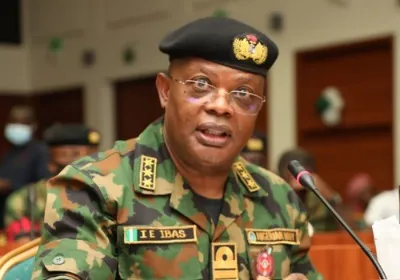
Throughout his career, Vice Admiral Ibas demonstrated an insatiable appetite for knowledge and professional development. He attended numerous military courses and training programs both within Nigeria and internationally, each adding to his expertise and preparing him for higher responsibilities.
International Training
India (1983-1984): Shortly after his commissioning, from April 1983 to May 1984, Ibas attended the Sub-Lieutenant Technical Course at INS Venduruthy in Cochin, India. This specialized training provided him with technical knowledge essential for naval operations.
Nigeria (1986-1987): Demonstrating his versatility, Ibas underwent Primary Pilot Training at the 301 Primary Flying Training School at the Nigerian Air Force Base in Kaduna from April 1986 to October 1987. This aviation training would prove valuable in understanding multi-dimensional military operations.
Armed Forces Command and Staff College, Jaji (1990): In January 1990, Ibas enrolled at the prestigious Armed Forces Command and Staff College in Jaji, Kaduna, completing the Junior Staff Course in June 1990. This course is designed to prepare mid-level officers for staff and command positions.
United States (1992-1993): In July 1992, Ibas reported to the Amphibious Warfare School at the United States Marine Corps University in Quantico, Virginia. He graduated in May 1993 with a diploma in amphibious warfare, gaining valuable insights into complex maritime operations and international military best practices.
Underwater Warfare Specialization (1994-1995): Demonstrating his commitment to specialized knowledge, Ibas commenced the Officers’ Long Course in underwater warfare at the Underwater Warfare School, NNS Quorra, in February 1994, completing it in February 1995. This specialization would later distinguish him as an expert in submarine and anti-submarine warfare.
Senior Staff Course (1996-1997): From August 1996 to July 1997, Ibas returned to the Armed Forces Command and Staff College, Jaji, for the Senior Staff Course. His outstanding performance during this course, completing with excellent grades, led to his appointment as directing staff at the same institution, a rare honor reserved for exceptional officers.
Pakistan (Advanced Studies): Ibas attended the National Defence Course at the National Defence College in Islamabad, Pakistan, where he also earned a Master of Science (MSc) degree in Defence and Strategic Studies from Quaid-i-Azam University, Islamabad. This advanced academic qualification added intellectual depth to his military expertise.
Professional Development Seminars and Exhibitions
Beyond formal courses, Ibas participated in numerous seminars and exhibitions that kept him abreast of global security developments:
- 25th International Homeland Security Exhibition, Tel Aviv, Israel (June 2011)
- 3rd International Exhibition for Operational Units, Tel Aviv, Israel (June 2011)
- London International Leadership Course, London, England (August 2012)
These experiences provided him with exposure to cutting-edge security technologies and international best practices in defense and homeland security.
Naval Career: A Journey Through the Ranks
Early Naval Service (1983-1993)
As a newly commissioned Sub-Lieutenant, Ibas began his operational service as a midshipman aboard several Nigerian Navy Ships (NNS), including:
- NNS Ruwan Yaro
- NNS Obuma
- NNS Aradu
After his commissioning, he served as a watchkeeping officer on NNS Ayam and NNS Ekpe, where he gained practical experience in ship operations, navigation, and maritime security. These early postings provided him with firsthand knowledge of the challenges and complexities of naval operations in Nigerian waters.
Between July 1993 and August 1996, as a Lieutenant Commander, Ibas served as Executive Officer (second-in-command) on three different vessels:
- NNS Siri
- NNS Ekun
- NNS Ambe
The role of Executive Officer is critical in naval operations, as the individual serves as the captain’s right hand, managing day-to-day ship operations and crew welfare.
Command Positions (1997-2002)
Commanding Officer, Nigerian Navy Underwater Warfare School (1997-1998): From August 1997 to September 1998, Ibas commanded the Underwater Warfare School at NNS Quorra. This appointment reflected his specialized expertise in underwater warfare and positioned him as a leader in this critical domain of naval operations.
Commanding Officer, Forward Operating Base Ibaka (1998-2000): From September 1998 to June 2000, Ibas commanded the Forward Operating Base in Ibaka, Akwa Ibom State. This strategic location in the Gulf of Guinea placed him at the forefront of Nigeria’s efforts to secure its maritime territory and combat illegal activities in Nigerian waters.
Directing Staff, Armed Forces Command and Staff College (2000-2002): Due to his outstanding performance during the Senior Staff Course, Ibas was appointed as directing staff at the Armed Forces Command and Staff College, Jaji, from June 2000 to June 2002. In this capacity, he trained and mentored mid-career military officers from across the Nigerian Armed Forces and occasionally from other African nations.
Higher Command and Staff Positions (2003-2010)
Naval Provost Marshal (2003-2004): From April 2003 to June 2004, Ibas served as the Naval Provost Marshal, responsible for maintaining discipline, investigating offenses, and ensuring compliance with military regulations within the Nigerian Navy.
Principal Staff Officer to the Chief of Naval Staff (2004-2005): From June 2004 to July 2005, Ibas served as the principal staff officer to the Chief of Naval Staff, providing strategic advice and managing high-level administrative functions at Naval Headquarters.
Command Operations Officer, Western Naval Command (2006): In 2006, Ibas briefly served as the Command Operations Officer at the Headquarters of the Western Naval Command in Lagos, overseeing operational planning and execution in Nigeria’s western maritime zone.
Commander, Naval Air Base, Ojo (2006-2009): From December 2006 to January 2009, Ibas commanded the Naval Air Base in Ojo, Lagos. This position placed him in charge of the Nigerian Navy’s aviation assets and operations, demonstrating his versatility across different dimensions of naval warfare.
Director, Department of Maritime Warfare, AFCSC (2009-2010): Ibas returned to the Armed Forces Command and Staff College, Jaji, in January 2009, this time as the Director of the Department of Maritime Warfare, a position he held until November 2010. In this role, he shaped the curriculum and training of future military leaders in maritime operations.
Senior Leadership Positions (2010-2015)
Chief Staff Officer, Naval Training Command (2010-2011): From September 2010 to March 2011, Ibas served as the Chief Staff Officer at the Headquarters of the Naval Training Command in Lagos, overseeing the training and development of naval personnel.
Chief of Administration, Naval Headquarters (2011-2012): From March 2011 to February 2012, in recognition of his versatility in staff duties and administration, Ibas was appointed as the Chief of Administration at Naval Headquarters in Abuja. This position placed him at the heart of the Nigerian Navy’s administrative machinery.
Navy Secretary (2012-2013): From February 2012 to January 2013, Ibas served as the Navy Secretary, one of the most senior administrative positions in the Nigerian Navy. The Navy Secretary manages correspondence, documentation, and serves as the custodian of naval records and traditions.
Flag Officer Commanding, Western Naval Command (2013-2014): From January 2013 to January 2014, Ibas was appointed Flag Officer Commanding (FOC) of the Western Naval Command, one of the Nigerian Navy’s most important operational commands. As FOC, he oversaw all naval operations along Nigeria’s western coastline, including Lagos and the approaches to Nigeria’s busiest port.
Chief of Logistics (2014): In February 2014, Ibas was appointed Chief of Logistics at Naval Headquarters, responsible for procurement, supply chain management, and ensuring that the Nigerian Navy had the resources needed to carry out its missions.
GMD/CEO, Nigerian Navy Holdings Limited (2014-2015): In December 2014, Ibas was appointed as the Group Managing Director and Chief Executive Officer of Nigerian Navy Holdings Limited, a corporate entity established to generate revenue and support the welfare of naval personnel and their families. This appointment demonstrated his business acumen and ability to manage commercial operations.
Chief of Naval Staff (2015-2021)
Appointment and Tenure
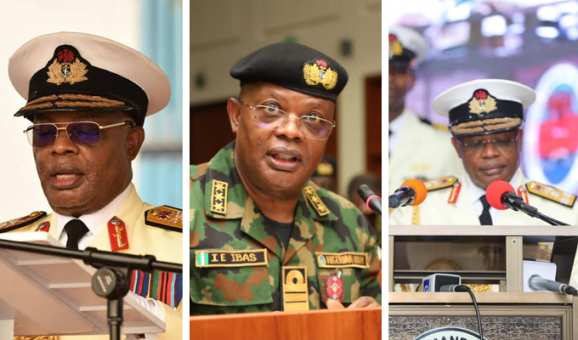
On July 13, 2015, President Muhammadu Buhari appointed Vice Admiral Ibok-Ete Ekwe Ibas as the 22nd Chief of Naval Staff (CNS) of the Nigerian Navy, the highest position in the service. This appointment came at a critical time when Nigeria faced significant maritime security challenges, including piracy, oil theft, illegal fishing, and the activities of militant groups in the Niger Delta.
As CNS, Ibas was responsible for:
- Setting the strategic direction for the Nigerian Navy
- Overseeing all naval operations across Nigeria’s territorial waters and Exclusive Economic Zone
- Managing personnel development and welfare
- Procuring and maintaining naval assets
- Collaborating with regional and international partners on maritime security
- Advising the President and National Security Council on naval and maritime matters
Key Achievements as Chief of Naval Staff
During his nearly six-year tenure as CNS, Vice Admiral Ibas implemented several initiatives aimed at modernizing the Nigerian Navy and enhancing its operational effectiveness:
Fleet Modernization: He oversaw the acquisition of new naval vessels and the refurbishment of existing ones, gradually modernizing Nigeria’s fleet to better address contemporary maritime threats.
Enhanced Training: Ibas prioritized the professional development of naval personnel, expanding training opportunities both locally and internationally to ensure the Navy had skilled personnel capable of operating modern equipment.
Improved Welfare: He championed initiatives aimed at improving the welfare of naval personnel and their families, recognizing that a well-motivated workforce is essential for operational effectiveness.
Regional Cooperation: Under his leadership, the Nigerian Navy strengthened its cooperation with regional navies through the Gulf of Guinea Commission and other multilateral platforms, recognizing that maritime security challenges require collective responses.
Anti-Piracy Operations: The Nigerian Navy intensified its anti-piracy operations in the Gulf of Guinea during Ibas’s tenure, contributing to a gradual decline in piracy incidents in Nigerian waters.
Counter-Illegal Activities: The Navy maintained pressure on illegal oil bunkering, illegal fishing, and other criminal activities in Nigerian waters, protecting the nation’s economic interests.
Retirement from Active Service
After a distinguished career spanning 42 years in the Nigerian Navy, Vice Admiral Ibas retired from active service on January 29, 2021. His retirement marked the end of an era, but not the end of his service to Nigeria.
Diplomatic Service: High Commissioner to Ghana (2021-2023)
Following his retirement from the Nigerian Navy, Vice Admiral Ibas transitioned seamlessly into diplomatic service. In July 2021, President Muhammadu Buhari appointed him as Nigeria’s High Commissioner to the Republic of Ghana, succeeding Olufemi Michael Abikoye.
Diplomatic Achievements
As Nigeria’s top diplomat in Ghana, Ibas brought his wealth of experience in international relations and strategic thinking to bear on strengthening bilateral ties between the two West African nations. His achievements in this role included:
Strengthening Bilateral Relations: Ibas worked to enhance cooperation between Nigeria and Ghana across multiple sectors, including trade, security, education, and cultural exchange.
Nigerian Citizens Assistance Desk: He established a Nigerian Citizens Assistance Desk in Accra to support the welfare of Nigerians in the diaspora, addressing their concerns and providing consular services efficiently.
Security Cooperation: Drawing on his military background, Ibas facilitated enhanced security cooperation between Nigeria and Ghana, particularly in addressing transnational security challenges affecting the West African region.
Trade Promotion: He promoted increased trade and investment between Nigerian and Ghanaian businesses, recognizing the economic potential of stronger bilateral economic ties.
Cultural Diplomacy: Ibas supported cultural exchange programs that fostered greater understanding between Nigerians and Ghanaians, strengthening the people-to-people connections that underpin diplomatic relations.
His tenure as High Commissioner was marked by professionalism, dedication, and a genuine commitment to advancing Nigeria’s interests while maintaining excellent relations with the host country.
Administrator of Rivers State (2025)
Appointment and Context
On March 18, 2025, in a dramatic development in Nigerian politics, President Bola Ahmed Tinubu declared a state of emergency in Rivers State, suspending Governor Siminalayi Fubara, his deputy Ngozi Odu, and all members of the Rivers State House of Assembly for an initial period of six months.
The declaration came amid a prolonged political crisis in the oil-rich state, stemming from tensions between Governor Fubara and his predecessor, Nyesom Wike, who serves as Minister of the Federal Capital Territory. The crisis had paralyzed governance and threatened stability in one of Nigeria’s most economically strategic states.
In his nationwide broadcast announcing the state of emergency, President Tinubu nominated Vice Admiral Ibas as the Sole Administrator to oversee the affairs of Rivers State. The President stated:
“In the meantime, I hereby nominate Vice Admiral Ibokette Ibas (Rtd) as Administrator to take charge of the affairs of the state in the interest of the good people of Rivers State.”
Rationale for Selection
The selection of Vice Admiral Ibas for this sensitive assignment was based on several factors:
Demonstrated Leadership: His successful leadership of the Nigerian Navy and diplomatic service demonstrated his ability to manage complex organizations during challenging times.
Neutrality: As someone not from Rivers State or involved in the political disputes, Ibas was seen as a neutral figure who could restore order without partisan bias.
Security Expertise: Given the security implications of the political crisis, his extensive military and security background was considered valuable.
Administrative Competence: His experience managing large organizations and complex logistics positioned him well to oversee state administration.
Disciplined Approach: His military background was expected to bring discipline, efficiency, and a results-oriented approach to governance.
Mandate and Responsibilities
As Sole Administrator, Vice Admiral Ibas’s mandate includes:
- Overseeing the day-to-day administration of Rivers State
- Ensuring continuity of government services
- Maintaining law and order
- Managing state resources prudently
- Coordinating with federal agencies
- Preparing for the eventual restoration of democratic governance
Importantly, the President clarified that the declaration did not affect the judicial arm of Rivers State, which would continue to function according to its constitutional mandate. The Administrator was also prohibited from making new laws but could formulate regulations necessary for administration, subject to approval by the Federal Executive Council and promulgation by the President.
Public Reception and Controversies
The appointment of a military administrator in a democratic setting generated significant debate across Nigeria:
Supporters’ Perspective: Supporters of the appointment argued that Ibas’s disciplined leadership, experience in crisis management, and neutral status made him ideally suited to restore order and stability to Rivers State. They emphasized that the state of emergency was a constitutional provision designed for extraordinary circumstances.
Critics’ Perspective: Critics questioned the suspension of democratically elected officials and the appointment of a military-style administrator, viewing it as a setback for democracy. Some argued that constitutional and political mechanisms should have been exhausted before resorting to emergency rule.
Legal Challenges: The declaration and appointment faced legal challenges in Nigerian courts, with various parties questioning the constitutionality of the President’s actions.
Despite the controversies, Vice Admiral Ibas approached his responsibilities with professionalism, focusing on maintaining stability and ensuring that essential government services continued uninterrupted.
Personal Life and Family
Marriage and Children
Vice Admiral Ibok-Ete Ekwe Ibas is happily married to Barrister Theresa Ibas, a distinguished lawyer and former National President of the Naval Officers’ Wives Association (NOWA). Mrs. Theresa Ibas was born on May 11 and has been a strong pillar of support throughout her husband’s military and post-military career.
The couple is blessed with three children, sons and a daughter, and at least one grandchild. Despite his high-profile public service, Ibas has managed to maintain a relatively private family life, protecting his children from excessive public scrutiny while instilling in them the values of discipline, integrity, and service that have defined his own life.
Religious Faith
Vice Admiral Ibas is a devout and practicing Christian. His faith has been a guiding force throughout his life, providing moral direction and spiritual strength during challenging times. He has often attributed his successes to divine providence and maintains that his Christian values inform his approach to leadership and service.
Personal Interests and Hobbies
Despite the demands of his various roles, Ibas maintains several personal interests that provide balance and relaxation:
Reading: He is an avid reader with a particular interest in military history, strategic studies, and biographies of great leaders. This habit of continuous learning has contributed to his intellectual depth and strategic thinking.
Watching Documentaries: Ibas enjoys watching documentary films, particularly those related to military history, nature, and global affairs. This interest keeps him informed about global developments and broadens his perspective.
Golf: Like many senior military officers and diplomats, Ibas is a golf enthusiast. He is a member of several prestigious golf clubs, including the IBB Golf Club and the Ibom Golf Club. Golf provides him with recreation, exercise, and opportunities for informal networking.
Physical Appearance
Vice Admiral Ibas stands approximately 5 feet 6 inches (5’6″) tall. He maintains a dignified bearing characteristic of senior military officers, with a commanding presence that reflects decades of leadership.
Awards, Honors, and Professional Affiliations
Military Awards and Decorations
Throughout his distinguished military career, Vice Admiral Ibas earned numerous awards and decorations recognizing his service and contributions to Nigeria’s defense:
- Silver Jubilee Medal: Awarded to military personnel with 25 years of distinguished service
- ECOMOG Medal: For service with the Economic Community of West African States Monitoring Group
- Forces Service Star (FSS)
- Meritorious Service Star (MSS)
- Distinguished Service Star (DSS)
- General Service Star (GSS)
- Admiralty Medal (AM)
- Passed Staff Course (DAGGER): A designation indicating successful completion of staff college with distinction
National Honours
Commander of the Order of the Federal Republic (CFR): In October 2022, Vice Admiral Ibas was conferred with the prestigious Commander of the Order of the Federal Republic (CFR) by President Muhammadu Buhari. This is one of Nigeria’s highest national honors, recognizing his exceptional contributions to national security and the development of the Nigerian Navy.
Academic and Professional Designations
- Fellow of the National Defence College (FDC)
- Passed Staff Course Plus (psc+): An enhanced staff college qualification
Professional Memberships and Affiliations
Vice Admiral Ibas holds membership in several prestigious professional organizations:
Military and Security Organizations:
- Fellow, International Institute of Professional Security
- Member, United States Naval Institute
Maritime and Shipping:
- Fellow, Certified Institute of Shipping
Management and International Affairs:
- Nigerian Institute of Management (Chartered)
- Nigerian Institute of International Affairs (NIIA)
Social and Service Organizations:
- Paul Harris Fellow, Rotary Club International
- Member, Ikoyi Club, Lagos
- Member, IBB Golf Club
- Member, Ibom Golf Club
These memberships reflect his diverse interests and his commitment to continuous engagement with professional communities both within and outside the military sphere.
Legacy and Impact on the Nigerian Navy
Vice Admiral Ibok-Ete Ekwe Ibas’s impact on the Nigerian Navy extends far beyond his tenure as Chief of Naval Staff. His legacy includes:
Professionalism and Excellence
Throughout his career, Ibas exemplified the highest standards of military professionalism. His commitment to excellence, attention to detail, and insistence on proper procedures set an example for junior officers and helped elevate standards across the service.
Specialization and Expertise
By specializing in underwater warfare and amphibious operations, technical areas that require advanced knowledge, Ibas demonstrated the importance of specialized expertise in modern naval operations. He inspired a generation of naval officers to pursue advanced specializations.
International Exposure
Through his numerous international courses and assignments, Ibas brought global best practices to the Nigerian Navy. His exposure to the U.S. Marine Corps, Indian Navy, and Pakistani military enriched the Nigerian Navy’s approach to operations, training, and strategic planning.
Leadership Development
As a directing staff member and later as Director of Maritime Warfare at the Armed Forces Command and Staff College, Ibas directly influenced the professional development of hundreds of military officers from Nigeria and other African countries. Many of his former students have gone on to occupy senior positions in their respective services.
Mentorship
Known for his willingness to mentor junior officers, Ibas has left an indelible mark on many careers in the Nigerian Navy. His door was always open to officers seeking guidance, and he took a personal interest in the development of promising personnel.
Modernization Initiatives
As Chief of Naval Staff, his efforts to modernize the Nigerian Navy’s fleet, improve training facilities, and enhance operational capabilities positioned the service to better address 21st-century maritime security challenges.
Character and Values
Those who have worked with Vice Admiral Ibas consistently describe him as:
Disciplined: A product of rigorous military training and decades of service, Ibas embodies military discipline in both professional and personal conduct.
Strategic Thinker: His advanced education in defense and strategic studies, combined with practical experience, has honed his ability to think strategically and anticipate challenges.
Versatile: From commanding ships to managing complex administrative systems, from teaching at staff college to serving as a diplomat, Ibas has demonstrated remarkable versatility throughout his career.
Integrity-Driven: Colleagues and subordinates consistently note his commitment to doing what is right rather than what is expedient.
Dedicated Public Servant: Whether in uniform or as a diplomat, Ibas has consistently prioritized national interest over personal gain.
Humble: Despite his numerous achievements and high positions, Ibas is known for his humility and approachability.
Family-Oriented: While dedicated to public service, he has maintained strong family bonds and prioritizes his role as a husband, father, and grandfather.
Challenges and Criticisms
No public figure’s career is without challenges or criticisms, and Vice Admiral Ibas is no exception.
Allegations of Misconduct
During his career, some allegations of misconduct surfaced, including claims related to financial impropriety during a 1996 ECOMOG mission in Liberia. Captain Emmanuel Ekpe Owen (Rtd), a former naval officer, alleged that Ibas, then a Lieutenant Commander, inflated personnel lists to misappropriate allowances. These allegations reportedly led to Owen facing victimization within the Navy.
As of available information, there is no public record of formal responses from Vice Admiral Ibas regarding these allegations. The Nigerian Navy has indicated that such matters are handled administratively, though specific details about investigations or outcomes have not been publicly disclosed.
Appointment as Rivers State Administrator
As discussed earlier, his appointment as Sole Administrator of Rivers State generated significant controversy, with critics questioning whether military-style governance was appropriate in a democratic setting. The suspension of elected officials and the appointment of an administrator, even one as distinguished as Ibas, raised concerns among civil society organizations and democracy advocates.
Naval Operations Under His Watch
During his tenure as Chief of Naval Staff, Nigeria’s maritime domain continued to face security challenges, including piracy, oil theft, and illegal fishing. While the Navy’s efforts showed some success, critics argued that more could have been done to address these persistent problems.
It is important to note that addressing complex maritime security challenges requires resources, inter-agency cooperation, and time, factors not always within the complete control of the Chief of Naval Staff. Moreover, available evidence suggests that under Ibas’s leadership, the Nigerian Navy made measurable progress in combating piracy and other maritime crimes.
Net Worth and Financial Standing
As of 2025, Vice Admiral Ibok-Ete Ekwe Ibas’s estimated net worth ranges between $30 million and $45 billion Nigerian Naira (approximately $30 million USD based on exchange rates). These estimates are not officially verified by Forbes or other authoritative sources.
His wealth is believed to come from:
- Accumulated military salaries and benefits over 42 years of service
- Retirement benefits from the Nigerian Navy
- Diplomatic allowances during his tenure as High Commissioner
- Legitimate business interests and investments
- Compensation for his role as Administrator of Rivers State
It should be noted that senior military officers and diplomats in Nigeria receive substantial benefits, including housing, transportation, and other allowances, which contribute to their financial well-being. Additionally, Ibas’s prudent financial management and disciplined lifestyle have likely contributed to his financial stability.
Social Media Presence
Unlike many public figures of his generation, Vice Admiral Ibas maintains a relatively low profile on social media. He does not appear to be active on platforms such as Twitter (now X), Instagram, or Facebook for personal use.
This approach is consistent with his generation of military officers, who tend to value privacy and maintain a certain distance from the often-volatile world of social media. His communications with the public typically occur through official channels, formal statements, and traditional media interviews.
Broader Context: Military Officers in Governance
Vice Admiral Ibas’s appointment as Rivers State Administrator must be understood within the broader context of military officers’ roles in Nigerian governance.
Historical Precedent
Nigeria has a long history of military involvement in governance, with multiple military regimes between 1966 and 1999. During these periods, military officers served as state governors, ministers, and in various administrative capacities. The return to democracy in 1999 was meant to end this pattern, though retired military officers have continued to play roles in governance, typically through electoral politics rather than appointments.
Contemporary Debate
The appointment of a retired military officer to administer a state under emergency rule has reignited debates about:
- The appropriate role of military officers (even retired ones) in democratic governance
- The balance between maintaining security/order and respecting democratic norms
- The effectiveness of military-style administration versus civilian governance
- The circumstances under which emergency rule is justified
These debates reflect ongoing tensions in Nigerian society about governance models and the relationship between civilian and military institutions.
Ibas’s Unique Position
What distinguishes Ibas’s appointment from some historical precedents is:
- He is a retired, not active-duty, officer
- The appointment is explicitly temporary (initially six months)
- It comes through a constitutional provision (state of emergency)
- His mandate is limited (cannot make new laws, subject to Federal Executive Council oversight)
- His track record includes both military service and diplomatic experience
Looking Forward: The Future of Vice Admiral Ibas
As of late 2025, Vice Admiral Ibas continues to serve as Administrator of Rivers State. The future trajectory of his public service remains to be seen, but several possibilities exist:
Completion of Rivers State Mandate: He is likely to continue serving as Administrator until the state of emergency is lifted or his term expires, after which democratic governance would presumably be restored.
Return to Private Life: At 65 years old (as of September 2025), Ibas might choose to fully retire from public service, dedicating more time to family, personal interests, and perhaps mentoring the next generation of leaders.
Advisory Roles: Given his wealth of experience, he might be called upon to serve in advisory capacities on matters of national security, maritime affairs, or regional cooperation.
International Organizations: His diplomatic experience and security expertise might lead to opportunities with international organizations focused on maritime security, peacekeeping, or West African affairs.
Continued Public Service: Nigeria’s needs for experienced leadership might result in additional appointments to boards, commissions, or other bodies where his expertise would be valuable.
Conclusion
Vice Admiral Ibok-Ete Ekwe Ibas’s life story is a testament to dedication, excellence, and service. From his humble beginnings in Nko, Cross River State, to the highest echelons of the Nigerian Navy, and subsequently to diplomatic service and state administration, he has consistently answered the call to serve his nation.
His 42-year naval career was marked by continuous professional development, operational excellence, and steady advancement through merit. As the 22nd Chief of Naval Staff, he led Nigeria’s premier maritime force during a period of significant security challenges, working to modernize the fleet and enhance operational capabilities.
His transition to diplomatic service as High Commissioner to Ghana demonstrated his versatility and ability to excel in non-military roles. The establishment of support services for Nigerians in Ghana and his efforts to strengthen bilateral relations earned him respect in the diplomatic community.
His current role as Administrator of Rivers State, while controversial to some, reflects the confidence placed in his leadership abilities during a time of political crisis. Whether one agrees or disagrees with the mechanism through which he came to this position, few can dispute his qualifications or his commitment to serving in the interest of the Nigerian people.
Vice Admiral Ibas embodies values that transcend his military background: integrity, discipline, continuous learning, strategic thinking, and dedication to service. His life offers valuable lessons for aspiring leaders in any field:
- The importance of solid educational foundations
- The value of continuous professional development
- The power of specialized expertise
- The need for versatility in a changing world
- The significance of maintaining strong family ties while pursuing ambitious careers
- The rewards of integrity and ethical conduct
- The fulfillment that comes from service to others
As Nigeria continues to navigate complex security, economic, and political challenges, the nation will need leaders who combine technical expertise with character, strategic vision with practical experience, and personal ambition with genuine commitment to the common good. Vice Admiral Ibok-Ete Ekwe Ibas represents this type of leadership.
His story is far from over. Whether in his current role as Rivers State Administrator, in future positions yet unknown, or simply as a respected elder statesman and mentor, Vice Admiral Ibas will undoubtedly continue to contribute to Nigeria’s development and serve as an inspiration to those who follow in his footsteps.
In the final analysis, the life and career of Vice Admiral Ibok-Ete Ekwe Ibas remind us that true leadership is not measured solely by the positions one holds, but by the positive impact one has on institutions, communities, and individuals. By this standard, his legacy is already secure, and his influence will be felt for generations to come.
Quick Reference: Vice Admiral Ibok-Ete Ekwe Ibas at a Glance
Full Name: Ibok-Ete Ekwe Ibas
Post-Nominals: CFR, psc+, GSS, AM, ndc, MSc
Date of Birth: September 27, 1960
Age: 65 years (as of 2025)
Place of Birth: Nko, Yakurr LGA, Cross River State, Nigeria
State of Origin: Cross River State
Ethnic Group: Yakurr
Religion: Christianity
Height: Approximately 5’6″ (168 cm)
Education:
- Primary: Nko Primary School, Big Qua Primary School (1966-1971)
- Secondary: Hope Waddell Training Institute, Calabar (1972-1976)
- Pre-Military: School of Basic Studies, Ogoja (1977-1979)
- Military: Nigerian Defence Academy (1979-1983)
- Advanced Degree: MSc in Defence and Strategic Studies, Quaid-i-Azam University, Pakistan
Military Service: 1979-2021 (42 years)
Final Rank: Vice Admiral
Key Positions Held:
- 22nd Chief of Naval Staff (2015-2021)
- Nigerian High Commissioner to Ghana (2021-2023)
- Administrator, Rivers State (2025-present)
Major Awards:
- Commander of the Order of the Federal Republic (CFR)
- Silver Jubilee Medal
- ECOMOG Medal
- Distinguished Service Star (DSS)
- General Service Star (GSS)
- Admiralty Medal (AM)
Spouse: Barrister Theresa Ibas
Children: Three
Estimated Net Worth: $30 million (approximately ₦45 billion)
Personal Interests: Reading, watching documentaries, golf
Professional Memberships:
- Fellow, International Institute of Professional Security
- Fellow, Certified Institute of Shipping
- Member, United States Naval Institute
- Nigerian Institute of Management (Chartered)
- Nigerian Institute of International Affairs
- Paul Harris Fellow, Rotary International