Biography and Early Life
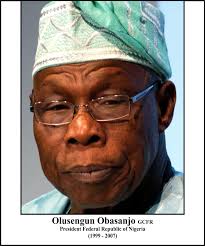
Chief Olusegun Matthew Okikiola Ogunboye Aremu Obasanjo was born on March 5, 1937, in Ibogun-Olaogun village near Abeokuta, Ogun State, Nigeria. He was born into a farming family of the Owu branch of the Yoruba ethnic group. His father was a farmer, and his mother, Bernice Ashabi Bankole, was a trader and farmer as well. Growing up in rural Yorubaland during Nigeria’s colonial period, young Olusegun experienced the challenges of poverty and limited opportunities that characterized rural Nigeria.
His upbringing in a humble farming family instilled values of hard work, discipline, and determination that would define his later life. The Owu people, known for their warrior tradition and resilience, shaped his character and approach to leadership. Obasanjo’s early exposure to farming would later manifest in his passion for agriculture, which he pursued throughout his life alongside military and political careers.
Educational Background
Obasanjo’s educational journey began at the Baptist Boys’ High School (BBHS) in Abeokuta, one of Nigeria’s most prestigious secondary schools that has produced numerous national leaders. After completing his secondary education, he briefly worked as a teacher before joining the Nigerian Army in 1958, unable to afford a university education at the time.
Military Training
His military education was extensive and international:
Regular Officers’ Special Training School, Teshi, Ghana (1958): His first formal military training.
Mons Officers’ Cadet School, Aldershot, England (1958-59): Where he received his officer training and was commissioned as Second Lieutenant in 1959.
Royal College of Military Engineering, Chatham, England: Specialized training in military engineering.
School of Survey, Newbury, England: Advanced surveying and mapping training.
Indian Army School of Engineering, Poona, India: Further engineering specialization.
Indian Defence College: Strategic military education.
Royal Defence Studies, London: Senior command and defense studies.
This extensive international military education made Obasanjo one of Nigeria’s most professionally trained military officers, specializing in military engineering.
Continuing Education
National Open University of Nigeria: Decades after his military career, Obasanjo pursued theological studies, obtaining a Bachelor’s degree in Christian Theology and later a Master’s degree in Theology, reflecting his deep Christian faith developed during his 1995-1998 imprisonment.
Military Career (1958-1979)
Early Military Service
Obasanjo was commissioned as a Second Lieutenant in 1959 and was attached to British Battalions in England and Germany. He was promoted to Lieutenant in 1960. His early military career included:
UN Peacekeeping: Served with the United Nations peacekeeping mission in the Congo (now Democratic Republic of Congo) in the early 1960s.
Progressive Promotions: Rose steadily through military ranks due to competence and professionalism—Captain, Major, Lieutenant Colonel, Colonel, and eventually Brigadier.
Nigerian Civil War (1967-1970)
Obasanjo played a crucial role in Nigeria’s civil war against Biafran secessionists. When the Igbo military officer C. Odumegwu Ojukwu declared the Eastern Region’s secession as Biafra in 1967, Nigeria descended into a devastating 30-month civil war.
Obasanjo commanded the 3rd Marine Commando Division, which was instrumental in decisive military victories. His forces captured key Biafran territories, and he personally accepted the Biafran surrender on January 15, 1970, effectively ending the civil war. This military success elevated his profile within the Nigerian military establishment.
Military Government Roles (1975-1976)
Following the July 1975 coup that brought General Murtala Mohammed to power, Obasanjo was appointed Federal Commissioner (Minister) for Works and Housing. He later became Chief of Staff, Supreme Headquarters, making him Mohammed’s deputy.
Military Head of State (1976-1979)
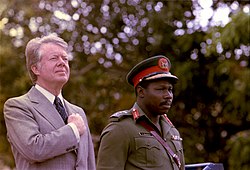
Assumption of Power
On February 13, 1976, General Murtala Mohammed was assassinated during an abortive coup attempt. The Supreme Military Council appointed Obasanjo as Chief of Staff to succeed Mohammed as Head of State. At 39 years old, Obasanjo became Nigeria’s military ruler during a critical period in the nation’s history.
Policies and Governance
Obasanjo continued Murtala Mohammed’s reform agenda:
Military Reforms: Reduced military size, demobilizing over 12,000 soldiers during 1976-1977 to cut costs and professionalize the force. Established rehabilitation centers to help demobilized soldiers transition to civilian life.
Education Expansion: Implemented Universal Primary Education (UPE), providing free primary education nationwide—a transformative policy that significantly increased school enrollment.
Budgetary Discipline: Implemented fiscal austerity measures and budgetary cuts to manage Nigeria’s economy.
New Capital Development: Advanced plans for relocating Nigeria’s capital from Lagos to Abuja in the center of the country.
Foreign Policy: Aligned Nigeria increasingly with the United States while maintaining active involvement in African affairs. Strongly supported liberation movements fighting white minority rule in Southern Africa, providing military and financial assistance to anti-apartheid forces.
Constitution Development: Oversaw the drafting committee that created Nigeria’s 1979 Constitution, modeled on the U.S. presidential system rather than the British parliamentary system previously used.
Controversies
Political Repression: His regime was accused of authoritarian practices. The most notorious incident involved the 1977 raid on Kalakuta Republic, the compound of musician and activist Fela Kuti. Military forces raided and burned the compound; Fela, his family, and associates were beaten, and Fela’s mother, the prominent activist Funmilayo Ransome-Kuti, was thrown from a window, suffering injuries that eventually led to her death. Fela later carried his mother’s coffin to Dodan Barracks in Lagos as a protest. This incident remains a dark stain on Obasanjo’s military government.
Historic Democratic Transition (1979)
Obasanjo’s most significant achievement as military ruler was fulfilling his commitment to return Nigeria to democratic civilian rule. He oversaw elections in 1979 and on October 1, 1979, peacefully handed over power to the democratically elected President Shehu Shagari.
This made Obasanjo the first military ruler in Africa to voluntarily relinquish power to an elected civilian government—a remarkable feat that earned him international acclaim and established his reputation as a statesman committed to democracy.
Post-Military Career (1979-1995)
Farming and Writing
After leaving office, Obasanjo retired to his farm in Ota, Ogun State, where he became a successful farmer and agricultural entrepreneur. His Obasanjo Farms became a major agricultural enterprise. He published several books during this period, including “My Command: An Account of the Nigerian Civil War, 1967-1970” and other works on leadership and African development.
International Engagement
African Leadership Forum (1988): Founded this organization to promote good governance and democracy in Africa.
UN Secretary-General Bid (1991): Unsuccessfully sought to become UN Secretary-General, losing to Boutros Boutros-Ghali.
Conflict Mediation: Actively involved in various international initiatives to resolve African conflicts, leveraging his statesmanship credentials.
Conflict with the Athe Bacha Regime
When General Sani Abacha seized power in 1993, establishing one of Nigeria’s most brutal military dictatorships, Obasanjo became a vocal critic. This opposition proved dangerous.
Arrest and Imprisonment (1995-1998): In 1995, Obasanjo was arrested and accused of plotting a coup against Abacha. Despite protesting his innocence, he was convicted in a secret military tribunal and sentenced initially to death, later commuted to life imprisonment, and eventually reduced to 15 years following international pressure from leaders including Nelson Mandela, Jimmy Carter, and Helmut Schmidt.
Prison Transformation: During his three years in prison (1995-1998), Obasanjo underwent a profound spiritual transformation, becoming a born-again Christian. He spent his imprisonment reading the Bible, praying, and writing. This period produced several books, including “Guide to Effective Prayer,” “The Animal Called Man,” and later “Sermons from Prison,” his prison memoirs.
Release: Following Abacha’s sudden death in June 1998, the new military leader, General Abdulsalami Abubakar, released Obasanjo and other political prisoners as part of Nigeria’s democratic transition.
Civilian Presidency (1999-2007)
1999 Election
When General Abdulsalami promised democratic elections, Obasanjo emerged from prison to contest for president under the People’s Democratic Party (PDP) platform. Despite initial reluctance, he decided his mission was to restore Nigeria’s image and defeat ethnic separatism.
In the February 27, 1999, election, Obasanjo won with approximately 63% of the votes, defeating Olu Falae of the Alliance for Democracy/All People’s Party coalition. However, the election was marred by widespread allegations of fraud and vote-buying. Many Yorubas, his own ethnic group, opposed him, still bitter about his perceived role in earlier political events.
On May 29, 1999, Obasanjo was inaugurated as Nigeria’s President, ending 15 years of military rule and beginning the Fourth Republic.
First Term (1999-2003)
Obasanjo’s first term focused on several key areas:
Economic Reforms:
- Privatization of state-owned enterprises, including telecommunications, power, and other sectors
- Banking sector reforms are strengthening financial institutions
- Debt relief initiatives, eventually securing $18 billion in debt forgiveness from Paris Club creditors
- Anti-corruption drive, establishing the Economic and Financial Crimes Commission (EFCC) and the Independent Corrupt Practices Commission (ICPC)
Telecommunications Revolution: The privatization and liberalization of telecommunications led to explosive growth, with mobile phone penetration increasing from negligible to millions of subscribers.
Anti-Corruption Initiatives: While his anti-corruption efforts had mixed results, the creation of EFCC under Nuhu Ribadu prosecuted high-profile corruption cases.
Foreign Policy: Restored Nigeria’s international standing after years as a pariah state under military rule. Improved relations with Western countries and international financial institutions.
Challenges:
- Religious and ethnic strife intensified, particularly after northern states implemented Sharia law
- His harsh military responses to ethnic conflicts in places like Odi (Bayelsa State) and Zaki Biam (Benue State) drew international condemnation for human rights violations
- Persistent corruption despite anti-corruption rhetoric
- Power sector reform failures—despite promises, electricity supply remained abysmal
2003 Re-election
In April 2003, Obasanjo won re-election with over 60% of the votes, defeating his main challenger, former military ruler Muhammadu Buhari. However, like in 1999, the election was marred by widespread reports of irregularities, violence, and fraud.
Second Term (2003-2007)
Economic Growth: Nigeria experienced economic growth, with GDP increasing and foreign investment improving.
Paris Club Debt Relief (2005): Obasanjo’s government secured approximately $18 billion in debt relief from Paris Club creditors—a major achievement that freed resources for development.
Niger Delta Militancy: His administration struggled with increasing militancy in the Niger Delta as armed groups attacked oil installations, demanding resource control and environmental remediation.
Ethnic and Religious Tensions: Christian-Muslim violence escalated in the Middle Belt states. His government’s responses were often criticized as heavy-handed or inadequate.
Third Term Controversy (2006-2007)
Obasanjo’s second term was marred by a major controversy when he attempted to amend the constitution to allow him to run for a third term. The proposed amendment faced fierce opposition from civil society, media, opposition parties, and even some PDP members.
In May 2006, the National Assembly rejected the third-term amendment, dealing Obasanjo a humiliating defeat. This controversy damaged his legacy and raised questions about his democratic credentials.
Handover to Umaru Yar’Adua (2007)
Despite the third-term debacle, Obasanjo successfully handed over power on May 29, 2007, to Umaru Musa Yar’Adua following elections. This made Obasanjo the first Nigerian President to complete two full civilian terms and hand over to another elected civilian—a significant democratic milestone.
However, the 2007 elections were widely regarded as among Nigeria’s most fraudulent, with Obasanjo accused of engineering Yar’Adua’s victory to maintain influence.
Post-Presidency (2007-Present)
Elder Statesman Role
Since leaving office, Obasanjo has remained highly active:
Olusegun Obasanjo Presidential Library (OOPL): Established a presidential library in Abeokuta, modeled on American presidential libraries—the first of its kind in Africa.
African Union Leadership: Served as Chairperson of the African Union (July 2004-January 2006) and continues involvement in AU affairs.
Conflict Mediation: Served as UN Special Envoy for various African conflicts and led electoral observation missions across Africa.
InterAction Council: Became Co-Chair of the InterAction Council of Former Heads of State and Government, the first African to hold this position.
Political Commentary: Remains outspoken on Nigerian and African politics, writing open letters to sitting presidents criticizing their governance.
Continuing Controversies
PDP Exits and Returns: Obasanjo publicly tore his PDP membership card in 2015 in dramatic fashion, later rejoining in 2018.
2015 Election: Played a crucial role in defeating incumbent President Goodluck Jonathan, his former deputy, supporting Muhammadu Buhari despite their past antagonism.
2019 and 2023 Elections: Continued involvement in presidential politics, endorsing various candidates, and maintaining political relevance.
Corruption Allegations: Faces ongoing questions about wealth accumulation and alleged corruption during his presidency, though he has avoided prosecution.
Personal Life
Obasanjo has been married multiple times. His first wife, Oluremi Obasanjo, with whom he had several children, died in 1988. He later married Stella Obasanjo in 1976, who served as First Lady and died controversially in Spain in 2005 during plastic surgery. He has married subsequently and has numerous children.
His daughter, Iyabo Obasanjo, served as a Senator representing Ogun Central Senatorial District. Their relationship became publicly strained, with Iyabo writing a widely publicized open letter criticizing her father.
Obasanjo is known for his strong personality, work ethic, and sometimes authoritarian demeanor. He is a devout Christian whose faith deepened during imprisonment. He continues farming at his Ota estate and has interests in various business ventures.
Legacy and Assessment
Obasanjo’s legacy is deeply contested, reflecting his complex, controversial career:
Supporters Credit Him With:
- First African military ruler to voluntarily hand over to democracy (1979)
- Completing two full civilian presidential terms (1999-2007)
- Securing $18 billion in debt relief for Nigeria
- Economic reforms and telecommunications revolution
- Restoring Nigeria’s international standing after pariah status
- Anti-corruption initiatives establishing EFCC and ICPC
- Infrastructure investments and economic growth
Critics Argue:
- Third-term attempt revealed authoritarian tendencies and contempt for constitutional limits.
- The 2007 election he oversaw was fraudulent, undermining democratic gains
- Human rights violations (Odi, Zaki Biam massacres; Fela Kuti incident in 1977)
- Failed to solve the electricity crisis despite promises and resources
- Corruption persisted despite anti-corruption rhetoric; questions about his own wealth
- Heavy-handed responses to ethnic and religious conflicts
- Niger Delta militancy worsened under his watch
- Vindictive politics and godfather tendencies
Balanced Perspective
Olusegun Obasanjo remains one of Nigeria’s most significant and controversial political figures. His voluntary handover of power in 1979 established him as a democratic pioneer in Africa—a reputation that survived even his military background. His return as civilian president in 1999 symbolized Nigeria’s return to democracy, and his administration delivered some genuine achievements, particularly debt relief and telecommunications transformation.
However, his governance was marked by authoritarian tendencies, human rights concerns, and ultimately the third-term controversy that tarnished his democratic credentials. The 2007 election he oversaw remains one of Nigeria’s most fraudulent, raising questions about his commitment to democracy when it conflicted with his interests.
His post-presidency has been characterized by continued political involvement, sometimes constructive (conflict mediation, democratic advocacy) and sometimes controversial (political interference, partisan activism).
Obasanjo embodies the contradictions of Nigerian leadership—capable of democratic gestures and authoritarian impulses, delivering reforms while tolerating corruption, championing democracy while undermining it when convenient. Whether remembered primarily as democracy’s champion (1979 handover) or its betrayer (third-term attempt) may depend on which aspect of his multifaceted career history is emphasized
Chief Olusegun Obasanjo‘s career spanning over six decades—from army officer to civil war hero to military head of state to political prisoner to two-term civilian president to elder statesman—represents one of Africa’s most remarkable political journeys. His voluntary handover in 1979 made him a democratic pioneer; his return from prison to the presidency symbolized Nigeria’s democratic rebirth. Yet his third-term attempt, the 2007 election fraud, and human rights violations complicate this narrative. As he continues influencing Nigerian and African politics in his late eighties, Obasanjo remains a towering, controversial figure whose legacy encompasses both democratic progress and authoritarian regression, economic reforms and persistent corruption, international acclaim and domestic criticism. History’s final judgment will likely acknowledge both his significant contributions and serious shortcomings, recognizing him as a consequential but deeply flawed leader whose impact on Nigeria and Africa remains undeniable.