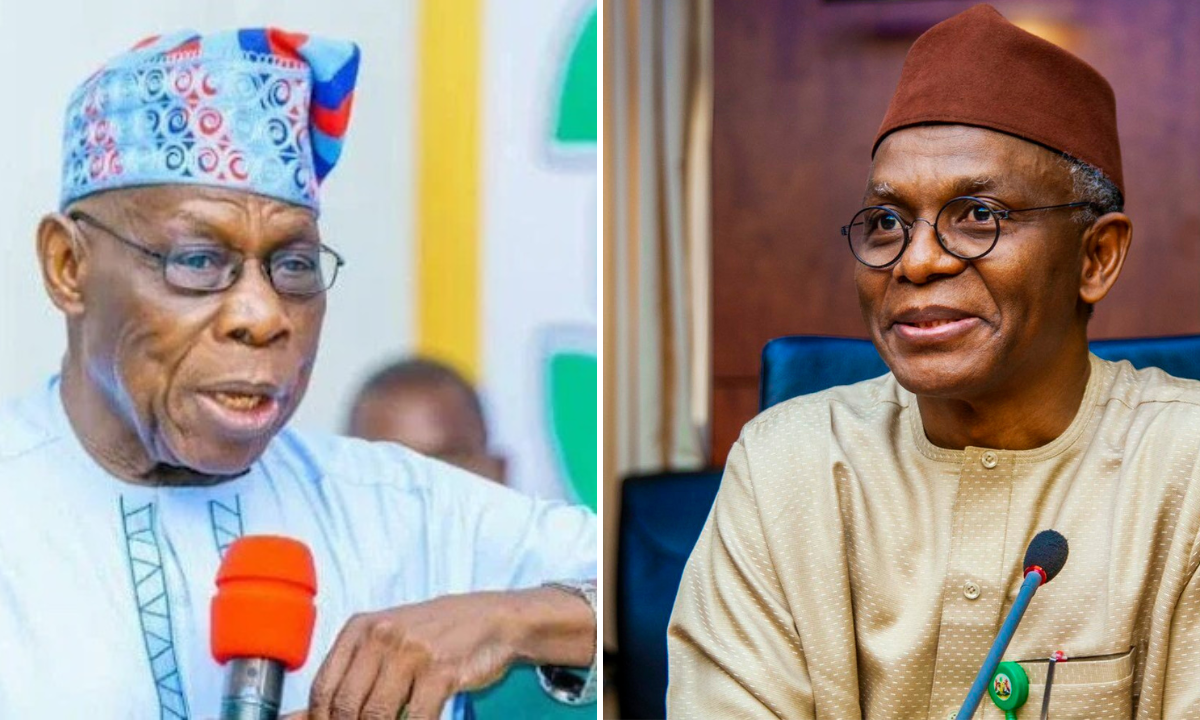
Former President Olusegun Obasanjo has disclosed the reason he turned down a proposal to have former Kaduna State Governor, Malam Nasir El-Rufai, succeed him as Nigeria’s president.
Speaking in Abeokuta, Ogun State, Obasanjo revealed that the suggestion came from former Minister of Aviation, Osita Chidoka, who had pushed for El-Rufai to take over after his administration. However, Obasanjo said he rejected the idea because he believed El-Rufai “needed to mature” before assuming such a high office.
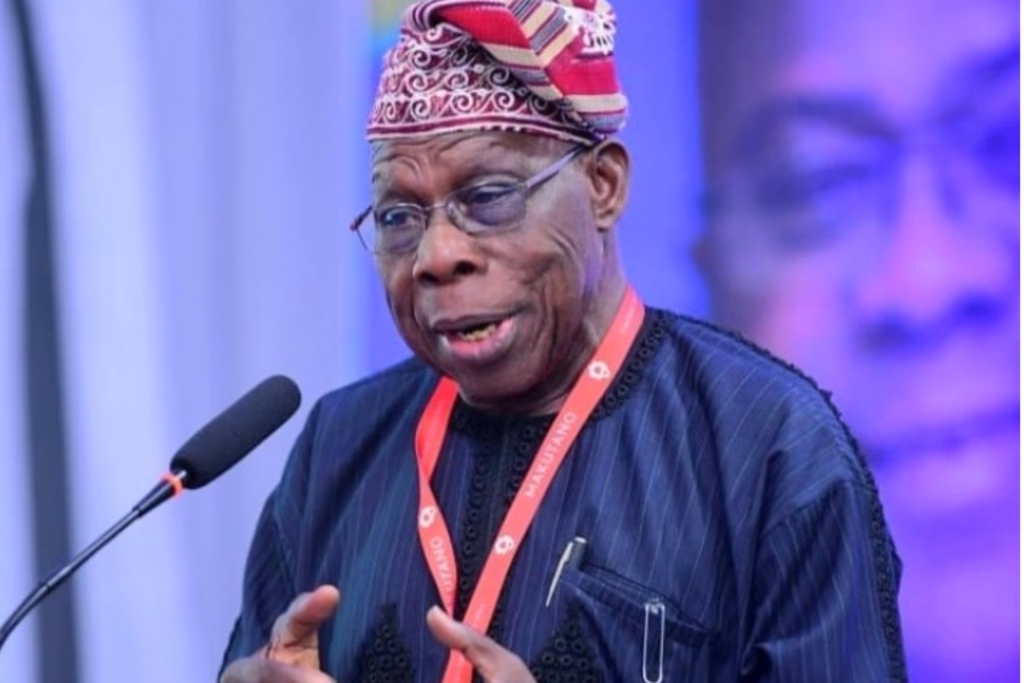
Chidoka, who was the keynote speaker at the event, had earlier recalled how El-Rufai recommended him to Obasanjo at the age of 34—a move that eventually led to his appointment as Corps Marshal of the Federal Road Safety Corps (FRSC).
Interrupting Chidoka’s speech with a smile, Obasanjo reminded him of his earlier suggestion. “Let him tell you,” the former president said. “He didn’t mention that he was pushing when I was leaving government that his friend, El-Rufai, should be brought in as my successor.”
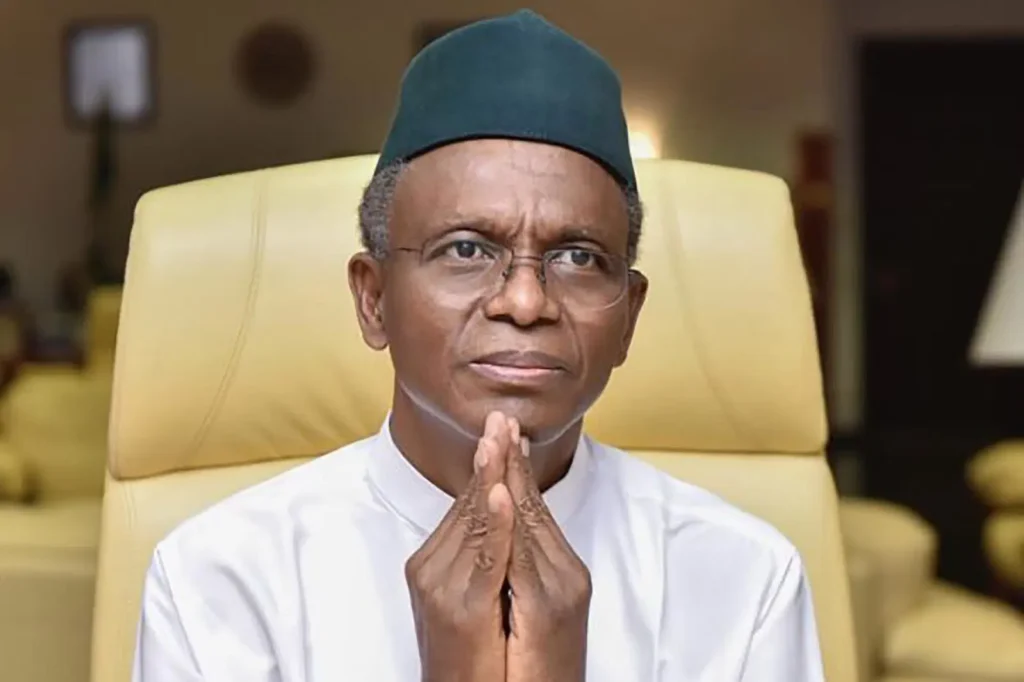
The former president explained that although he respected Chidoka’s view, he had strong reservations about El-Rufai’s readiness for the nation’s highest office.
“I did not yield to the pressure,” Obasanjo said. “Later, he said, ‘I suggested this person, why didn’t you agree?’ I said El-Rufai needs to mature. You remember? When I left government and, many years later, he saw the performances of El-Rufai, he came back to me and said, ‘You’re absolutely correct. El-Rufai needed to mature.’”
Obasanjo went on to commend both Chidoka and El-Rufai, along with other members of his former administration, acknowledging their “special attributes” and contributions that strengthened his government’s performance.
Reflecting on the event’s theme, “Importance of Leadership in Governance,” the former president emphasized that leadership requires character, exposure, experience, and proper training. He lamented that politics remains the only field without structured leadership development.
“It’s only in politics that I found out there is no training for leadership. Even among armed robbers, I was told there is an apprenticeship,” Obasanjo said. “But it’s only in politics that there is no training in leadership. That’s not good enough.”
In his keynote address, Chidoka attributed Nigeria’s leadership problems to what he described as a culture of excuses and the politics of alibi.
“Leadership finds its true measure not in speeches or charisma but in the systems it leaves behind,” he stated. “Moral conviction must translate into the everyday machinery of governance—rules, routines, and institutions that make competence predictable and corruption difficult. Nigeria’s problem has never been a shortage of ideas; it is the absence of systems strong enough to outlive their authors.”
Dignitaries at the event included Senator Shuaibu Salis, who represents Ogun Central; the Olowu of Owu Kingdom, Oba Saka Matemilola; the Olota of Ota, Oba Adeyemi Obalanlege; and former Ogun First Lady, Mrs. Olufunsho Amosun.
What You Should Know
Former President Olusegun Obasanjo revealed that he declined Osita Chidoka’s recommendation of Nasir El-Rufai as his potential successor, citing El-Rufai’s need for greater maturity at the time.
Obasanjo, who emphasized the importance of training and integrity in political leadership, commended both men for their roles in his administration.
The discussion took place during a leadership event that highlighted Nigeria’s need for institutional reforms and accountable governance.