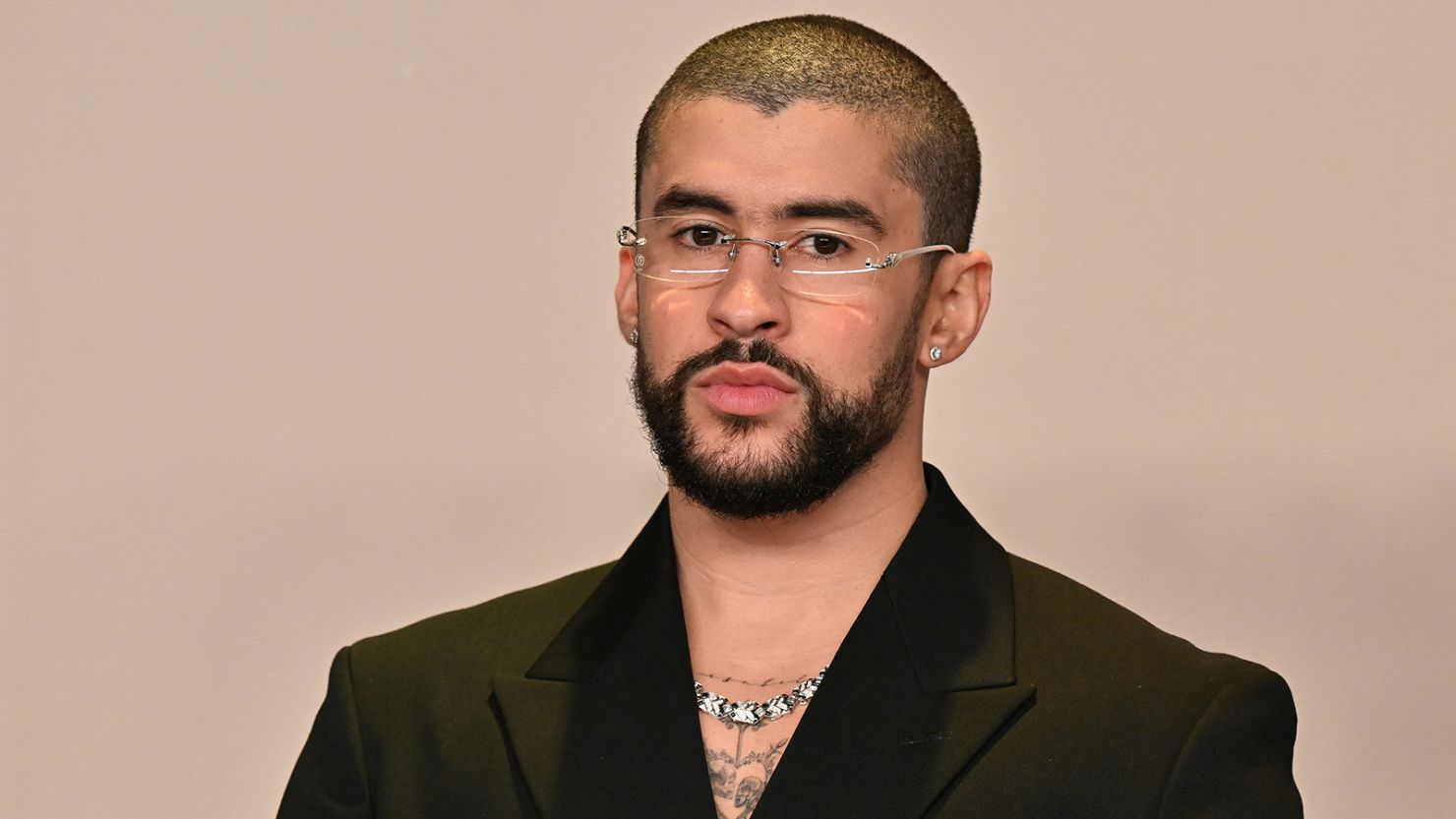
Bad Bunny added another accolade to his already impressive collection on Thursday night, accepting the “Best Artist of the 21st Century” award at the Latin Billboard Awards in a ceremony that underscored both his cultural impact and the ongoing debate surrounding his upcoming Super Bowl performance.
The 30-year-old reggaeton sensation, born Benito Antonio Martínez Ocasio, received the milestone trophy from legendary actress Rita Moreno, who lauded the artist for his “strength and passion” before presenting him with the honor. The moment marked a high point in what has been an extraordinary year for the Puerto Rican performer, though not without controversy.
In his acceptance speech, Bad Bunny struck a notably humble tone, acknowledging the collaborative nature of his success while paying tribute to the broader Latin music community. “I’m aware that this award could have been for any of the artists here tonight who have also contributed to Latin music, who have inspired me, who are why I’m here, and those who are dreaming of being here,” he told the audience. “I will always identify with those artists because I consider myself a young man who continues to dream, with many goals and things to do.”
The artist credited not only his own dedication but also his team’s tireless work and fellow Latin musicians who have helped propel the genre into mainstream consciousness. His remarks reflected an understanding of his position within a larger cultural movement that has seen Latin music achieve unprecedented commercial and critical success in recent years.
However, what Bad Bunny conspicuously didn’t mention was the elephant in the room: his selection as the headliner for Super Bowl LX’s halftime show, scheduled for February 2026 in New Orleans. The announcement has sparked fierce debate in recent weeks, with critics questioning the NFL’s choice.
Among the most vocal opponents are media personality Megyn Kelly and President Donald Trump, who have criticized the selection on multiple grounds. Detractors have pointed to Bad Bunny’s past reluctance to tour certain U.S. markets over concerns about Immigration and Customs Enforcement (ICE) operations, as well as the fact that he predominantly performs in Spanish rather than English.
The backlash represents a flashpoint in ongoing cultural conversations about representation, language, and who gets to occupy one of America’s biggest entertainment stages. For supporters, Bad Bunny’s selection represents long-overdue recognition of Latin music’s dominant position in contemporary popular culture. For critics, it raises questions about patriotism and accessibility during one of the nation’s most-watched television events.
Despite the mounting pressure, NFL Commissioner Roger Goodell has stood firmly behind the decision. In recent statements, Goodell emphasized that Bad Bunny “understands the platform he’s on” and made clear the league has no intention of reversing course or considering alternative performers.
The controversy has done little to slow Bad Bunny’s momentum. The artist behind hits like “DtMF” has consistently broken streaming records, sold out stadium tours worldwide, and become one of the most influential voices in contemporary music. His ability to maintain authenticity while achieving crossover success has made him both a commercial juggernaut and a cultural icon, particularly among younger, diverse audiences.
As Bad Bunny left the stage Thursday night, trophy in hand, the moment crystallized the complex position he occupies in American popular culture: celebrated by millions, controversial to some, but undeniably significant. Whether his Super Bowl performance will further cement his legacy or intensify the debate remains to be seen, but one thing is certain—Bad Bunny shows no signs of stepping out of the spotlight.
WHAT YOU SHOULD KNOW
Bad Bunny received the prestigious “Best Artist of the 21st Century” award at the Latin Billboard Awards, delivering a humble speech that credited his team and fellow Latin artists. However, the honor comes amid significant controversy over his selection as the Super Bowl LX halftime performer, with critics like Megyn Kelly and Donald Trump objecting to his predominantly Spanish-language music and past concerns about U.S. tours.
Despite the backlash, NFL Commissioner Roger Goodell is standing firm on the decision, signaling that Bad Bunny’s cultural influence has reached a level where he commands one of America’s biggest stages—even as debate rages over what that represents for the country’s evolving cultural landscape.