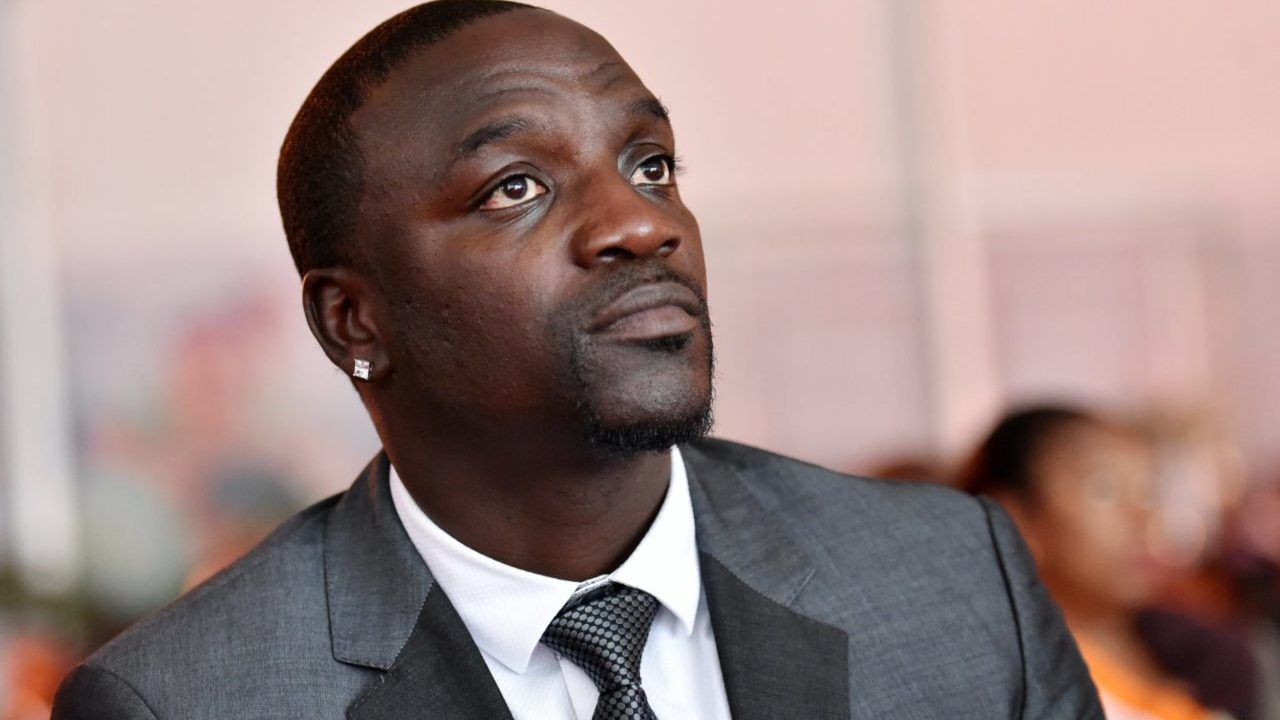
In a stunning turn of events that has sent shockwaves through the entertainment industry, Aliaune Thiam—known worldwide as Akon—is embroiled in what legal experts are calling one of the most complex celebrity divorce cases in recent memory.
The Grammy-nominated artist’s wife, Tomeka Thiam, has filed for divorce after nearly three decades of marriage, demanding a staggering €100 million settlement and exposing what appears to be an intricate web of asset management that has left even seasoned legal professionals puzzled.
Court documents filed in the proceedings paint a picture of a marriage that, according to Mrs. Thiam’s legal team, was as much a business partnership as a personal union. Her attorneys argue that she was instrumental in building the Akon brand from its early days, providing strategic guidance and support as the singer rose from his breakout hit “Locked Up” in 2004 to becoming a global entertainment mogul.
The settlement demand—equivalent to approximately $110 million USD—reflects what Mrs. Thiam’s representatives claim is her rightful share of an empire that extends far beyond platinum records and sold-out tours.
The couple’s joint ventures allegedly encompass substantial real estate holdings, music production companies, and, perhaps most notably, Akon’s philanthropic crown jewel: the Akon Lighting Africa initiative, which has brought solar power to millions across the continent.
“Mrs. Thiam wasn’t simply a supportive spouse,” a source close to the case said. “She was actively involved in business decisions, networking, and the strategic planning that helped diversify Akon’s portfolio beyond music.”
What has transformed this from a typical high-net-worth divorce into a media sensation is the revelation that emerged during financial discovery: Akon’s personal bank accounts allegedly contain just $10,000.
For an artist whose career has generated hundreds of millions in revenue—from chart-topping collaborations with artists like Eminem and Snoop Dogg to his work as a producer for Lady Gaga and other superstars—the figure seems implausible.
The disconnect between Akon’s reported net worth of over $60 million and his claimed liquid assets has ignited fierce debate. Social media platforms erupted with speculation within hours of the court documents becoming public, with hashtags related to the case trending globally.
The plot thickened considerably when court-ordered financial investigations uncovered that the substantial majority of Akon’s wealth appears to be held not in his own name, but rather under the legal ownership of his mother. This discovery has raised serious questions about the timing and intent of these asset structures.
Family law specialists observing the case have noted that while holding assets in family trusts or through relatives is not inherently illegal, the practice becomes problematic when used to evade legitimate financial obligations, particularly in divorce proceedings.
“This is where things get exceptionally complicated,” explained Margaret Chen, a divorce attorney specializing in high-net-worth cases who is not involved in the Akon proceedings. “If these assets were transferred recently or with the intent to shield them from marital property division, the court can potentially ‘pierce the veil’ and include them in the settlement calculation.
However, if these arrangements have existed for years as part of legitimate estate planning or cultural family wealth management practices, it becomes much harder to challenge.”
Two competing theories have emerged to explain Akon’s financial situation. The first, favored by Mrs. Thiam’s legal team and many observers, suggests calculated asset protection—that the singer, perhaps anticipating marital difficulties, systematically transferred wealth to family members to place it beyond reach of divorce proceedings.
The alternative theory posits that Akon may be facing genuine liquidity problems. The entertainment industry is notoriously volatile, and even successful artists can encounter cash flow issues if they’ve overextended on investments, if revenue streams have dried up, or if they’re managing debt obligations that aren’t publicly visible.
Akon’s business ventures, while impressive in scope, also carry risk. The Akon Lighting Africa project, while philanthropically significant, may not generate immediate returns. Real estate investments can become illiquid quickly, especially if markets shift or if properties are tied up in development projects.
What legal experts agree on is that this case is far from straightforward. If substantial assets are indeed held in his mother’s name, Mrs. Thiam’s attorneys face the considerable challenge of proving those assets should be considered marital property.
“Discovery is going to be extensive,” noted David Brennan, a forensic accountant who frequently testifies in divorce cases. “We’re talking about tracing fund movements potentially going back years, examining the source of money used to acquire assets, documenting who made management decisions, and establishing whether there was intent to defraud or merely legitimate family wealth structuring.”
The international dimension adds another layer of complexity. With assets potentially spanning multiple countries—Akon has business interests in Africa, Europe, and North America—jurisdictional questions about which courts have authority over which assets could extend proceedings considerably.
Some commentators have noted that Akon, who was born in St. Louis to Senegalese parents and spent significant time in Senegal during his childhood, may be operating under different cultural frameworks regarding family and wealth.
In many African cultures, wealth is viewed more communally, with successful individuals often holding assets in ways that benefit extended family rather than accumulating purely individual wealth.
Whether this cultural context will have bearing on legal proceedings conducted under American family law remains to be seen, but it may explain some of the asset structuring that has come to light.
Perhaps most striking has been the complete absence of public comment from Akon or his representatives. The artist, normally active on social media and known for candid interviews, has maintained total silence since the divorce filing became public knowledge. His social media accounts have gone dark, and his publicist has declined all interview requests.
This silence is likely strategic, with his legal team advising that any public statements could be used against him in proceedings. However, it has also created an information vacuum that speculation and rumor have rushed to fill.
Legal proceedings of this complexity and magnitude typically unfold over months or even years. The immediate next steps likely involve extensive financial discovery, with both sides’ forensic accountants combing through decades of financial records, business transactions, and asset transfers.
If the case proceeds to trial rather than settlement—which experts consider likely given the enormous sums involved and the apparent disagreement over asset ownership—it could become one of the most closely watched celebrity divorce trials in recent history.
As this legal battle continues, one thing remains certain: the coming months will reveal whether Akon’s apparent financial predicament is a masterful game of asset protection chess or a genuine crisis for one of music’s most successful entrepreneurs. Either way, the world will be watching.
WHAT YOU SHOULD KNOW
Akon’s 29-year marriage has ended with his wife demanding €100 million, but court documents reveal he allegedly has only $10,000 in personal accounts despite a reported $60 million net worth.
The bulk of Akon’s wealth appears to be held in his mother’s name, not his own—raising two possibilities: He transferred wealth to shield it from the divorce settlement, or he may be facing real liquidity problems despite his fame