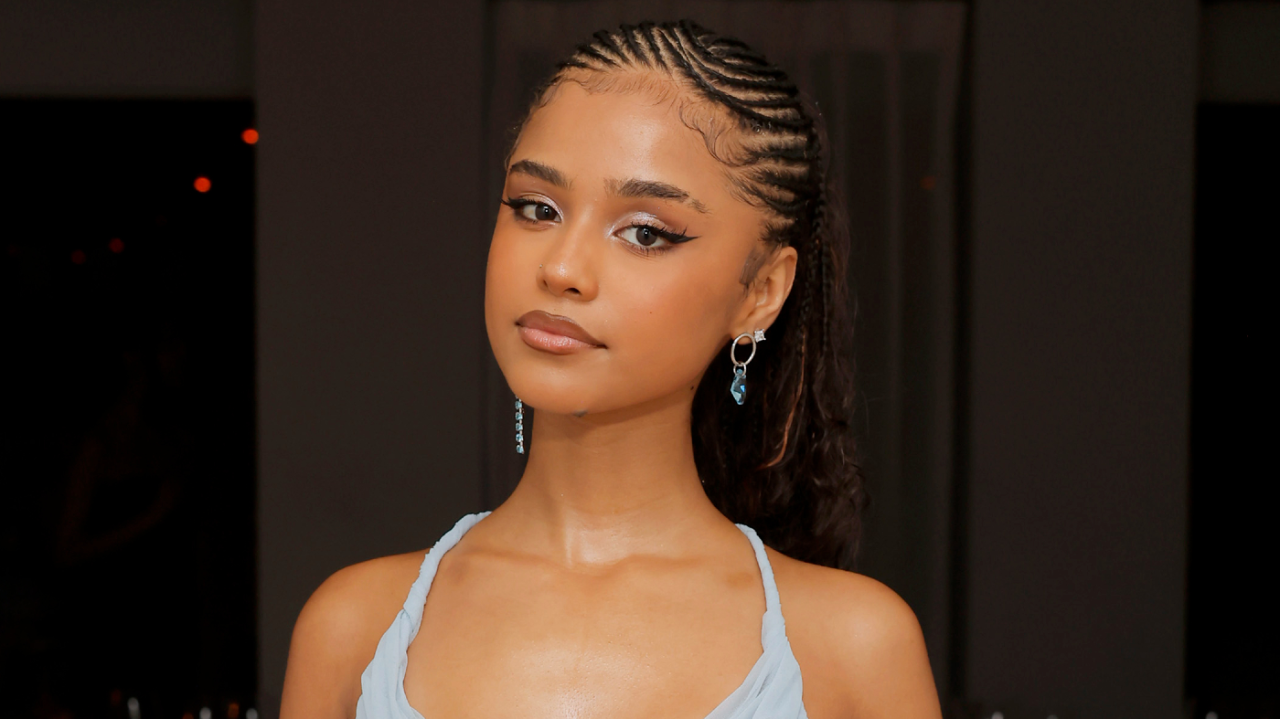
Grammy-winning South African artist Tyla publicly distanced herself from an unsolicited apology offered on her behalf by Nigerian superstar Tiwa Savage, highlighting the complex intersection of racial identity, cultural understanding, and Pan-African solidarity in the global entertainment landscape.
The controversy traces back to Tyla’s use of the term “colored” to describe her racial identity—a classification that holds legitimate, legally recognized status within South Africa’s complex racial framework but carries deeply offensive historical connotations in the United States, where it evokes the painful legacy of Jim Crow segregation and racial subjugation.
The 22-year-old “Water” hitmaker found herself at the center of an international firestorm when her self-identification sparked fierce backlash from African-American communities, who viewed her terminology as insensitive and historically tone-deaf. The criticism intensified on social media platforms, where cultural context often gets lost in translation across geographical and generational lines.
Tiwa Savage, the acclaimed Nigerian artist who attempted to bridge the divide during her appearance on the influential American radio show “The Breakfast Club.” Positioning herself as an “elder” in the African music community, Savage offered what she characterized as a protective gesture, apologizing to Black Americans on Tyla’s behalf and attempting to provide cultural context for the younger artist’s remarks.
However, Savage’s well-intentioned intervention backfired spectacularly, triggering a secondary wave of outrage—this time from South African audiences who viewed her actions as cultural overreach and colonial-minded paternalism. Critics argued that Savage, despite her continental sister status, lacked the nuanced understanding of South African racial dynamics necessary to speak authoritatively on the matter.
South Africa’s racial classification system, a complex legacy of apartheid-era legislation, recognizes “Coloured” as a distinct racial category for people of mixed African, European, and Asian heritage. This classification, while controversial and debated within South African society itself, remains embedded in the country’s legal framework and social consciousness—a reality far removed from the American historical context where similar terminology was weaponized as a tool of oppression.
Tyla’s response came not through press statements or social media posts, but through the universal language that brought her to international prominence: her music. During a high-profile performance at the Global Citizen Festival in New York over the weekend, she delivered what observers are calling a masterclass in subtle defiance.
“Sorry, I am not sorry,” she declared to the crowd before launching into her track “Mr Media,” a statement that resonated as both artistic expression and political positioning. The moment, captured on video and rapidly disseminated across social media platforms, was interpreted by supporters as a principled stand for cultural authenticity and self-determination.
The incident has exposed the fault lines that exist within Pan-African identity politics, where shared struggles against colonialism and racism can sometimes obscure the distinct historical experiences and cultural frameworks that shape different African societies. It underscores the challenges facing African artists as they navigate increasingly global audiences while maintaining connections to their specific cultural contexts.
South African social media users rallied behind their homegrown star, with thousands sharing clips of her “not sorry” declaration and praising her refusal to be silenced or spoken for by external voices, regardless of their good intentions. The response reflects broader South African sensitivities about cultural sovereignty and the right to define their own racial and social narratives without outside interference.
The controversy also highlights the evolving dynamics of African music’s global expansion, where artists must balance international appeal with cultural authenticity, often finding themselves caught between different audiences with varying levels of cultural literacy and historical awareness.
As this story continues to unfold across multiple continents and cultural contexts, it serves as a reminder of the complex negotiations required in our increasingly interconnected world, where terminology, identity, and historical memory don’t always translate seamlessly across borders—even among communities that share common struggles and aspirations.
The incident may ultimately prove instructive for the broader conversation about cultural competency, representation, and the delicate art of cross-cultural advocacy in the digital age, where good intentions don’t always guarantee positive outcomes.
WHAT YOU SHOULD KNOW
The clash between Tyla and Tiwa Savage reveals a critical lesson about cultural identity: even within the African diaspora, racial terminology and historical context vary dramatically between countries.
What’s acceptable and legally recognized in South Africa (“coloured”) can be deeply offensive in America, and well-meaning attempts to speak for others across cultural lines—no matter how sisterly the intention—can backfire when they lack proper understanding of local contexts.