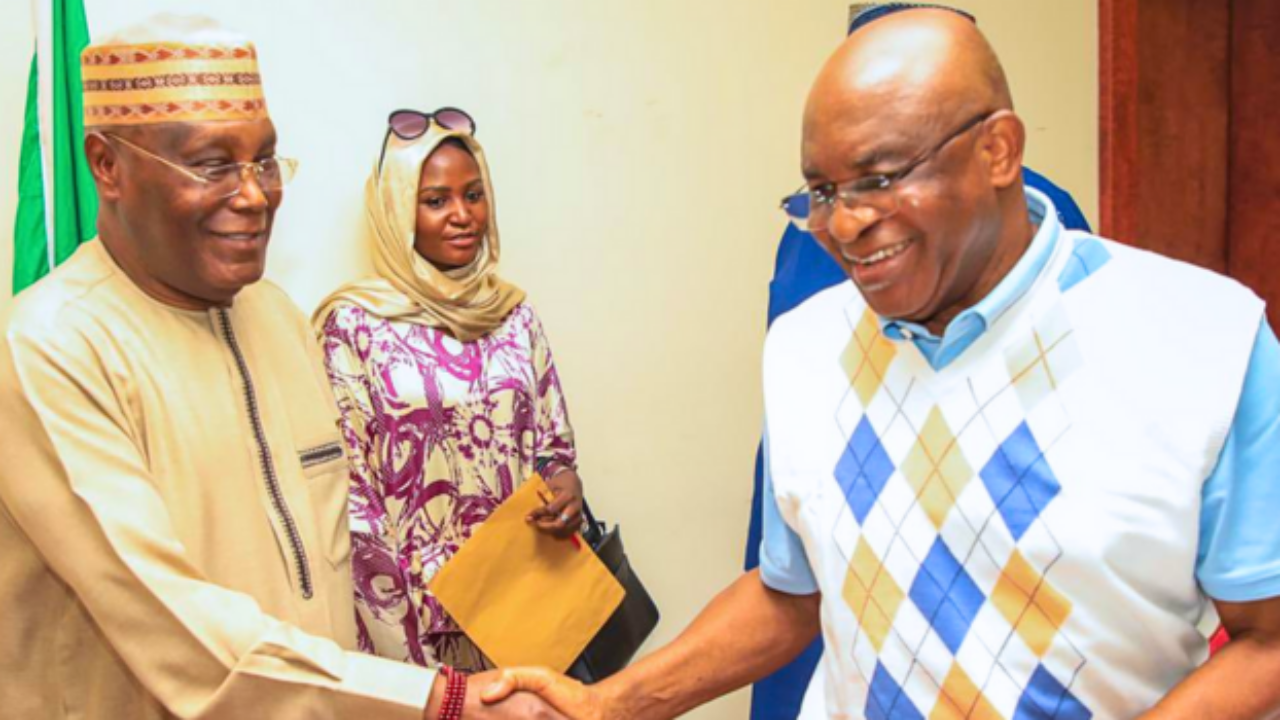
Former Vice-President Atiku Abubakar on Thursday took part in a high-level closed-door session with African Democratic Congress (ADC) coalition leaders in Abuja, signaling the opposition’s determination to build a formidable alliance ahead of the 2027 general elections.
The meeting, convened at a discreet venue in the Federal Capital Territory, drew several political heavyweights, including former Senate President and ADC National Chairman David Mark; ex-Kaduna State Governor Nasir el-Rufai; former Minister of Digital Economy Isa Pantami; ex-Sokoto State Governor Aminu Tambuwal; former Kwara State Governor Abdulfatai Ahmed; and former Minister of Transportation Rotimi Amaechi.
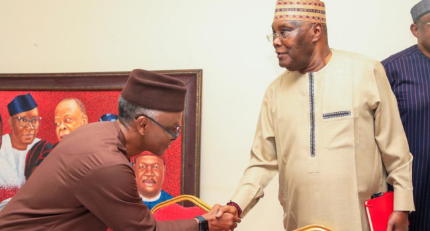
‘A Meeting Against Oligarchs’
Confirming his attendance in a post on X, Atiku described the session as part of a broader struggle to resist entrenched political and economic elites.
“I am currently at the stakeholders meeting of the Coalition African Democratic Congress (ADC) in Abuja,” he wrote. “It’s a meeting of the Nigerian people against the oligarchs who promote poverty and insecurity in the land.”
He stressed that the coalition is committed to providing a credible alternative to President Bola Tinubu’s administration and to championing reforms that address insecurity and hardship across the country.
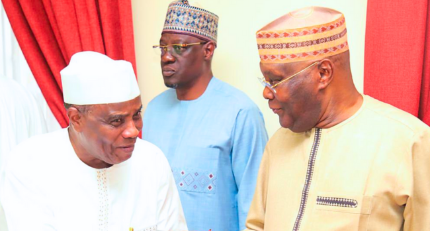
Key Resolutions
The discussions focused on strengthening opposition unity and refining strategies ahead of 2027. A major outcome was the suspension of moves to register the proposed All Democratic Alliance (ADA), a new party that had been awaiting approval by the electoral commission.
ADC National Chairman David Mark presided over the gathering, while Labour Party’s 2023 presidential candidate, Peter Obi, who could not attend in person, conveyed his support through a message of solidarity.
According to ADC’s National Publicity Secretary, Bolaji Abdullahi, three pivotal resolutions were adopted. First, all presidential hopefuls pledged to rally behind whoever emerges as the ADC’s flag bearer after primaries. Second, members were directed to formally sever ties with other political parties and dedicate their loyalty exclusively to the ADC. Third, the National Working Committee was mandated to announce dates for primaries in Osun and Ekiti, in preparation for upcoming off-cycle governorship contests.
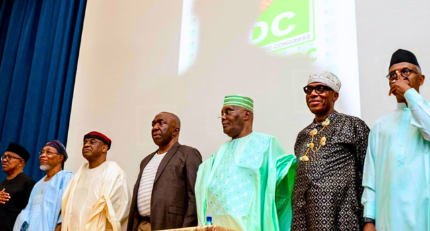
The ADC, originally founded in 2005 as the Alliance for Democratic Change before securing registration from the Independent National Electoral Commission (INEC) in 2011, has grown into a rallying ground for opposition figures seeking to mount a robust challenge to the ruling APC.
The coalition, formally inaugurated in July after months of consultations, has drawn prominent names such as Uche Secondus, Rauf Aregbesola, Emeka Ihedioha, Dino Melaye, and former APC National Chairman John Odigie-Oyegun. Thursday’s deliberations reaffirmed the bloc’s mission to unite disparate political forces in what members describe as a “rescue mission” to confront insecurity, corruption, and economic hardship.
With Atiku Abubakar, Peter Obi, and Rotimi Amaechi all tipped as likely presidential contenders, the ADC faces the task of balancing ambition with unity as it seeks to cement its place as the leading opposition platform ahead of 2027.
What You Should Know
The African Democratic Congress (ADC) coalition has become a central hub for Nigeria’s opposition ahead of the 2027 elections.
By bringing together figures like Atiku Abubakar, Peter Obi, and Rotimi Amaechi, the bloc aims to present a unified alternative to the APC, focusing on insecurity, corruption, and economic recovery.