At least 63 people, including five soldiers and 58 civilians, were killed in a deadly assault on Daral-Jamal, a community located along the Bama-Banki road in the Sambisa Forest.
The attack, which took place late Friday, was carried out by suspected Boko Haram insurgents who also torched over 20 houses, vehicles, food supplies, and other belongings of resettled Internally Displaced Persons (IDPs).
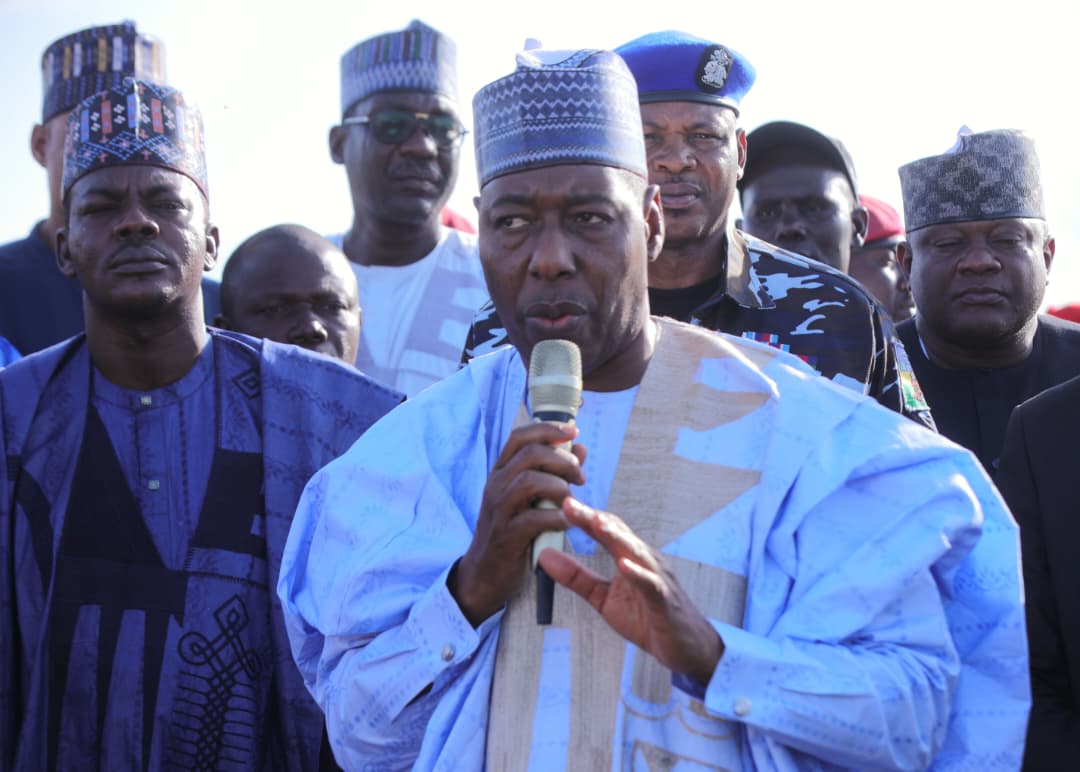
The community, which hosts a military base near the Nigeria-Cameroon border, has long been a target of jihadist violence. On Saturday, Borno State Governor Babagana Umara Zulum paid a condolence visit to the grieving residents, where he met with community leaders and families of the victims.
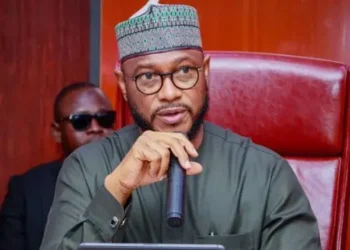
Visibly shaken, the governor condemned the massacre in strong terms, describing it as a devastating blow to a community that had only recently resettled after years of displacement.
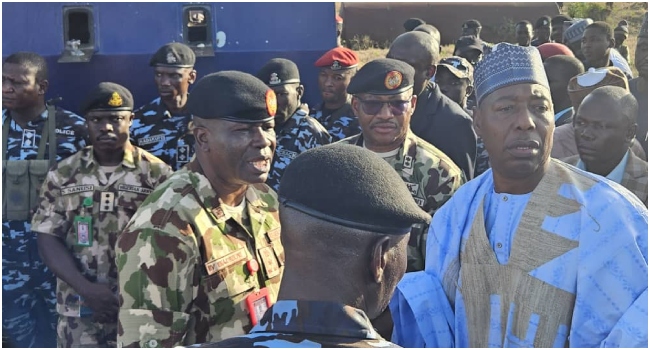
“We are here to commiserate with the people of Darajamal over what happened last night that has claimed the lives of many people. It is very sad. This community was settled a few months ago, and they go about their normal activities, but unfortunately, they experienced a Boko Haram attack last night. Our visit is to commiserate with them and build their resilience,” Zulum said.
The governor confirmed that a total of 63 people were killed, with civilians making up the majority of the casualties. He emphasized the urgent need to strengthen security in vulnerable communities and called for the immediate deployment of recently trained Forest Guards to complement the overstretched military.
“We have to take note that the numerical strength of the military is not enough to cover everywhere. So far, two sets of Forest Guards have been trained. Therefore, one of the solutions that we need to implement immediately is to deploy the trained Forest Guards to most of the locations that are vulnerable, so they can protect the forest and communities,” Zulum added.
Senator Kaka Shehu Lawan, representing Borno Central where Darajamal falls, also condemned the massacre. He described the attack as a crime against humanity and pledged to support the governor with legislative measures to restore peace and stability in the region.
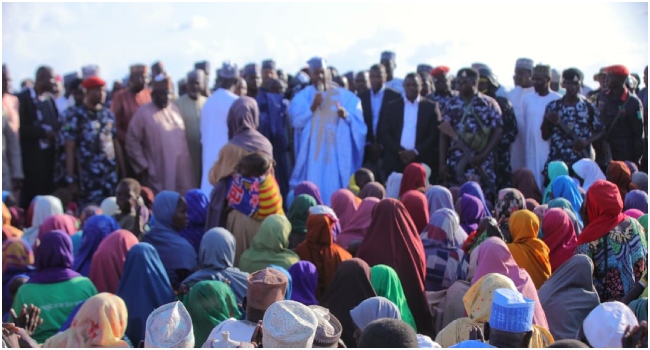
The incident has reignited debate about the government’s push to close IDP camps and relocate residents back to rural communities despite ongoing security risks.
Witnesses recounted how the attackers stormed the area around 8:30 pm, arriving on motorcycles and opening fire indiscriminately. Homes were set ablaze as residents fled into the night.
“They came shouting, shooting everyone in sight,” said Malam Bukar, a survivor who escaped with his wife and three children. “When we returned at dawn, bodies were everywhere.”
While casualty figures varied, with some sources estimating between 55 and 64 deaths, the Nigerian Air Force said in a statement that it killed 30 “terrorists” during a firefight in Dar-El-Jamal, the alternative name of the community. However, neither the army nor the air force directly commented on the civilian deaths.
Many of those killed were families who had only recently been relocated from the now-closed Government Secondary School displacement camp in Bama.
“The government told us we would be safe here,” lamented Hajja Fati, a mother of five who lost her brother in the attack. “Now we are burying our people again.”
Security sources linked the assault to Boko Haram commander Ali Ngulde, who is believed to control the area.
A Renewed Wave of Insurgency
The massacre comes amid a resurgence of jihadist activity in Nigeria’s northeast. Boko Haram, which has been waging a bloody insurgency since 2009, has caused the deaths of more than 40,000 people and displaced over two million. The group splintered in 2016, with Islamic State West African Province (ISWAP) emerging as a formidable rival faction.
Data from Good Governance Africa (GGA) shows that in the first half of 2025 alone, about 300 jihadist attacks killed nearly 500 civilians. ISWAP has been responsible for much of the violence, increasingly overrunning military bases and employing advanced tactics such as drone surveillance, night assaults, and the involvement of foreign fighters.
The situation is compounded by regional instability. Neighboring Niger has scaled back its participation in a multinational task force fighting terrorism, while Nigeria’s military is stretched thin by the dual challenges of jihadist insurgency in the northeast and armed banditry in the northwest.
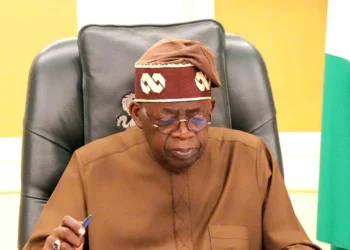
Analysts argue that worsening economic hardship under President Bola Tinubu has also fueled discontent, giving extremist groups a fertile ground to exploit grievances in rural communities.
What You Should Know
The Boko Haram attack on Daral-Jamal underscores the ongoing fragility of northeast Nigeria despite years of military campaigns.
With 63 people killed, including soldiers and civilians, the tragedy highlights the dangers faced by resettled IDPs and the urgent need for stronger security measures.
Governor Zulum’s call for the deployment of Forest Guards signals a push for community-centered protection as jihadist groups intensify their assaults.