
In a dramatic turn that highlights the increasingly complex intersection of celebrity disputes and digital harassment, May Edochie has launched a ₦1 billion legal offensive against her former attorney, Emeka Ugwuonye, in what appears to be an escalating war of words that has spilled from private legal chambers onto public social media platforms.
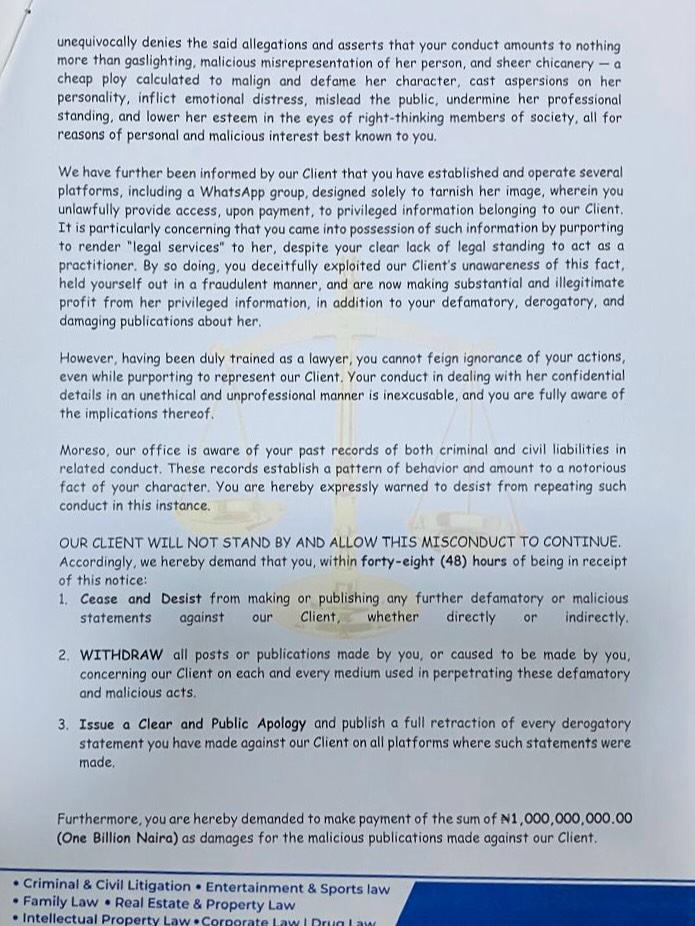
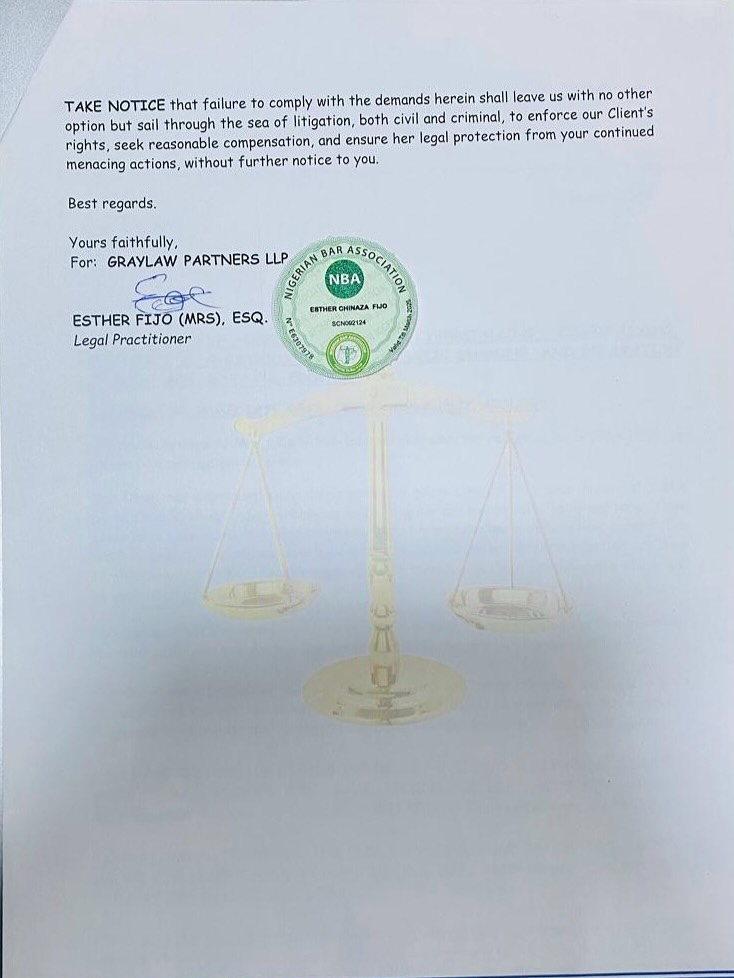
The cease-and-desist notice, delivered through her current legal representatives at Graylaw Partners, paints a picture of a systematic campaign that allegedly transcended typical attorney-client disagreements into what May’s team characterizes as a deliberate attempt to destroy her reputation and compromise her personal safety.
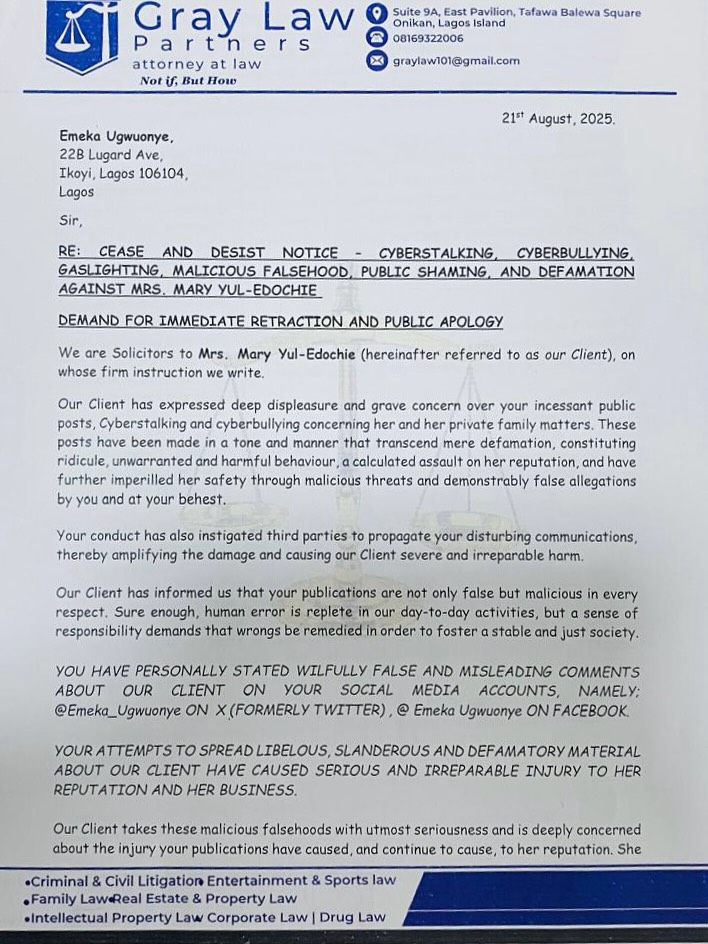
The gravity of the allegations becomes apparent in the language employed by May’s legal team, who describe Ugwuonye’s actions as going “beyond defamation” to constitute “ridicule, harassment, and malicious attacks.” This characterization suggests the dispute has moved far beyond the realm of professional disagreement into territory that May’s lawyers argue constitutes criminal behavior under Nigeria’s cybercrime laws.
Particularly troubling, according to the legal notice, is the allegation that Ugwuonye didn’t merely publish his own content but actively “incited third parties to amplify these communications.” This claim suggests a coordinated effort to mobilize online harassment, a tactic that has become increasingly common in high-profile disputes but remains legally precarious for those who deploy it.
The ₦1 billion damages claim—a substantial sum that underscores the severity of the alleged harm—reflects both the financial impact May claims to have suffered and serves as a deterrent against continued behavior. Such astronomical figures in defamation cases often signal that the plaintiff views the damage to their reputation as potentially career-ending or life-altering.
May Edochie, who has maintained a relatively high public profile amid her marital difficulties with Nollywood star Yul Edochie, now finds herself fighting battles on multiple fronts. Her decision to pursue aggressive legal action against her former lawyer suggests either supreme confidence in her case or desperation to halt what she perceives as an unbearable assault on her character.
The three-pronged demand—immediate cessation of publications, full retraction of existing content, and public apology—follows a standard template for defamation cases but takes on particular significance in the social media age, where retractions often receive far less attention than original allegations.
Legal experts familiar with Nigerian cybercrime legislation note that the case could set important precedents for how attorney-client disputes are handled in the digital sphere, particularly when former legal counsel becomes adversarial. The alleged involvement of third parties in amplifying defamatory content also raises questions about the legal liability of those who share or promote potentially harmful content created by others.
For Ugwuonye, a lawyer whose professional reputation now hangs in the balance, the choice appears stark: comply with the demands and potentially admit wrongdoing, or face what May’s team promises will be “further legal proceedings” in a case that could result in both substantial financial penalties and professional sanctions.
The broader implications of this case extend beyond the immediate parties involved. In an era where social media has become both a powerful tool for public discourse and a potential weapon for character assassination, the outcome could influence how public figures and their former associates navigate the treacherous waters of post-relationship communications.
As this legal drama unfolds, it serves as a stark reminder that in the digital age, the line between legitimate criticism and actionable harassment has become increasingly blurred—and increasingly expensive to cross.
WHAT YOU SHOULD KNOW
May Edochie is suing her former lawyer, Emeka Ugwuonye, for ₦1 billion, alleging he conducted a systematic cyberbullying campaign against her on social media that went beyond typical legal disputes into harassment and safety threats.