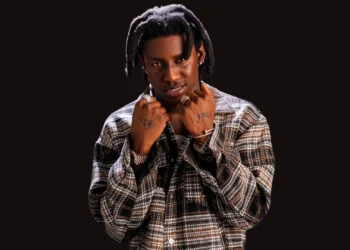
In a significant development in the ongoing family dispute surrounding late Nigerian Afrobeats singer Mohbad, an Ikorodu Magistrate Court has ordered comprehensive DNA testing for the singer’s son, Liam Aloba, following a protracted legal battle over paternity.
Magistrate Adefisoye Sonuga issued the landmark ruling on Tuesday, granting an application filed by Joseph Aloba, father of the deceased singer Ilerioluwa Aloba, who was known professionally as Mohbad. The case, filed against the singer’s widow, Omowunmi Cynthia Aloba, marks a crucial juncture in a legal saga that began in February 2024 when Joseph Aloba first filed suit at the Magistrates’ Court in Ikorodu.
The elder Aloba’s legal team, led by Augustine Adegbemi, successfully argued that the paternity question needed a definitive resolution. In court documents, Joseph Aloba stated, “There remains uncertainty regarding the paternity of Master Liam Aloba, and given the sensitivity of the matter, the paternity must be conclusively settled.”
The applicant further emphasized the broader implications of the dispute, arguing that the DNA test was essential for determining “the respondent’s maintenance obligations and the future of the child,” while warning that delays could cause “further prejudice” to all parties involved.
In an unexpected turn, Mohbad’s widow had previously expressed readiness to conduct the DNA test in October 2024, with her legal counsel, Kabir Akingbolu, raising no opposition to the application made on Tuesday. This cooperative stance represents a shift from earlier proceedings, where attempts at alternative dispute resolution in July 2024 had failed to yield an agreement.
The magistrate’s ruling was notably comprehensive, ordering that “two DNA tests be conducted in accredited and recognized hospitals, one in Nigeria and the other outside Nigeria,” with the additional requirement that “both parties or their representatives must be present when the samples are collected.”
This paternity dispute has emerged as one of several contentious issues surrounding Mohbad’s death in September 2023 at age 27. The family emphasized the need for the test due to the circumstances surrounding Mohbad’s death, with paternity issues concerning the child becoming contentious on social media.
The case has broader implications that extend beyond family relations, potentially affecting inheritance rights, child support obligations, and the distribution of the late singer’s estate. The court’s directive for DNA testing represents a significant step toward resolving uncertainties that have persisted since the singer’s controversial death.
The matter has been adjourned until November 11, 2025, for further proceedings, giving both parties time to comply with the court’s testing requirements. The dual-location testing requirement suggests the court’s determination to ensure the results are beyond dispute, addressing concerns about the credibility of local testing facilities.
This development comes as the investigation into Mohbad’s death remains ongoing, with the singer still unburied as of early 2025, adding another layer of complexity to an already intricate legal situation that has captured significant public attention in Nigeria’s entertainment industry.
The case continues to highlight the intersection of celebrity, family disputes, and Nigeria’s legal system, as the court seeks to provide clarity in a matter that has generated considerable public discourse and social media controversy since the young artist’s untimely death.
WHAT YOU SHOULD KNOW
An Ikorodu Magistrate Court has ordered DNA tests for late Nigerian singer Mohbad’s son, Liam, following a paternity dispute initiated by the singer’s father against his widow.
The court mandated dual testing—one in Nigeria and one abroad—to definitively establish paternity, which will determine inheritance rights and child support obligations.
This ruling represents a critical step in resolving family disputes that have persisted since Mohbad’s controversial death in September 2023 at age 27, with the case set to resume in November 2025.