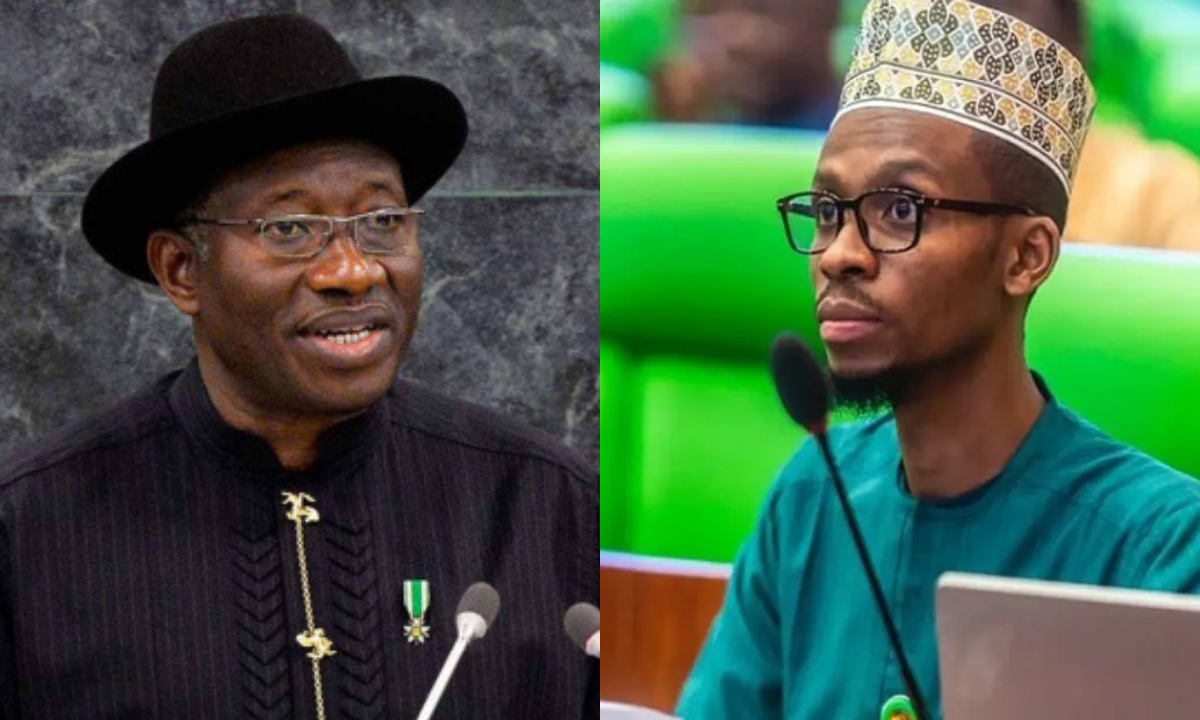
Bello El-Rufai, a member of Nigeria’s House of Representatives and son of former Kaduna State Governor Nasir El-Rufai, has acknowledged that his past criticisms of former President Goodluck Jonathan were made out of youthful naivety.
Representing the Kaduna North Federal Constituency under the All Progressives Congress (APC), Bello made the admission while reflecting on his political growth and shifting perspectives on governance. He recalled an encounter with his father, Nasir El-Rufai, who had gone to consult with Jonathan, which triggered a moment of self-awareness.
“I visited my father after I became a member and I saw him wearing a polo shirt and I said, ‘Where are you going?’ And he said he was going to see President Jonathan,” Bello recounted. “I paused because when I was naive or when I thought ego or gratification mattered, I used to be very active in criticising President Jonathan.”
He admitted that, like many young Nigerians, he failed to appreciate the presence of governance during Jonathan’s administration. “I even forgot in my naivety… that we had governance then,” he added. “I said, ‘Please, when you see him, tell him I am very sorry, I am wiser now.’”
Bello praised former President Jonathan for his democratic principles, particularly for peacefully handing over power after losing the 2015 election — a rare act on the African continent. “It takes a lot, particularly in Africa, to lose an election and leave. He did that,” he said.
On electoral matters, Bello expressed concern over unverified proposals to amend voting eligibility criteria, especially suggestions that voting without a voter’s card might be allowed. “If there’s any truth to the rumour of an electoral amendment that would allow people to vote without a voter’s card, I would vote against such a proposal,” he declared.
However, he reiterated his support for progressive reforms such as the electronic transmission of results, which he believes can strengthen the integrity of Nigeria’s electoral system.
What you should know
Bello El-Rufai’s remarks signal a maturing perspective within Nigeria’s younger political class. By acknowledging former President Jonathan’s democratic legacy and supporting key electoral reforms, El-Rufai joins a growing group of lawmakers prioritising institutional integrity over partisan rhetoric.